
Gardening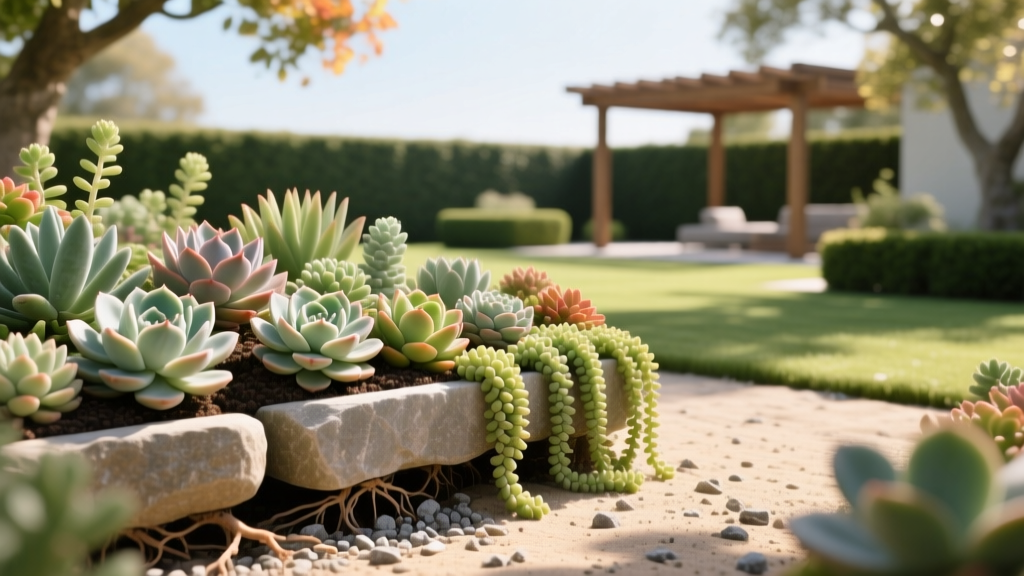
Growing Succulent Plants Outdoors: Zone, Soil, and Care Guide
Transitioning succulents from controlled indoor environments to the unpredictable outdoors requires more than simply placing a terracotta pot on a patio. The primary cause of outdoor succulent mortality is not drought, but root asphyxiation from moisture-retaining soils and sudden UV-induced epidermal bleaching. Successfully growing succulent plants outdoors demands a structural approach to soil engineering, precise hardiness zone matching, and strategic microclimate utilization.
Assessing Your Hardiness Zone for Outdoor Succulents
Before breaking ground, you must align your plant selection with your specific USDA Plant Hardiness Zone. The USDA Plant Hardiness Zone Map divides regions by minimum winter temperatures, which is the absolute limiting factor for outdoor succulent survival. Succulents broadly divide into two categories: 'soft' succulents (Echeveria, Crassula, Aloe) that perish below 32°F (0°C), and 'hardy' succulents (Sempervivum, Sedum, Orostachys) that can survive deep freezes down to -30°F (-34°C).
| Species Genus | Common Name | Hardiness Zones | Minimum Temp Tolerance | Winter Dormancy Behavior |
|---|---|---|---|---|
| Sempervivum | Hens and Chicks | 3 - 8 | -30°F to -40°F | Tightens rosettes, changes color (anthocyanin production) |
| Sedum | Stonecrop | 3 - 9 | -30°F to -40°F | Herbaceous varieties die back to the crown; evergreen varieties persist |
| Agave | Century Plant | 7 - 11 | 0°F to 15°F (varies by species) | Slows metabolic rate; susceptible to winter rot if wet |
| Echeveria | Mexican Snowball | 9 - 11 | 25°F to 30°F | Continues slow growth; highly susceptible to frost crystal damage |
If you reside in Zone 8 or lower and wish to grow soft succulents outdoors, they must be treated as annuals or kept in movable containers that can be relocated to a greenhouse or sunroom when nighttime temperatures consistently drop below 40°F (4°C).
Engineering a High-Drainage Outdoor Soil Matrix
Standard garden soil, topsoil, and even commercial 'cactus mixes' sold at big-box retailers retain far too much moisture for outdoor succulent beds. Outdoor environments subject soil to heavy rainfall and morning dew, making rapid drainage and root-zone aeration non-negotiable. You must engineer a gritty, inorganic-heavy matrix.
The Professional Outdoor Succulent Soil Recipe
- 40% Pumice (1/4-inch grade): Provides permanent structural porosity. Unlike perlite, pumice will not float to the surface during heavy rains or crush underfoot. (Source: General Pumice, approx. $25 for a 5-gallon bucket).
- 30% Calcined Clay (Turface MVP): Fired clay granules that absorb excess moisture and slowly release it, while maintaining a high Cation Exchange Capacity (CEC) to hold nutrients.
- 20% Composted Pine Bark Fines: The only organic component. Provides slight moisture retention and feeds soil microbiology without compacting.
- 10% Coarse Horticultural Sand: Adds weight to anchor top-heavy species like large Agave and increases drainage speed.
Shortcut Alternative: If mixing your own is prohibitive, commercial gritty mixes like Bonsai Jack Succulent and Cactus Soil (approx. $35 for 10 lbs) offer a reliable, pre-mixed inorganic alternative.
Microclimate Hacking for Marginal Zones
When growing succulent plants outdoors in transitional zones (Zones 7 and 8), relying solely on ambient air temperature is a mistake. You can artificially expand your hardiness zone by 5 to 10 degrees by exploiting thermal microclimates. The Royal Horticultural Society (RHS) frequently highlights the use of thermal mass in alpine and succulent gardening to protect marginally hardy specimens.
Strategic Placement Techniques
- South-Facing Stone Walls: Brick and stone absorb solar radiation during the day and radiate it back at night. Planting heat-loving Agave or Opuntia within 18 inches of a south-facing wall can prevent fatal frost damage.
- Elevation and Slopes: Cold air is denser than warm air and settles in low-lying 'frost pockets.' Always plant succulents on berms, slopes, or raised beds (minimum 12 inches elevation) to allow cold air to drain away from the root crown.
- Gravel Mulching: Applying a 1-inch top dressing of crushed gravel (not organic wood mulch) reflects sunlight up into the plant canopy, keeps the lower leaves dry, and prevents soil-borne fungal spores from splashing onto the foliage during rain.
The 21-Day Outdoor Establishment Watering Protocol
Acclimating a nursery-grown succulent to harsh outdoor UV and wind requires a phased watering and shading approach. Do not plant and immediately flood the soil.
- Days 1–7 (The Callusing Phase): Plant the succulent in your prepared gritty matrix. Do not water. This dry period forces the plant to heal microscopic root tears and stimulates the growth of new, drought-seeking root hairs. Deploy a 40% shade cloth to prevent UV shock.
- Days 8–14 (The Initial Hydration): Remove the shade cloth for morning sun, but replace it during the intense 12 PM – 4 PM window. Water the soil deeply until it runs out of the drainage zone, but allow it to dry completely within 48 hours. If it remains wet, your soil matrix is too dense.
- Days 15–21 (Full Sun Acclimation): Remove the shade cloth entirely. Transition to the 'soak and dry' method. Insert a blunt wooden probe 3 inches into the soil; water only when the probe emerges completely dry and free of soil particles.
Troubleshooting Common Outdoor Failure Modes
Outdoor environments introduce variables that indoor growers rarely face. Recognizing the visual symptoms of these failure modes early is critical for saving the plant.
| Symptom | Probable Cause | Corrective Action |
|---|---|---|
| White, bleached, or papery patches on upper leaves | UV Sunburn (Epidermal damage from sudden full-sun exposure) | Move to partial shade; the damaged tissue will not heal, but new growth will acclimate if introduced gradually. |
| Translucent, mushy leaves at the base of the plant | Winter Rot / Crown Rot (Cold temperatures combined with wet soil) | Immediately remove the plant. Cut away all mushy tissue with a sterilized blade, dust with sulfur powder, and let callus for a week before replanting in dry soil. |
| Corky, raised brown bumps on the underside of leaves | Edema (Roots absorb water faster than leaves can transpire, bursting cells) | Reduce watering frequency. Ensure soil is not holding moisture for more than 3 days after a rain event. |
| Elongated, stretched stems with wide spacing between leaves | Etiolation (Insufficient light, often caused by overhead tree canopies) | Relocate to an area receiving a minimum of 6 hours of direct, unfiltered sunlight daily. You can behead and replant the rosette. |
By treating soil composition as an engineering problem and respecting the microclimates of your specific yard, growing succulent plants outdoors transforms from a gamble into a highly predictable, low-maintenance landscaping strategy.

