
Gardening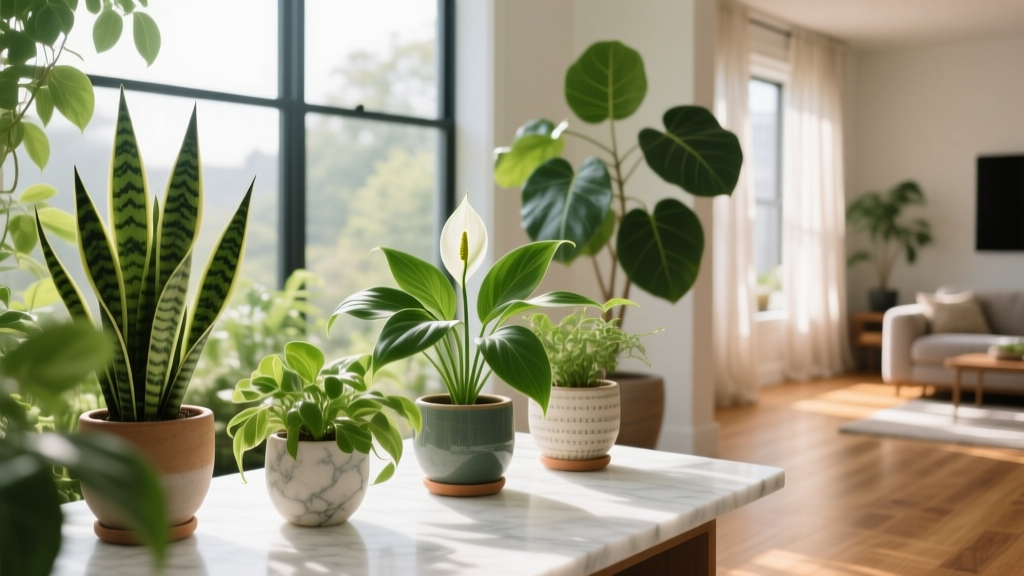
Do House Plants Purify Air? Diagnosing Indoor Toxins and Botanical Solutions
The 1989 NASA Study vs. Modern Building Science
For decades, homeowners have operated under the assumption that a few potted ferns in the corner will scrub their living spaces of harmful chemicals. This belief stems from the famous 1989 NASA Clean Air Study, which demonstrated that certain plants could absorb volatile organic compounds (VOCs) like formaldehyde and benzene in sealed, energy-efficient space stations. However, applying this data to modern residential construction requires a critical reality check.
A comprehensive 2019 review by Drexel University researchers analyzed 196 experiments on volatile organic compounds and indoor air quality. The conclusion was stark: to achieve the same air exchange rate as a standard building HVAC system, you would need between 10 and 1,000 plants per square meter of floor space. In a standard 150-square-foot bedroom, that equates to roughly 93 to 9,300 plants. Therefore, the premise that a handful of house plants purify air enough to single-handedly solve severe indoor toxicity is a diagnostic myth. However, plants do contribute to baseline phytoremediation, psychological well-being, and humidity regulation when deployed strategically alongside mechanical ventilation.
Diagnosing Your Indoor Air Quality (IAQ) Baseline
Before deploying botanical solutions, you must diagnose the actual chemical load in your home. Human olfactory senses are notoriously poor at detecting chronic VOC exposure due to olfactory fatigue. Relying on 'smell' to diagnose IAQ issues leads to under-treatment.
Step 1: Deploy a Photoionization Detector (PID) or Metal Oxide Sensor
Consumer-grade air monitors have advanced significantly. To accurately diagnose total VOC (TVOC) levels, invest in a monitor with a dedicated VOC sensor, not just a particulate matter (PM2.5) laser. The Airthings View Plus (approx. $299) or the Temtop M10 (approx. $90) provide real-time TVOC readings in parts per billion (ppb). According to the American Lung Association, keeping TVOC levels below 250 ppb is critical for respiratory health.
Step 2: Identify the Off-Gassing Sources
Once elevated VOCs are confirmed, locate the source. Formaldehyde primarily off-gasses from medium-density fiberboard (MDF) furniture, laminate flooring, and permanent-press fabrics. Benzene and toluene typically originate from fresh paint, solvents, and attached-garage exhaust. Removing or sealing the source with a water-based polyurethane sealant is always more effective than attempting to scrub the air after emission.
Data Highlight: The Air Exchange Reality
- Standard Home HVAC: Replaces indoor air 0.5 to 1.0 times per hour (ACH).
- 10 Potted Plants (100 sq ft room): Contributes roughly 0.003 ACH of VOC removal.
- Portable HEPA/Carbon Scrubber (e.g., Coway Airmega 400): Achieves 3.0 to 5.0 ACH for particulates, with carbon bed handling VOC peaks.
Targeted Botanical Solutions: Matching Plants to Toxins
While plants cannot replace mechanical ventilation, they excel at maintaining low-level baseline toxicity and processing specific compounds through both foliar uptake and rhizosphere (root zone) microbial degradation. To maximize efficacy, you must match the plant species to the specific chemical profile of your room.
| Target Toxin | Primary Indoor Source | Optimal Botanical Remedy | Phytoremediation Mechanism & Care |
|---|---|---|---|
| Formaldehyde | MDF furniture, carpets, glues | Epipremnum aureum (Golden Pothos) | Foliar stomatal uptake. Requires bright indirect light to keep stomata open; allow top 2 inches of soil to dry between waterings. |
| Benzene | Paints, plastics, detergents | Spathiphyllum wallisii (Peace Lily) | Rhizosphere microbial breakdown. Requires consistently moist (not wet) soil to sustain the soil bacteria that metabolize benzene. |
| Trichloroethylene (TCE) | Dry cleaning residue, adhesives | Chamaedorea seifrizii (Bamboo Palm) | High transpiration rate pulls air to the root zone. Needs 40-50% ambient humidity and well-draining aroid soil to prevent root asphyxiation. |
| Xylene | Printers, rubber, leather | Aglaonema commutatum (Chinese Evergreen) | Metabolized via leaf cuticle absorption. Highly tolerant of low light, but dust on leaves blocks cuticle pores; wipe leaves monthly. |
Diagnosing Phytoremediation Failure: Why Your Plants Stop Working
A dead or stressed plant purifies zero air. Phytoremediation relies entirely on stomatal conductance (the opening of microscopic pores on leaves) and active soil microbiomes. When a plant experiences environmental stress, it closes its stomata to conserve water, instantly halting its ability to absorb airborne VOCs. Diagnosing plant stress is a prerequisite for maintaining an effective botanical air filter.
Symptom-to-Cause Diagnostic Tree
- Symptom: Leaf edges are crispy and brown; soil pulls away from the pot edges.
- Diagnosis: Chronic underwatering or ambient humidity below 30%.
- Solution: Stomata have closed to prevent desiccation. Implement bottom-watering and introduce a localized ultrasonic humidifier to raise humidity to 45%.
- Symptom: Yellowing lower leaves; heavy, damp soil; presence of fungus gnats.
- Diagnosis: Hypoxia in the rhizosphere due to overwatering and dense, peat-heavy soil.
- Solution: The anaerobic soil conditions have killed the VOC-eating microbes. Repot immediately into a chunky aroid mix (40% orchid bark, 30% pumice, 20% coco coir, 10% horticultural biochar) to restore oxygen to the root zone.
- Symptom: White, crusty ring on the soil surface and pot rim; stunted new growth.
- Diagnosis: Soluble salt and mineral buildup from synthetic liquid fertilizers.
- Solution: High soil salinity creates osmotic stress, shutting down transpiration. Flush the soil with distilled water for 5 minutes, and switch to a diluted organic kelp emulsion.
Optimizing the Rhizosphere: The Hidden Engine of Air Purification
Most homeowners focus entirely on the leaves, but research indicates that up to 70% of VOC degradation occurs in the soil. Airborne toxins are drawn down to the root zone via transpiration, where specialized soil bacteria and fungi metabolize the chemicals into harmless byproducts. If you are using sterile, bagged potting soil, you are missing half the equation.
To supercharge the rhizosphere, incorporate horticultural biochar into your potting mix. Biochar is a highly porous form of charcoal that provides massive surface area for microbial colonization. A study published in the Journal of Environmental Management demonstrated that biochar-amended soils significantly increased the microbial breakdown of toluene and formaldehyde. Mix 10% to 15% biochar by volume into your potting media, and inoculate it with a mycorrhizal fungi powder during repotting to establish a robust, toxin-eating microbiome.
The Integrated IAQ Solution: Botanical + Mechanical
Relying solely on house plants purify air strategies is an incomplete solution for modern, tightly sealed homes. The most effective protocol integrates botanical baseline maintenance with mechanical peak-load management.
- Source Control: Remove or seal high-VOC emitters (e.g., apply AFM Safecoat sealant to exposed MDF edges).
- Botanical Baseline: Deploy 3 to 5 large-leaf plants (like Monstera deliciosa or Ficus lyrata) per 150 square feet. While they won't match an HVAC system, their continuous, low-level transpiration and rhizosphere activity help buffer minor daily VOC fluctuations.
- Mechanical Peak Scrubbing: For actual purification, utilize an air scrubber equipped with a minimum of 5 pounds of activated carbon. Standard HEPA filters capture particulates (dust, pollen) but do absolutely nothing for gaseous VOCs. Units like the Austin Air HealthMate (containing 15 lbs of carbon/zeolite) or the IQAir GC MultiGas are required to chemically adsorb gases that plants cannot process fast enough.
- Ventilation: Open windows for 10 minutes twice daily to flush accumulated CO2 and radon, which neither plants nor carbon filters can effectively mitigate.
By diagnosing your specific chemical load, optimizing the soil microbiome for your potted plants, and pairing them with appropriately rated carbon filtration, you create a resilient, multi-layered defense against indoor air toxicity.

