
Gardening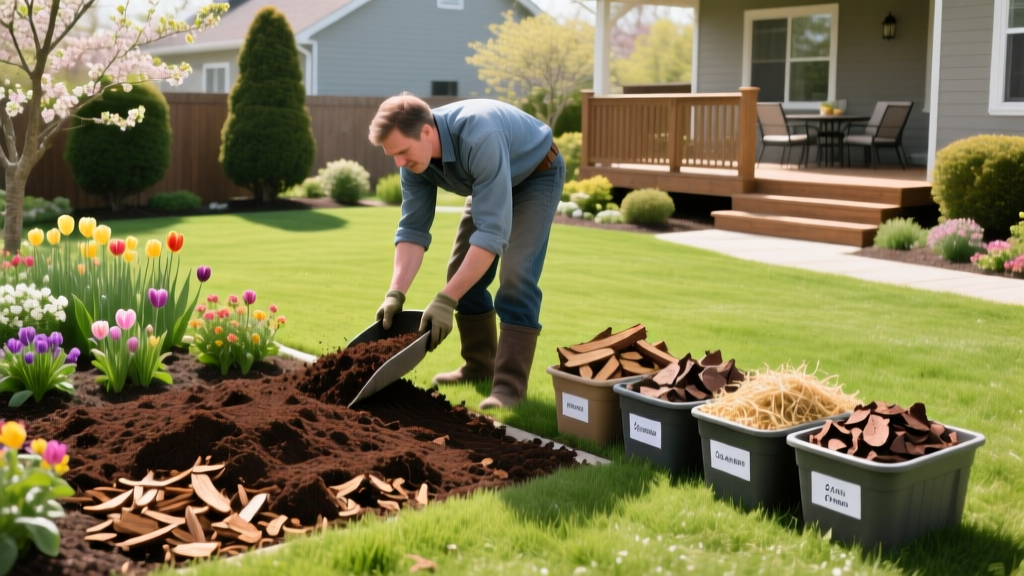
How to Apply Mulch: Depth, Timing, and Material Selection Guide
The Science of Mulching: Beyond Aesthetics
Applying mulch is one of the most effective practices for garden bed health, yet it remains one of the most frequently botched landscaping tasks. When you learn how to apply mulch correctly, you create a microclimate that regulates soil temperature by up to 10°F, reduces surface evaporation by 70%, and suppresses weed seed germination. However, improper application—specifically excessive depth or direct contact with plant stems—can induce hypoxia (oxygen deprivation) in the root zone and invite fatal fungal pathogens like Phytophthora.
This guide moves past basic advice to provide exact measurements, material cost breakdowns, and soil science principles required for professional-grade mulching in 2026.
⚠️ Warning: The 'Volcano Mulching' Epidemic
Piling mulch high against tree trunks (volcano mulching) is a leading cause of urban tree decline. It keeps the bark perpetually moist, leading to necrosis and girdling roots. According to the Arbor Day Foundation, you must maintain a strict 3 to 5-inch clearance between the mulch edge and the tree trunk, ensuring the root flare remains completely visible.
Calculating Mulch Depth by Material and Plant Type
The ideal mulch depth is not a universal number; it depends entirely on the particle size of the material and the oxygen requirements of the plants below. Fine mulches compact easily and restrict gas exchange if applied too thickly, while coarse mulches allow for deeper application without suffocating roots.
| Mulch Material | Particle Size | Recommended Depth | Best Use Case |
|---|---|---|---|
| Compost / Leaf Mold | Fine (< 0.5 inch) | 1 to 2 inches | Vegetable gardens, annual flower beds |
| Shredded Hardwood Bark | Medium (1-2 inches) | 2 to 3 inches | Perennial borders, shrub beds |
| Arborist Wood Chips | Coarse (2-4 inches) | 3 to 4 inches | Tree rings, pathways, large naturalized areas |
| Pine Straw | Long needles | 3 to 5 inches (fluffed) | Acid-loving plants, sloped beds (resists washing) |
Step-by-Step: How to Apply Mulch in Garden Beds
Follow this precise sequence to ensure maximum weed suppression and soil health.
- Clear and Prep the Zone: Remove all existing weeds, including the taproots of perennials like dandelions. If the infestation is severe, apply a 20% horticultural vinegar solution or use a flame weeder two weeks prior to mulching.
- Edge the Bed: Use a half-moon edger to cut a 4-inch deep trench along the border where the lawn meets the garden bed. This physical barrier prevents turfgrass rhizomes from invading the mulched area.
- Calculate Your Volume: Avoid overbuying or running short. Use the standard landscaping formula: (Square Footage × Desired Depth in Inches) ÷ 324 = Cubic Yards Needed. For a 200 sq. ft. bed at 3 inches deep, you need exactly 1.85 cubic yards.
- Apply and Rake: Distribute the mulch evenly using a steel-tined landscaping rake. Maintain the critical 3-inch trunk clearance for trees and 1-inch clearance for herbaceous perennials.
- Water the Mulch In: This is the most skipped step. Thoroughly water the newly applied mulch with a hose for 10-15 minutes. This settles the material, prevents wind blow-off, and initiates the microbial breakdown process at the soil-mulch interface.
Material Selection and 2026 Pricing Economics
Choosing between bulk and bagged mulch drastically impacts your budget. While bagged mulch offers convenience, the cost-per-volume premium is massive.
- Bulk Hardwood Mulch: Typically costs $30 to $45 per cubic yard delivered. Requires a minimum order (usually 5-10 yards) and space for a dump truck to drop the load.
- Bagged Mulch (2 cu. ft. bags): Costs $4.50 to $6.50 per bag. Since there are 13.5 bags in a cubic yard, this equates to $60 to $87 per cubic yard. Only economical for beds requiring less than 0.5 cubic yards.
- Pine Straw Bales: Priced at $45 to $65 per bale. One bale covers roughly 40-50 square feet at a 3-inch depth. Excellent for erosion control on slopes.
The 'Nitrogen Robbery' Myth vs. Soil Science Reality
A persistent gardening myth claims that wood-based mulches rob the soil of nitrogen. This is only half-true and depends entirely on where the mulch is placed.
Carbon-to-Nitrogen (C:N) ratios dictate decomposition. Raw wood chips have a C:N ratio of roughly 400:1. Soil microbes require a 24:1 ratio to function. If you till wood chips into the soil, microbes will scavenge available soil nitrogen to break down the carbon, causing temporary nitrogen deficiency in your plants. However, when applied strictly as a surface top-dressing, the decomposition happens at the mulch-soil interface, and nitrogen tie-up in the root zone is virtually non-existent.
According to research published by Penn State Extension, surface-applied woody mulches do not negatively impact the nitrogen levels of established landscape plants. If you are using high-carbon mulch in a vegetable garden, simply apply a light side-dressing of blood meal (12-0-0) or composted poultry manure before laying the mulch to buffer any marginal nitrogen draw.
Troubleshooting Common Mulching Failures
Dealing with 'Sour' Mulch
If your bulk mulch smells like vinegar, sulfur, or rotten eggs, it has undergone anaerobic fermentation due to being stored in large, airtight piles at the supplier. This 'sour mulch' contains acetic and formic acids that can drop soil pH to 4.0, burning plant foliage and roots within 48 hours. The Fix: Do not apply it. Spread the mulch out on a driveway or tarp in a thin layer (2 inches thick) and water it heavily for three days to leach out the toxic acids and reintroduce oxygen.
Landscape Fabric: To Use or Not to Use?
Woven geotextile landscape fabric is highly effective for inorganic mulches (like river rock) in commercial settings. However, in organic garden beds, it is generally discouraged. Over 2-3 years, organic mulch breaks down into humus on top of the fabric, creating a perfect seedbed for weeds whose roots will penetrate the fabric, making them nearly impossible to pull. Furthermore, the fabric eventually degrades, leaving plastic fragments in your soil and blocking earthworm movement.
Termite Concerns
Mulch does not attract termites from neighboring properties; rather, it provides a favorable moist environment if termites are already foraging in the soil. To mitigate risk, maintain a 12-inch bare-soil or gravel buffer zone between your mulched beds and the wooden siding or foundation of your home, allowing for visual inspection of the foundation.

