
Gardening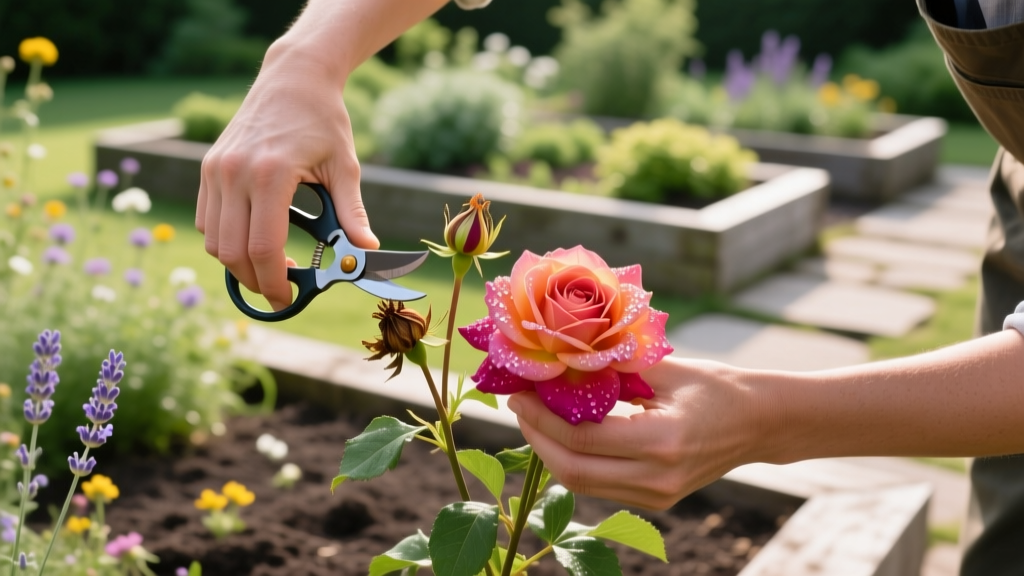
How Do You Deadhead Flowers? The Complete Pinching and Pruning Guide
The Biological Engine Behind Deadheading
When gardeners ask, "how do you deadhead flowers without damaging the plant?", the answer lies in understanding plant hormones. Flowering plants operate under a principle called apical dominance. The terminal bud (the primary flower or growing tip) produces auxins, a class of hormones that suppress the growth of lateral buds lower down the stem. By physically removing the spent bloom, you eliminate the auxin source. This triggers cytokinins in the lateral nodes to activate, forcing the plant to push out new side-shoots and subsequent flower clusters rather than directing energy into seed production.
According to Penn State Extension, failing to deadhead annuals like zinnias and marigolds can reduce their total seasonal bloom count by up to 60%, as the plant shifts its biological priority from reproduction (flowering) to seed maturation. Understanding this hormonal shift is the first step in mastering the technique.
Selecting the Right Steel: Tools of the Trade
Using the wrong tool crushes the vascular cambium layer of the stem, inviting pathogens like Botrytis cinerea (gray mold) and Xanthomonas (bacterial leaf spot). Match your tool to the stem thickness:
- Bypass Pruners (For stems > 1/4 inch): The Felco 2 Classic (retailing around $68 in 2026) features a hardened steel blade that makes clean, crush-free cuts on thick-stemmed perennials like roses, hydrangeas, and echinacea. Never use anvil pruners on live, green tissue; they crush the stem.
- Micro-Tip Snips (For stems < 1/8 inch): Fiskars 361001 Micro-Tip snips ($15) are essential for delicate annuals like petunias, lobelia, and alyssum. The 5-inch stainless steel blades allow you to navigate dense canopies without accidentally snipping adjacent unopened buds.
- Hori-Hori Knife (For fibrous scapes): Daylilies and hostas produce tough, hollow flower scapes that resist standard shears. A Japanese Hori-Hori knife with a serrated edge slices through these cleanly at the base.
How Do You Deadhead Flowers by Growth Habit?
The exact location of your cut dictates the plant's recovery speed and the aesthetic quality of the new growth. Here is the framework for the three primary growth habits.
1. Single-Stem and Shrub Bloomers (Roses, Zinnias, Sunflowers)
For plants that produce one large bloom per stem, trace the flower stem downward until you find the first true leaf that has five leaflets (in roses) or a robust set of lateral side-shoots. Make a clean cut exactly 1/4 inch above the node where the leaf meets the main stem, angling the blades at 45 degrees. This angle ensures water runs off the cut surface rather than pooling on the node, which prevents rot. According to the Royal Horticultural Society, cutting too close to the bud damages the latent eye, while leaving too much stem creates a "dead stick" that invites cane dieback.
2. Spike and Raceme Bloomers (Delphiniums, Salvia, Foxgloves, Snapdragons)
These plants bloom from the bottom of the spike upward. When the lower two-thirds of the florets have faded but the top is still blooming, do not cut the main spike. Instead, use micro-snips to pinch off individual spent florets. Once the entire spike has finished flowering, cut the entire central spike down to the basal foliage or the first major lateral side-shoot. This secondary spike will be smaller but will extend the color display by 3 to 4 weeks.
3. Carpet and Mounding Bloomers (Petunias, Coreopsis, Sweet Alyssum)
Deadheading these plants individually is a mathematical impossibility. Instead, use the "shearing method." Wait until the plant looks tired and leggy (usually mid-to-late July). Take a pair of manual hedge shears and aggressively shear the top 1/3 of the entire plant, removing both spent flowers and some foliage. Follow immediately with a liquid fertilizer application (such as a 10-10-10 water-soluble mix at 1 tablespoon per gallon). The plant will look decimated for about 10 days before flushing with a massive, dense wave of new blooms.
⚠️ The Seedhead Exception: Not all flowers should be deadheaded. Stop cutting back Echinacea purpurea (coneflower), Rudbeckia (black-eyed Susan), and ornamental grasses by late August. As noted by the University of Minnesota Extension, the dried seedheads provide critical winter forage for goldfinches and chickadees, while the hollow stems offer overwintering habitat for native solitary bees.
Plant-Specific Deadheading Matrix
Use this quick-reference table to determine the exact protocol for the most common garden species.
| Plant Species | Growth Habit | Cut Location | Tool Required | Frequency |
|---|---|---|---|---|
| Hybrid Tea Rose | Shrub / Cane | 1/4" above 5-leaflet node | Bypass Pruner | Every 3-5 days |
| Salvia nemorosa | Spike / Raceme | Above first lateral shoot | Micro-Tip Snips | Bi-weekly |
| Wave Petunia | Mounding / Carpet | Shear top 1/3 of canopy | Hedge Shears | Once in mid-July |
| Coreopsis verticillata | Mounding / Carpet | Shear top 1/3 of canopy | Hedge Shears | Late July / Early Aug |
| Hemerocallis (Daylily) | Clump / Scape | Snap scape at base crown | Hands or Hori-Hori | Weekly |
Sanitation: Preventing Pathogen Transfer
The most common mistake gardeners make when learning how do you deadhead flowers is neglecting tool hygiene. Moving directly from a plant infected with powdery mildew or black spot to a healthy plant effectively inoculates the entire garden. Keep a small spray bottle of 70% isopropyl alcohol in your tool belt. Spray the blades and wipe them with a clean rag between every single plant. While a 10% bleach solution is sometimes recommended, bleach rapidly pits and corrodes high-carbon steel blades, ruining the tension and cutting edge of premium pruners over a single season.
Furthermore, never leave deadheaded debris piled at the base of the plant. Decaying petals harbor Sclerotinia (white mold) and attract slugs. Collect spent blooms in a canvas apron or bucket and transfer them immediately to a hot compost pile (minimum 140°F) or municipal green waste bin to destroy any lingering fungal spores.

