
Gardening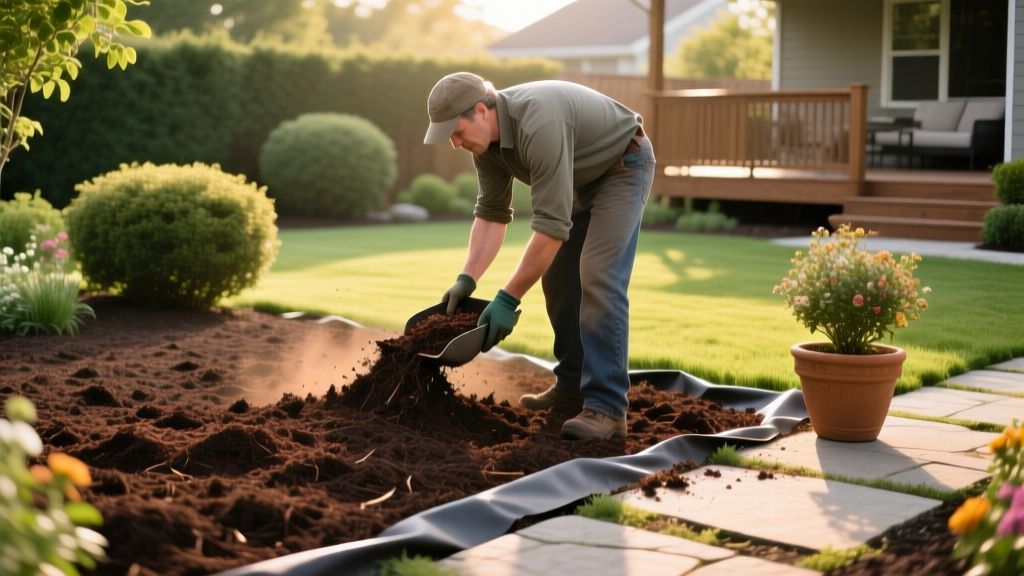
How to Put Down Mulch Properly: Depth, Edging, and Timing
Mulch is far more than a cosmetic landscape finish. When applied correctly, a mulch layer regulates soil temperature by 10°F to 15°F, reduces surface evaporation by up to 70%, and intercepts weed seed germination. However, improper application—specifically excessive depth and trunk contact—causes root asphyxiation, secondary root growth, and fatal cambium rot. Understanding exactly how to put down mulch requires precise volume calculations, strategic site preparation, and an understanding of soil carbon-to-nitrogen (C:N) ratios.
The Math: Calculating Exact Mulch Volume
The most common error homeowners make is under-ordering bulk mulch or over-applying bagged mulch to force it to fit a space. Mulch is sold by the cubic yard (bulk) or cubic foot (bagged). One cubic yard equals 27 cubic feet. To calculate your exact requirement, use the standard landscape formula: (Square Footage × Desired Depth in Inches) ÷ 324 = Cubic Yards.
| Bed Area (Sq. Ft.) | 2-Inch Depth (Top-Up) | 3-Inch Depth (Standard) | 4-Inch Depth (Heavy Weed) |
|---|---|---|---|
| 100 | 0.62 cu. yd. | 0.93 cu. yd. | 1.23 cu. yd. |
| 250 | 1.54 cu. yd. | 2.31 cu. yd. | 3.08 cu. yd. |
| 500 | 3.08 cu. yd. | 4.62 cu. yd. | 6.17 cu. yd. |
| 1,000 | 6.17 cu. yd. | 9.25 cu. yd. | 12.34 cu. yd. |
Note: If you are refreshing an existing mulch bed, measure the current depth and only order enough to reach the 3-inch total threshold. Applying 3 inches over an existing 2-inch layer creates a 5-inch blanket that blocks oxygen exchange to the rhizosphere.
Site Preparation: What to Do Before You Spread
Never drop mulch directly over existing weeds or undefined bed edges. Proper preparation ensures the mulch performs its hydrological and thermal functions without accelerating landscape degradation.
- Cut a Trench Edge: Use a half-moon edger to cut a 4-inch deep, 45-degree V-trench along the lawn-to-bed border. This physical barrier prevents creeping turfgrasses (like Bermuda or Zoysia) from invading the bed and stops mulch from migrating onto the lawn during heavy rain.
- Eradicate Perennial Weeds: Spot-treat deep-rooted weeds (dandelion, bindweed) with a glyphosate-based herbicide 7 to 10 days before mulching. Mulch will suppress annual weed seeds, but it will not smother established perennial taproots.
- Apply Pre-Emergent (Optional but Recommended): For high-pressure weed zones, apply a granular pre-emergent like prodiamine (Pendulum) or dithiopyr (Dimension) at the label rate before laying mulch. Water it in lightly to activate the chemical barrier at the soil line.
- Expose the Root Flare: For existing trees, use a hand trowel or air-spade to carefully excavate soil and old mulch away from the trunk until the root flare (where the trunk widens into the roots) is fully visible.
How to Put Down Mulch: The 3-Inch Rule and Edge Tapering
When spreading the material, dump wheelbarrow loads in strategic piles rather than dumping directly over delicate perennials. Use a steel-tined garden rake or a specialized mulch rake to spread the material evenly.
⚠️ Warning: Avoid 'Volcano Mulching'
Piling mulch high against a tree trunk traps moisture against the bark, inviting Phytophthora root rot and providing a haven for boring insects and rodents. According to the Arbor Day Foundation, mulch must be kept 3 to 5 inches away from the trunks of young trees and 8 to 12 inches away from mature tree trunks. The mulch layer should resemble a wide, flat donut, not a volcano.
The Tapering Technique: The mulch layer should be 3 inches deep in the center of the bed, but it must taper down to 1 inch near the edges of the trench and 0 inches at the tree trunk. This tapering allows water to shed naturally into the bed rather than pooling against hardscapes or bark.
Material Selection Matrix: Organic vs. Inorganic
The type of mulch you choose dictates how it interacts with your soil profile. Organic mulches decompose and add humus, but they require annual replenishment. Inorganic mulches offer permanent weed control but provide zero soil amendment value.
| Material | Decomposition Rate | Soil Amendment Value | Best Use Case | Drawbacks |
|---|---|---|---|---|
| Shredded Hardwood | 12-18 months | Moderate (adds humus) | General garden beds, slopes (knits together) | Can harbor artillery fungus; may tie up surface nitrogen. |
| Pine Bark (Mini-Nuggets) | 24-36 months | Low (slow breakdown) | Shrubs, trees, flat beds | Floats away in heavy rain; can lower soil pH slightly. |
| Cedar / Cypress | 24+ months | Low | Insect-prone areas, pathways | More expensive; natural oils can temporarily inhibit seed germination. |
| River Rock / Gravel | None | None | Xeriscaping, drainage swales, fire zones | Absorbs and radiates heat; difficult to remove; weeds root deeply. |
| Recycled Rubber | None | None | Playgrounds, high-traffic commercial paths | Leaches zinc and heavy metals; highly flammable; toxic to aquatic life. |
Troubleshooting Common Mulching Failures
Even when you know how to put down mulch correctly, environmental factors can cause biological and chemical failures. Here is how to diagnose and fix the three most common issues:
1. Artillery Fungus (Shotgun Fungus)
Symptom: Tiny, tar-like black spots on house siding, windows, and light-colored hardscapes that cannot be washed off.
Cause: Sphaerobolus stellatus thrives in moist, decaying hardwood mulch. It shoots its spores toward light sources (like white siding).
Fix: There is no chemical cure. You must rake out the infected hardwood mulch and replace it with pine bark or cedar, which are highly resistant to this fungus. According to Penn State Extension, blending 40% compost with hardwood mulch can also suppress the fungus by introducing competing microorganisms.
2. Nitrogen Immobilization (Tie-Up)
Symptom: Plants adjacent to mulched beds show chlorosis (yellowing leaves) and stunted growth, despite adequate watering.
Cause: Fresh, unaged wood chips have a very high Carbon-to-Nitrogen (C:N) ratio (often 400:1). As soil bacteria break down the carbon, they consume all available soil nitrogen to fuel the process, starving your plants.
Fix: Apply a fast-acting, high-nitrogen fertilizer (like a 34-0-0 ammonium nitrate or a liquid fish emulsion) to the soil surface before laying the mulch. Only use fully aged, composted mulch around heavy-feeding annuals and vegetables.
3. Hydrophobic Crusting and Sour Mulch
Symptom: Water beads up and runs off the mulch surface, or the mulch emits a strong vinegar/rotten egg smell.
Cause: Deep piles of mulch that sit wet in bulk delivery trucks undergo anaerobic fermentation, producing acetic and formic acids (sour mulch). Finely shredded mulch can also form a hydrophobic crust when it dries out completely.
Fix: If bulk mulch smells sour, spread it out in a thin layer on a driveway and let it off-gas and aerate for 48 hours before applying it to plants; otherwise, the acids will burn plant foliage. To break a hydrophobic crust, lightly cultivate the top inch of the mulch with a hand rake to restore water infiltration.
Expert Sourcing and Cost Expectations for 2026
When planning your landscape budget, understanding the economics of bulk versus bagged mulch is critical. As of early 2026, supply chain stabilization has normalized landscape material costs, but delivery fees remain a significant variable.
- Bulk Hardwood Mulch: Typically costs $35 to $55 per cubic yard at the landscape supply yard. However, delivery fees range from $75 to $150 per truckload (up to 15 yards). Bulk is strictly the better financial choice if you need more than 2 cubic yards (approx. 54 bags).
- Bagged Mulch (2 cu. ft. bags): Priced between $4.50 and $6.50 per bag at big-box retailers. While more expensive per cubic foot, bagged mulch eliminates delivery fees, allows for easy transport in standard SUVs, and is ideal for small urban beds or rooftop gardens.
- Color-Enhanced Mulch: Black or red dyed mulches cost a 20% to 30% premium over natural hardwood. Ensure the dye is carbon-based (black) or iron-oxide-based (red), which are safe for soil biology. Avoid cheaper mulches dyed with chromated copper arsenate (CCA), which is sometimes illegally sourced from demolished pallets and treated lumber.
For comprehensive data on soil health and organic matter breakdown rates, refer to the University of Missouri Extension's guide on Mulches in the Home Garden. By combining precise volume calculations, strict trunk-clearance protocols, and the right organic material for your specific soil profile, your mulch will function as a highly effective, low-maintenance soil amendment system.

