
Gardening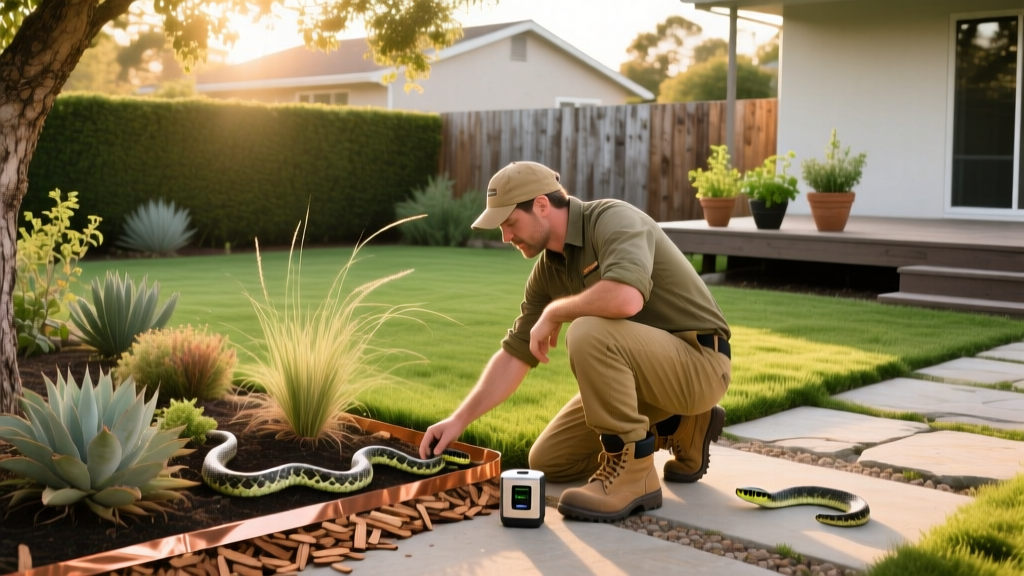
How to Repel Snakes From Your Yard: A Proven Defense Playbook
The Snake Attraction Matrix: Why They Are in Your Yard
Snakes enter residential properties for two primary reasons: prey availability and microclimate shelter. If you are dealing with rat snakes, garter snakes, or venomous species like copperheads, your landscaping is currently providing an all-you-can-eat buffet or a temperature-regulated hideout. To successfully modify your yard, you must eliminate these attractants. According to Penn State Extension, habitat modification is the single most effective long-term strategy for snake management.
| Yard Attractant | Snake Species Drawn | Targeted Solution |
|---|---|---|
| Thick wood chip mulch | Copperheads, Rat Snakes | Switch to large river rock or limit mulch to 2 inches deep |
| Overgrown grass (>4 inches) | Garter Snakes, Ribbon Snakes | Mow weekly, maintaining a 2.5 to 3-inch blade height |
| Active rodent burrows | Rat Snakes, King Snakes, Rattlesnakes | Deploy tamper-resistant bait stations and snap traps |
| Stacked firewood/lumber | Timber Rattlesnakes, Copperheads | Elevate wood piles 12 inches off the ground on metal racks |
Phase 1: Habitat Modification and Exposure
Snakes are ectothermic and rely on the environment to regulate body temperature, but they are highly vulnerable to aerial predators when exposed. Your goal is to remove the cover that makes them feel secure.
Mulch and Foundation Management
Avoid using thick layers of shredded hardwood mulch directly against your home's foundation. Shredded mulch retains moisture and creates a dense, cool matrix that snakes and their rodent prey love. Instead, maintain a 12-inch bare soil or crushed gravel buffer between your foundation and any mulch beds. If you must use mulch, limit the depth to 2 inches and opt for larger nuggets rather than fine shreds.
Lawn and Shrubbery Maintenance
Keep your turf mowed to a maximum of 3 inches. Trim the bottom 12 inches of all foundation shrubs to expose the soil beneath. This removes the dark, humid transition zone between the lawn and the house where snakes frequently ambush insects and small mammals.
Phase 2: Physical Exclusion and Fencing Specs
When habitat modification is not enough, physical exclusion is required. Standard chicken wire is entirely useless for snake control; the hexagonal gaps are large enough for most species to slither through. You must use specific materials and angles.
The 1/4-Inch Hardware Cloth Standard
Purchase 1/4-inch (0.25 inch) galvanized hardware cloth. This is a rigid, welded wire mesh. To install an effective snake fence around a garden, shed, or play area:
- Burial: Dig a trench 3 to 4 inches deep along the perimeter. Bury the bottom edge of the mesh to prevent snakes from burrowing underneath.
- Height: The fence must extend at least 30 inches above the soil line.
- The 30-Degree Rule: Angle the top 12 inches of the fencing outward at a 30-degree angle. Snakes can climb vertical wire mesh, but the outward overhang disrupts their center of gravity and prevents them from rolling over the top.
⚠️ Exclusion Warning: Do not forget structural gaps. Snakes can compress their bodies to fit through holes as small as 1/4 inch. Inspect weep holes in brick veneer, gaps under garage doors, and torn window screens. Stuff weep holes with coarse copper mesh or stainless steel wool, which allows water drainage but blocks pests.
Phase 3: Chemical and Natural Repellents
The internet is flooded with ineffective snake repellent myths. Understanding the chemistry of what actually irritates a snake's Jacobson's organ (their primary chemical sensory receptor) is crucial for saving money and time.
The Mothball Myth and Toxicity Risk
Using mothballs (naphthalene or paradichlorobenzene) outdoors to repel snakes is illegal, highly toxic to pets and children, and environmentally destructive. The National Pesticide Information Center (NPIC) explicitly warns against using mothballs in any manner not specified on the label. Furthermore, outdoor moisture rapidly degrades mothballs, rendering them useless within days while leaching carcinogens into your soil and groundwater.
Effective Granular Repellents: Sulfur and Essential Oils
Commercial repellents that actually yield results rely on a combination of sulfur and potent essential oils (like cinnamon and clove). These compounds overwhelm the snake's chemosensory system, causing them to avoid the treated perimeter.
- Ortho Snake B Gon Granules: Contains sulfur and cinnamon oil. Priced around $20 for a 2 lb bag. Apply at a rate of 0.5 lbs per 100 square feet along the perimeter.
- Dr. T's Snake-A-Way: A heavier sulfur-based formulation. Priced around $25 for a 4 lb bag. Highly effective but emits a strong, lingering odor that some homeowners find unpleasant.
Application Protocol: Apply granular repellents in a 4-inch wide band around the perimeter of your yard or specific garden beds. Reapply every 30 days, or immediately after heavy rainfall exceeding 1 inch, as the active volatile oils wash away.
Phase 4: Eradicating the Food Source
You cannot repel a snake that is actively hunting. If your yard has a high population of mice, voles, or rats, snakes will push through mild repellent barriers to reach the prey. Implement a strict rodent control protocol:
- Place tamper-resistant bait stations (e.g., Protecta RTU stations) along fence lines and near woodpiles.
- Use mechanical snap traps baited with peanut butter in areas where pet access is restricted.
- Secure all trash cans with bungee cords or locking lids to prevent attracting rodents in the first place.
When to Call a Professional Wildlife Exterminator
If you discover venomous snakes (like copperheads or rattlesnakes) nesting in your yard, or if physical exclusion fails, hire a licensed wildlife control operator. Expect to pay between $150 and $300 for an initial removal visit. Full property exclusion services, which include burying hardware cloth around the entire perimeter of a home, typically range from $1,500 to $4,000 depending on lot size and terrain complexity.
Frequently Asked Questions
Do ultrasonic snake repellers work?
No. Snakes lack external ears and eardrums. They detect vibrations through their jawbones resting on the ground, but they are entirely deaf to airborne high-frequency sound waves. Ultrasonic stakes marketed for snakes are scientifically baseless and function only as expensive lawn ornaments.
Will laying sharp gravel or crushed stone keep snakes away?
This is a common landscaping myth. A snake's belly scales are highly keratinized and designed to glide over rough, abrasive surfaces like rocks and bark without injury. While large, smooth river rock does not retain the cool moisture that snakes prefer (making it slightly less attractive than mulch), sharp gravel will not physically deter or harm them.
Are golf balls or plastic owls effective deterrents?
Placing golf balls in the yard to mimic eggs, or using plastic predator decoys, may cause a brief startle response. However, snakes rely heavily on chemical and thermal sensing. Once they realize the decoy emits no heat, scent, or vibration, they will ignore it entirely. Rely on physical barriers and habitat modification instead.

