Gardening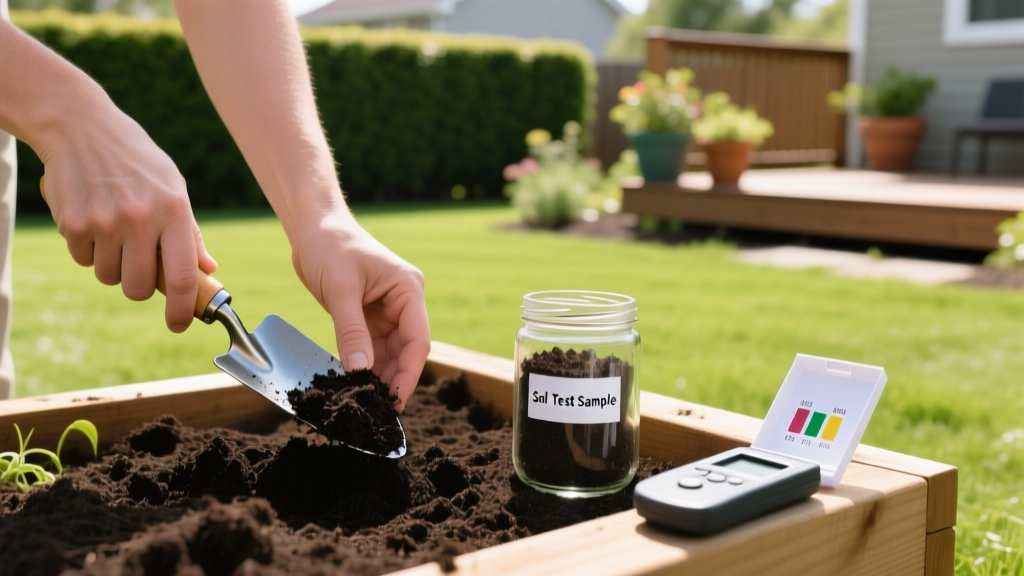
How to Test Garden Soil at Home: Step-by-Step Guide
David ParkPublished
Why Soil Testing Matters
Healthy soil is the foundation of every productive garden. Testing your soil reveals pH levels, nutrient content, and texture — information that determines which plants will thrive and what amendments you need. Without testing, you're guessing at fertilizer applications and risking nutrient imbalances that stunt growth or burn roots.
Understanding Soil pH
Soil pH affects nutrient availability. Most vegetables prefer slightly acidic soil between 6.0 and 7.0. Blueberries need 4.5 to 5.5, while asparagus tolerates up to 8.0. When pH is too high or too low, essential nutrients become chemically locked and unavailable to plant roots — even if they're present in the soil.
DIY Soil Testing Methods
The Jar Test for Soil Texture
Fill a clear jar one-third full with garden soil, add water to near the top, and shake vigorously. Let it settle for 24 hours. Sand settles first (bottom layer), silt in the middle, and clay on top. This reveals your soil texture — loam (roughly equal parts) is ideal for most gardens.
The Pantry pH Test
Place two soil samples in separate containers. Add vinegar to one — if it fizzes, your soil is alkaline (pH > 7). Add water and baking soda to the other — if it fizzes, your soil is acidic (pH < 7). No reaction means neutral soil around 7.0.
Reading Professional Soil Test Results
Send a sample to your county extension lab for precise results. A standard test reports pH, phosphorus (P), potassium (K), calcium, magnesium, and organic matter percentage. Each result comes with a recommendation for lime or fertilizer application rates per 1,000 square feet.
Interpreting Key Nutrients
- Nitrogen (N): Drives leafy growth. Deficiency shows as yellowing lower leaves.
- Phosphorus (P): Supports root development and flowering. Deficiency causes purple-tinged leaves.
- Potassium (K): Improves disease resistance and fruit quality. Deficiency produces brown leaf edges.
- Organic matter: Aim for 3-5%. Improves water retention and nutrient-holding capacity.
When to Test Your Soil
Test in early spring before planting, or in fall after harvest — results take 2-3 weeks from commercial labs. Test at the same time each year for consistent comparisons. Retest every 2-3 years for established beds, or annually when starting a new garden or troubleshooting poor plant performance.