
Gardening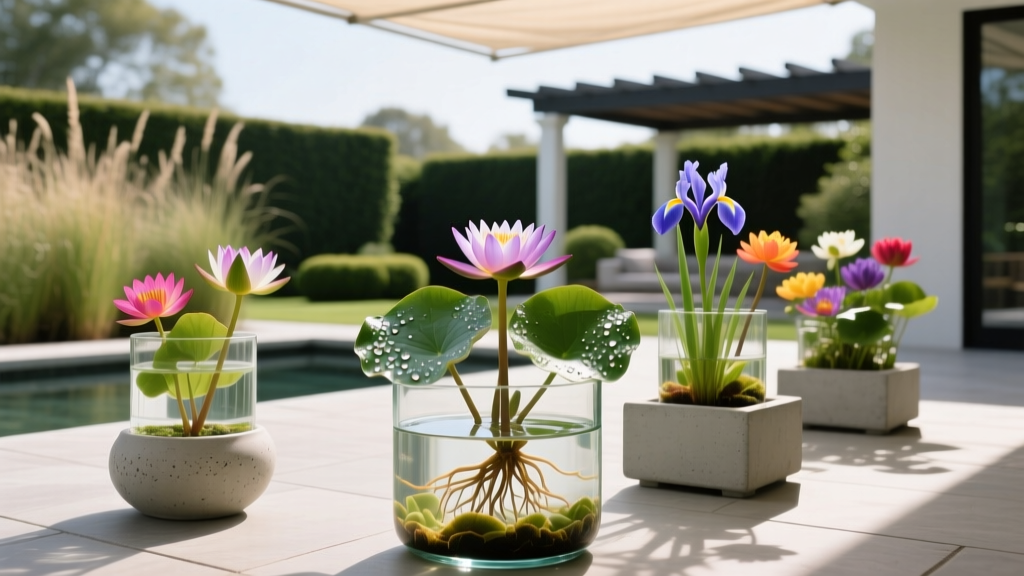
Best Flowers That Grow in Water: Hydroculture Planting Guide
The Science of Hydroculture for Flowering Plants
Growing flowers without soil—known as hydroculture or water propagation—relies on a fundamental biological adaptation. When terrestrial plant roots are submerged, they initially suffocate due to a lack of oxygen. However, specific species can develop aerenchyma tissue, a spongy, air-filled cellular structure that transports oxygen from the leaves down to the submerged root tips. This transition from 'soil roots' to 'water roots' typically takes 14 to 28 days. During this window, the plant is highly vulnerable to anaerobic bacterial infections, which manifest as black, mushy root rot.
Successful establishment of flowers that grow in water requires managing the water's dissolved oxygen levels, maintaining a slightly acidic pH (5.5 to 6.5), and providing a precise hydroponic nutrient profile, as water lacks the Cation Exchange Capacity (CEC) of soil to buffer and hold minerals.
⚠️ Critical Transition Rule: Never submerge the entire root mass or the plant's crown (the base where stems meet roots) immediately. Keep the top 20% of the root system and the crown entirely exposed to ambient air to prevent basal rot and allow for atmospheric oxygen intake while water roots form.
Top 5 Flowers That Grow in Water (Establishment Metrics)
Not all flowering plants adapt to aquatic environments. The following five species possess the genetic capacity to form aerenchyma tissue and thrive in long-term water culture, provided their specific light and pH requirements are met.
| Plant Species | Light Requirement | Ideal Water pH | Bloom Cycle | Difficulty |
|---|---|---|---|---|
| Spathiphyllum wallisii (Peace Lily) | Low to Bright Indirect | 5.5 - 6.5 | Spring / Summer | Beginner |
| Anthurium andraeanum (Flamingo Flower) | Bright Indirect | 5.0 - 6.0 | Year-round | Intermediate |
| Phalaenopsis amabilis (Moth Orchid) | Bright Indirect (East Window) | 5.5 - 6.5 | Winter / Spring | Advanced |
| Narcissus papyraceus (Paperwhite) | Full Sun to Bright Indirect | 6.0 - 7.0 | Winter (Forced) | Beginner |
| Nelumbo nucifera (Sacred Lotus - Outdoor) | Full Sun (6+ hours) | 6.5 - 7.5 | Summer | Intermediate |
Step-by-Step: Transitioning Soil-Grown Flowers to Water
Moving a mature, soil-grown plant directly into a vase of water is the most common cause of hydroculture failure. Soil roots are structurally different from water roots and will rot if suddenly submerged. Follow this precise protocol to force aerenchyma development.
- Root Extraction and Washing: Remove the plant from its nursery pot. Gently massage the root ball under lukewarm (70°F/21°C) running water until 100% of the soil is removed. Soil particles harbor anaerobic bacteria that will rapidly multiply in a stagnant water column.
- Strategic Root Pruning: Using sterilized bypass pruners, cut away exactly 20% to 30% of the longest, thickest soil roots. This induces a mild stress response, triggering the plant to push out new, highly branched water roots.
- Vessel Selection: Choose a glass or ceramic vessel with a narrow neck. The narrow neck supports the plant's crown, keeping it completely dry and above the water line. According to the University of Minnesota Extension, ensuring the crown remains dry is paramount for preventing fungal pathogens like Pythium.
- Water Level Calibration: Fill the vessel with distilled or reverse-osmosis (RO) water. Submerge only the bottom two-thirds of the root mass. The top third must remain in the humid air gap between the water surface and the crown.
- The 14-Day Flush: For the first two weeks, change the water entirely every 48 hours. Do not add fertilizer during this phase. This flushes away decaying cellular matter from the dying soil roots and prevents bacterial blooms.
Nutrient Management: Replacing Soil CEC
Soil acts as a buffer, holding onto positively charged nutrient ions (calcium, magnesium, potassium) and releasing them slowly. Water has zero CEC. If you use standard liquid houseplant fertilizers (like Miracle-Gro All Purpose 24-8-16) in water, the high urea nitrogen content will cause severe root burn and ammonia toxicity.
The Hydroponic Fertilizer Protocol
You must use a fertilizer specifically formulated for hydroponics, which derives nitrogen entirely from nitrate sources rather than urea. A reliable formulation is a 7-9-5 NPK ratio with added calcium and magnesium.
- Dosage: Mix at exactly 25% of the manufacturer's recommended soil dosage. For most concentrates, this equates to 1/4 teaspoon per gallon of water.
- Electrical Conductivity (EC): If you use an EC meter, aim for a reading between 1.0 and 1.5 mS/cm. Anything above 2.0 mS/cm will cause osmotic stress, drawing water out of the roots and causing leaf tip burn.
- Refresh Cycle: Replace the nutrient solution completely every 14 days. Between changes, top off the vessel with plain, un-fertilized RO water to replace evaporation without concentrating the salt load.
Direct Water Propagation: Forcing Flowering Bulbs
Unlike transitioning mature plants, forcing bulbs like Paperwhites (Narcissus papyraceus) and Hyacinths (Hyacinthus orientalis) relies on the energy stored within the bulb itself. This method, heavily documented by the Texas A&M AgriLife Extension, requires no fertilizer, but demands strict water-line management.
💡 Bulb Forcing Framework: Place a 2-inch layer of sterile glass pebbles or LECA (Lightweight Expanded Clay Aggregate) at the base of a shallow, wide bowl. Set the bulbs on top, pointed end up. Add water until it reaches exactly the basal plate (the flat bottom of the bulb). If the water touches the main body of the bulb, it will rot before roots establish. As roots grow down into the pebbles, maintain the water level at the base of the roots, never rising to touch the bulb.
Algae Prevention and Oxygenation
Green algae competes with your flowers for dissolved oxygen and nutrients, while simultaneously lowering the water's pH as it respires at night. Algae requires two things to grow: light and phosphorus.
Mitigation Strategies:
- Light Exclusion: Use opaque ceramic vases or wrap the bottom half of glass vases in decorative sleeves. Blocking light from the root zone halts photosynthesis in aquatic algae without affecting the plant's foliage.
- Hydrogen Peroxide Treatment: If green water appears, do not use chemical algaecides, which are toxic to aerenchyma tissue. Instead, add food-grade 3% hydrogen peroxide (H2O2) at a rate of 2 milliliters per liter of water. The H2O2 breaks down into water and free oxygen, killing algae spores on contact while oxygenating the root zone.
Troubleshooting Common Hydroculture Failures
When flowers that grow in water begin to decline, the symptoms manifest rapidly. Use this diagnostic matrix to correct the environment.
- Symptom: Leaves turning yellow starting at the bottom, accompanied by a sour, swampy odor from the vase.
Cause: Anaerobic root rot. The water temperature is too high (above 75°F/24°C), depleting dissolved oxygen, or the crown was submerged.
Fix: Remove the plant, trim all brown/mushy roots with sterile scissors, rinse in a 10% bleach solution for 5 minutes, and restart in fresh, cool RO water with increased air gap. - Symptom: Leaf edges turning crispy and brown; white crust forming on the glass above the water line.
Cause: Nutrient salt accumulation and osmotic stress.
Fix: Flush the vessel completely. Reduce fertilizer concentration by 50%. Wipe the glass with a 50/50 white vinegar and water solution to dissolve mineral deposits. - Symptom: Plant produces lush green foliage but fails to produce flower spikes.
Cause: Excess nitrogen relative to phosphorus, or insufficient light intensity (DLI - Daily Light Integral is too low).
Fix: Switch to a bloom-boosting hydroponic nutrient (e.g., 5-30-5 NPK) for 30 days. Move the plant to an east-facing window to increase light exposure without causing thermal leaf scorch.
'The key to long-term hydroculture is patience during the first month. You are essentially asking a terrestrial plant to rewrite its root architecture. Expect some lower leaf drop as the plant redirects energy to aerenchyma formation.' — Advanced Indoor Horticulture Principles
Final Establishment Checklist
Before finalizing your water garden setup, verify that your water source is free of chlorine and chloramines (use a standard aquarium water conditioner if using tap water), your vessel provides structural support for the crown, and your lighting matches the specific DLI requirements of your chosen flowering species. With precise environmental control, hydroculture offers a cleaner, more predictable, and highly rewarding method for cultivating indoor and outdoor aquatic blooms.

