
Gardening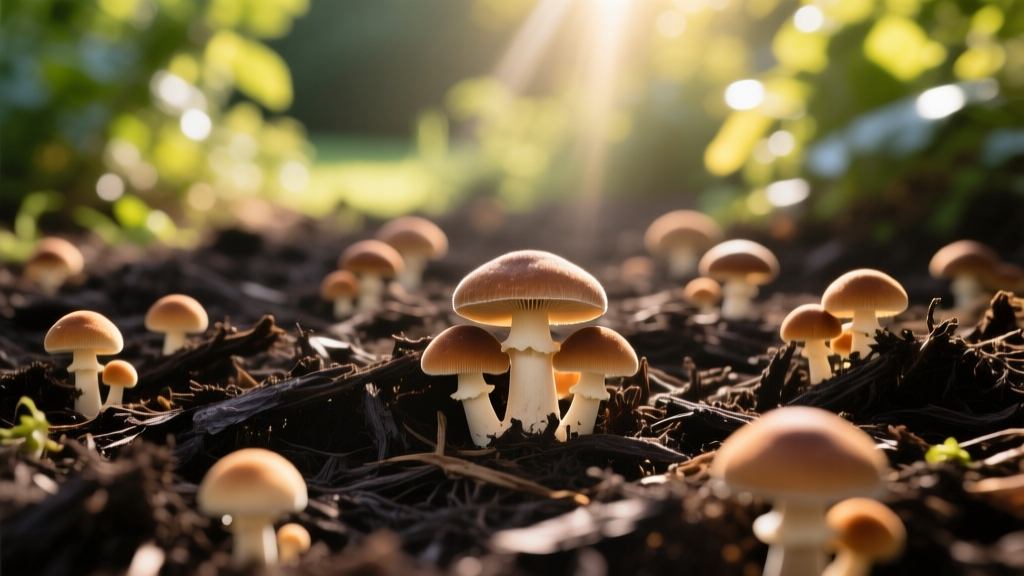
Mushrooms in Mulch: Causes, Identification, and Control
The Biology Behind Mushrooms in Mulch
Finding mushrooms in mulch is a predictable biological response to high-carbon, high-moisture environments. Mulch, particularly shredded hardwood or wood chips, has a carbon-to-nitrogen (C:N) ratio often exceeding 400:1. While bacteria struggle to decompose materials with a C:N ratio above 30:1 without supplemental nitrogen, fungi thrive. The visible mushroom (the fruiting body) is merely the reproductive structure of a vast, subterranean mycelial network that is actively breaking down the lignin and cellulose in your mulch bed.
The Saprophytic Nutrient Cycle: Most mulch fungi are saprophytes. They secrete enzymes that break down complex organic polymers into simpler compounds, eventually releasing locked-up nitrogen, phosphorus, and potassium back into the soil profile for plant uptake. In many cases, their presence indicates a highly active, healthy soil food web.
Common Mushroom Species Found in Garden Mulch
Accurate identification is the first step in determining whether you need to intervene. Below are the most frequently encountered species in residential landscape beds.
| Species | Common Name | Visual Characteristics | Toxicity & Impact |
|---|---|---|---|
| Leucocoprinus birnbaumii | Flowerpot Parasol | Bright yellow, scaly cap, 1-2 inches tall. Common in potted plants and greenhouse mulch. | Toxic if ingested. Harmless to plants. |
| Coprinellus disseminatus | Fairy Inkcaps | Tiny, fragile, grey-white caps with gills that dissolve into black ink. Grows in dense clusters. | Non-toxic. Harmless to plants. Rapid decay. |
| Panaeolus foenisecii | Brown Hay Cap | Small brown caps, often found at the interface of mulch and turfgrass. | Mildly toxic to pets. Harmless to plants. |
| Armillaria mellea | Honey Fungus | Honey-brown caps with white rings. Look for black, shoestring-like rhizomorphs under the mulch. | Edible but highly destructive to living tree and shrub roots. |
Are Mushrooms in Mulch Harmful to Your Plants?
The Beneficial Fungi (Saprophytes)
The vast majority of mushrooms in mulch are saprophytic. They feed exclusively on dead organic matter. According to the University of Maryland Extension, these fungi do not attack living plant tissue. In fact, their mycelial networks improve soil structure by binding soil particles into aggregates, increasing water retention and aeration. Removing them is often an aesthetic choice rather than an agronomic necessity.
The Harmful Fungi (Pathogens)
The primary exception is Armillaria mellea (Honey Fungus). As noted by the Royal Horticultural Society, this pathogen spreads via rhizomorphs through the soil and mulch, invading the root systems of stressed or vulnerable woody ornamentals. If you identify honey fungus in your mulch beds, immediate removal of the infected mulch and any dead stumps is required to protect adjacent trees and shrubs.
Warning for Pet Owners: Because visual identification of wild fungi is notoriously difficult and misidentification can be fatal, the Texas A&M AgriLife Extension advises treating all unidentified mushrooms as toxic. If you have dogs or cats that forage in garden beds, physically remove fruiting bodies as soon as they appear to prevent accidental ingestion.
Step-by-Step Remediation: How to Control Fungal Blooms
If the fungal bloom is excessive, creating hydrophobic mats that repel water, or posing a risk to pets, implement this targeted remediation protocol.
- Physical Disruption (Raking): Use a steel bow rake to aggressively turn the top 2 to 3 inches of the mulch bed. This breaks up the hydrophobic mycelial mat, exposes the network to UV light and desiccation, and restores water infiltration to the soil below.
- Nitrogen Amendment: Shift the C:N ratio to favor bacteria over fungi. Apply a high-nitrogen, fast-release organic amendment like blood meal (12-0-0) at a rate of 2 lbs per 100 square feet. Alternatively, use a synthetic 16-4-8 fertilizer at 1 lb per 100 square feet. Water deeply immediately after application to drive the nitrogen into the mulch layer.
- Irrigation Calibration: Fungi require constant surface moisture to fruit. Transition from daily light watering to deep, infrequent irrigation. Target 1 inch of water per week, applied in one or two sessions, allowing the top layer of mulch to dry out completely between waterings.
- Thin the Mulch Layer: Maintain a mulch depth of exactly 2 to 3 inches. Layers exceeding 4 inches trap excessive moisture and restrict oxygen flow to the soil, creating an ideal anaerobic environment for aggressive fungal colonization.
Mulch Selection Matrix: Fungal Resistance Compared
If you are reinstalling mulch and want to minimize future fungal fruiting, your material choice is critical. Hardwood mulches break down rapidly and feed fungi, while certain softwoods contain natural fungicides. Below is a comparison based on 2026 average bulk pricing and biological resistance.
| Mulch Type | Decay Rate | Fungal Resistance | Est. Cost (per Cu. Yd.) |
|---|---|---|---|
| Shredded Hardwood | Fast (1-2 years) | Low (Highly susceptible) | $35 - $45 |
| Pine Bark Nuggets | Moderate (2-3 years) | Moderate | $45 - $55 |
| Western Red Cedar | Slow (3-5 years) | High (Contains thujaplicin) | $55 - $75 |
| Cypress | Slow (3-5 years) | High (Contains cypressene) | $50 - $65 |
| Recycled Rubber | None | Absolute (Inorganic) | $120 - $150 |
Expert Recommendation: For beds highly prone to fungal blooms, transition to Western Red Cedar. The natural compound thujaplicin acts as a potent fungicide, significantly suppressing mycelial growth while providing excellent weed suppression and moisture retention.
Frequently Asked Questions
Will spraying vinegar kill mushrooms in mulch?
No. While acetic acid can burn the visible mushroom cap, it does not penetrate or kill the subterranean mycelial network. Furthermore, applying vinegar to your mulch bed will rapidly lower the soil pH, potentially causing aluminum toxicity or nutrient lockout in your acid-sensitive ornamental plants.
Does removing the mushroom cap stop it from spreading?
Plucking the fruiting body prevents the release of new spores, but it does not stop the existing mycelium from spreading through the mulch. Because spores are ubiquitous in the atmosphere, new spores will inevitably land in the bed. Focus on altering the environment (moisture and C:N ratio) rather than merely plucking the caps.
Can I use fungicides to treat mulch beds?
Chemical fungicides (like copper sulfate or chlorothalonil) are generally ineffective against saprophytic mulch fungi and are not labeled for this use. They will also indiscriminately kill beneficial mycorrhizal fungi that your plants rely on for phosphorus uptake. Cultural controls—raking, nitrogen amendment, and moisture management—remain the only scientifically sound remediation strategies.

