
Gardening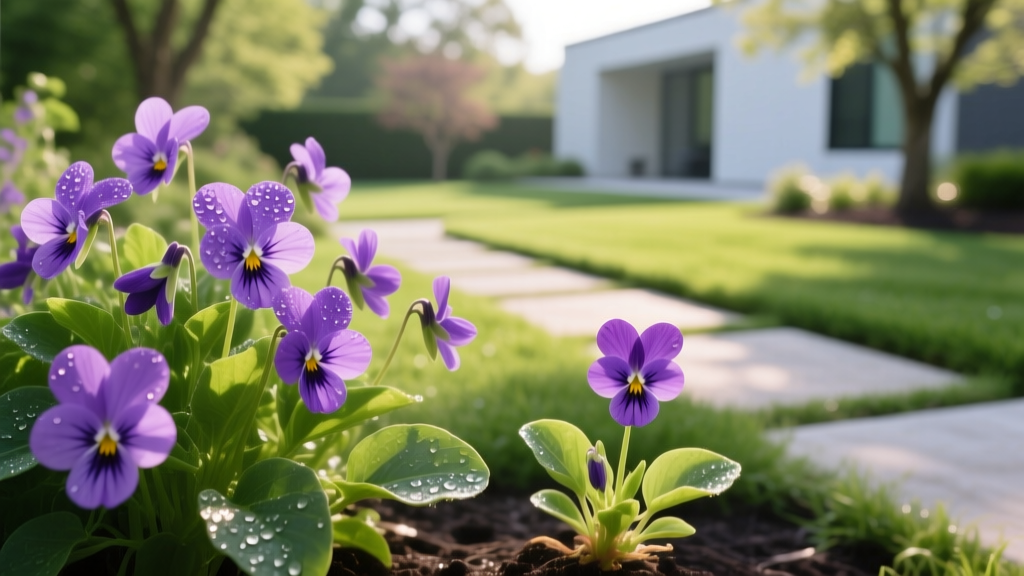
What Is the State Flower for Illinois? Violet ID and Growing Guide
When exploring native Midwestern botany or tackling a regional trivia question, you might ask: what is the state flower for Illinois? The official state flower is the Violet, specifically the Common Blue Violet (Viola sororia). Adopted over a century ago, this resilient native perennial is a staple of Illinois woodlands, prairies, and suburban garden beds.
While often dismissed as a simple lawn weed by turf enthusiasts, Viola sororia is a critical ecological keystone. It provides essential early-season nectar and serves as a primary host plant for specialized butterfly species. This guide covers the historical background, precise botanical identification, ecological benefits, and actionable cultivation techniques for integrating the Illinois state flower into your landscape.
The History Behind the Illinois State Flower
The designation of the violet as the state flower was not driven by politicians or botanists, but by students. In 1907, the Illinois General Assembly organized a statewide vote for school children to select the state flower. The Violet won by a landslide, beating out the evening primrose and the Indian pink.
'The violet was chosen by the school children of Illinois in 1907 and officially adopted by the General Assembly in 1908, symbolizing the modesty and resilience of the state's native flora.'
— Illinois State Symbols
The legislation did not specify a particular species initially, simply referring to the genus Viola. However, horticultural consensus and subsequent state publications recognize the Common Blue Violet (Viola sororia) as the definitive representative due to its widespread natural distribution across all 102 Illinois counties.
Botanical Identification: Spotting Viola sororia
Accurate identification requires examining both the floral structure and the foliage. Viola sororia is a stemless herbaceous perennial, meaning all leaves and flower stalks emerge directly from a basal rosette at the soil line.
| Feature | Specific Characteristics |
|---|---|
| Leaves | Heart-shaped (cordate), 2 to 4 inches wide, with finely toothed margins and prominent palmate venation. |
| Flowers | Five petals: two upper, two lateral (bearded with fine hairs), and one lower spurred petal. Color ranges from deep violet-blue to pale lilac. |
| Bloom Time | Mid-April through early June in USDA Zones 5-6 (typical for Illinois). |
| Height | 4 to 8 inches tall at maturity. |
| Root System | Thick, fleshy rhizomes that spread laterally to form dense colonial patches. |
The Phenomenon of Cleistogamy
One of the most fascinating botanical traits of Viola sororia is cleistogamy. While the showy spring flowers (chasmogamous) attract cross-pollinating insects, the plant produces a second set of flowers in late summer and autumn. These secondary flowers never open; they remain hidden near the soil surface beneath the leaf litter and self-pollinate. This guarantees seed production even if pollinator populations crash or weather conditions prevent insect activity. The seed pods eventually dry and explosively dehisce, flinging seeds up to 6 feet away from the parent plant.
Ecological Value: Why Violets Matter for Pollinators
Integrating the Illinois state flower into your garden provides measurable ecological benefits. According to the National Wildlife Federation, native violets are crucial larval host plants for several species of fritillary butterflies.
Pollinator Spotlight: The Fritillary Connection
The Great Spangled Fritillary (Speyeria cybele) and the Meadow Fritillary (Boloria bellona) rely almost exclusively on native violets. Female butterflies lay their eggs on or near violet foliage in late summer. The larvae hatch, overwinter in the leaf litter, and feed on the emerging violet leaves in early spring. Without a robust population of Viola sororia, local fritillary populations cannot sustain themselves.
Additionally, the showy spring flowers provide a critical early-season nectar source for native sweat bees (Halictidae) and mason bees (Osmia) emerging from winter dormancy when few other forbs are in bloom.
Cultivating Common Blue Violets in Your Garden
While Viola sororia will readily colonize a lawn on its own, deliberate cultivation in a dedicated pollinator bed or woodland garden requires specific site preparation.
- Site Selection: Choose a location with dappled sunlight or partial shade. While violets tolerate full sun, excessive heat in Zone 6 (Central Illinois) can cause summer dormancy and foliage scorch. Aim for 4 to 6 hours of direct morning sun.
- Soil Preparation: Violets prefer rich, loamy soil with high organic matter. Amend heavy clay soils—common in the Chicago basin—with 2 inches of finished compost. The ideal soil pH ranges from 6.0 to 7.8. Test your soil before planting; if pH is below 5.8, apply pelletized limestone at a rate of 5 lbs per 100 square feet.
- Planting Depth and Spacing: Plant bare-root divisions or nursery plugs in early spring or early fall. Space plants 8 to 12 inches apart to allow room for rhizomatous expansion. Ensure the crown (where the leaf stems meet the roots) sits exactly at the soil surface; burying the crown invites fungal crown rot.
- Moisture Management: Maintain consistent moisture during the first 60 days of establishment. Mature plants require approximately 1 inch of water per week. Apply a 2-inch layer of shredded hardwood mulch to retain soil moisture and suppress competing weeds, keeping the mulch 1 inch away from the violet crowns.
Violet vs. Lookalikes: Avoiding Misidentification
Foragers and botanists must distinguish Viola sororia from similar species. While most native violets are edible and ecologically valuable, accurate ID ensures you are supporting the correct local genotype.
- Confederate Violet (Viola sororia f. priceana): A naturally occurring, rare genetic variant of the common blue violet. The petals are white with a distinct blue-violet center. It is native to a few isolated counties in Illinois and should be protected rather than harvested.
- Bird's-Foot Violet (Viola pedata): Features deeply dissected, fern-like leaves resembling a bird's foot, unlike the solid heart-shaped leaves of V. sororia. It prefers dry, sandy, acidic soils and is highly susceptible to root rot in heavy clay.
- Lesser Celandine (Ficaria verna): An invasive, non-native weed that emerges at the same time as violets. It has glossy, kidney-shaped leaves and bright yellow flowers. It aggressively chokes out native spring ephemerals and must be eradicated.
For comprehensive regional identification data, consult the Illinois Wildflowers database, which provides high-resolution macro photography and county-level distribution maps.
Frequently Asked Questions
Are Illinois state flowers edible?
Yes, the leaves and flowers of Viola sororia are entirely edible. The young leaves are rich in vitamins A and C and can be eaten raw in salads or cooked like spinach. The flowers are often used as edible garnishes or frozen into ice cubes. Note that the leaves contain saponins; while safe in normal culinary quantities, consuming massive amounts can cause mild gastrointestinal distress.
Will common blue violets take over my lawn?
In a traditional turfgrass setting, Viola sororia is often classified as a broadleaf weed because it outcompetes weak Kentucky Bluegrass or Fescue in shaded, compacted soils. If you maintain a strict monoculture turf, selective broadleaf herbicides containing 2,4-D or dicamba will control them. However, many eco-conscious homeowners are now embracing 'bee lawns,' intentionally allowing violets and creeping Charlie to bloom in the grass to support early pollinators.
How do I propagate my violet patch?
The most efficient method is rhizome division. In early September, use a sharp spade to dig up the perimeter of the violet colony. Separate the fleshy rhizomes into sections, ensuring each division has at least three healthy leaf nodes and a robust root mass. Replant immediately and water thoroughly.

