
Gardening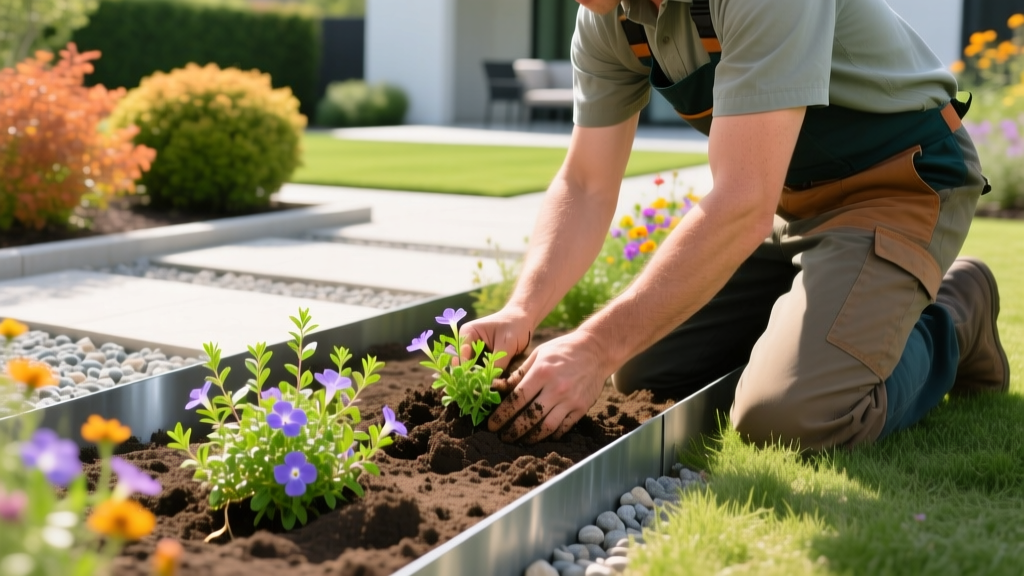
How to Plant and Contain Fast Spreading Ground Cover
The Dual Nature of Aggressive Ground Covers
Fast spreading ground covers are the ultimate solution for erosion control, shade gardening, and weed suppression. Species like creeping thyme, ajuga, and vinca can transform a barren patch of dirt into a lush carpet in a single growing season. However, their primary strength—rapid vegetative reproduction via stolons and rhizomes—is also their greatest liability. Without precise installation protocols and physical containment, these plants will invade adjacent lawns, crack walkway mortar, and choke out neighboring perennials.
This guide details the exact horticultural and structural methods required to establish aggressive ground covers while permanently restricting their boundaries. According to the University of Minnesota Extension, selecting the right plant for your specific microclimate and installing proper edging are the two most critical factors in long-term ground cover management.
Selecting Your Spreader: Growth Rates and Risk Profiles
Not all fast spreaders behave identically. Some spread via above-ground stolons (runners) that are easily trimmed, while others use aggressive subterranean rhizomes that can bypass shallow physical barriers. Below is a performance matrix for four of the most common fast-spreading options available at commercial nurseries in 2026.
| Botanical Name | Common Name | Spread Rate | Light Requirement | Containment Difficulty |
|---|---|---|---|---|
| Thymus serpyllum | Creeping Thyme | 12-18 inches/year | Full Sun | Low (Surface stolons) |
| Ajuga reptans | Bugleweed | 12-24 inches/year | Part to Full Shade | Medium (Stolons and shallow roots) |
| Lysimachia nummularia | Creeping Jenny | 24-36 inches/year | Sun to Part Shade | High (Aggressive wetland invader) |
| Vinca minor | Periwinkle | 12-18 inches/year | Shade to Part Sun | Medium (Roots at nodes) |
Ecological Warning: Lysimachia nummularia (Creeping Jenny) is classified as an invasive species in several northeastern and midwestern states due to its tendency to escape into wetlands and smother native flora. Always check your local Department of Natural Resources registry before planting it near water features or property edges.
Soil Preparation and the Math of Spacing
The most common mistake homeowners make with fast spreaders is over-purchasing plants due to a misunderstanding of spacing mathematics. Because these plants are bred to fill gaps rapidly, planting them too closely wastes money and increases fungal disease risk due to poor air circulation during the establishment phase.
Calculating Plug Quantities
Ground covers are typically sold in 72-plug or 128-plug flats. For a standard 100-square-foot garden bed, here is the exact spacing math based on a square grid layout:
- 6-inch spacing: 4 plugs per square foot = 400 plugs total. (Fills in 3-4 months; highest cost).
- 8-inch spacing: 2.25 plugs per square foot = 225 plugs total. (Fills in 6-8 months; optimal balance).
- 12-inch spacing: 1 plug per square foot = 100 plugs total. (Fills in 12-18 months; lowest cost).
For a 100-square-foot bed at 8-inch spacing, you will need three 72-plug flats. As of early 2026, commercial nursery flats of Thymus serpyllum average $55 to $75 per flat, putting your plant material cost between $165 and $225.
Soil Percolation and Amendment
Fast spreaders like creeping thyme will quickly succumb to Phytophthora root rot in compacted clay. Before planting, conduct a percolation test: dig a 12-inch deep hole, fill it with water, and let it drain completely. Refill it and measure the drop rate. If the water level drops less than 1 inch per hour, you must amend the top 6 inches of soil with 30% coarse horticultural sand or pine bark fines to ensure adequate drainage.
Step-by-Step: Installing Physical Root Barriers
Relying on chemical edging or manual trenching to stop aggressive rhizomes is a losing battle. Subterranean physical barriers are mandatory for plants like Vinca and Ajuga when planted near turfgrass or paved surfaces. The industry standard is 60-mil High-Density Polyethylene (HDPE), which costs approximately $1.50 to $2.50 per linear foot.
Pro Tip: Never use cheap landscape fabric or thin PVC as a root barrier. Rhizomes will easily pierce woven fabrics, and thin PVC will become brittle and shatter after two seasons of freeze-thaw cycles.
Installation Protocol
- Trench the Perimeter: Use a sharp half-moon edger or a motorized trencher to dig a continuous 6-inch wide trench around the entire planting bed. The trench must be exactly 16 inches deep.
- Position the HDPE: Unroll the 18-inch wide HDPE barrier into the trench. Ensure the top 2 inches of the barrier protrudes above the final grade level. This above-grade lip prevents surface stolons from creeping over the top during heavy rains.
- Seal the Seams: Where barrier sections meet, overlap them by a minimum of 6 inches. Secure the overlap using double-sided butyl flashing tape, then drive two aluminum locking stakes through the overlapped section to prevent shifting during backfilling.
- Backfill and Tamp: Fill the trench with the excavated soil, tamping it down every 4 inches with a hand tamper to eliminate air pockets that could cause the barrier to lean inward.
Ongoing Containment and Edge Maintenance
Even with a properly installed HDPE barrier, surface-running stolons (like those of creeping thyme and creeping jenny) will attempt to bypass the barrier by growing over it or rooting into mulch that has piled up against the edge. The NC State Extension Plant Database notes that regular perimeter maintenance is essential for stoloniferous species.
The Vertical Cut Method
Twice a year—once in late spring and once in early fall—perform a vertical edge cut. Using a sharp, flat spade or a half-moon edger, drive the blade straight down into the soil immediately on the outside of the barrier lip. Sever any stolons that have crept over the top. Do not use a string trimmer for this task, as it will simply shred the plant material at the surface while leaving the nodes intact to re-root.
Additionally, maintain a strict mulch protocol. Keep organic mulch at least 2 inches below the top of your root barrier. If mulch reaches the top of the barrier, the ground cover will use the mulch as a bridge to root on the outside of your containment zone.
Troubleshooting: Why Ground Covers Fail or Escape
When a fast spreading ground cover fails to thrive, or conversely, escapes its boundaries, it is almost always due to one of three specific environmental or installation failures.
Failure Mode 1: Center Die-Back (Fungal Pathogens)
If your ground cover is spreading rapidly at the edges but dying out in the center, you are likely dealing with a fungal issue exacerbated by overhead irrigation. Species like Ajuga are highly susceptible to crown rot (Sclerotium rolfsii). Switch to drip irrigation and apply a preventive bio-fungicide containing Bacillus subtilis during periods of high humidity and temperatures above 80°F.
Failure Mode 2: The Rhizome Jump
If Vinca minor or Ajuga appears on the wrong side of your HDPE barrier, inspect the soil grade. Over time, soil and organic debris build up against the barrier, effectively lowering the barrier's relative height. Once the soil level outside the bed matches the 2-inch above-grade lip, rhizomes will simply grow over it. Rake away debris from the barrier edge annually to maintain the physical drop-off.
Failure Mode 3: Nutrient Burn
Homeowners often treat ground covers like lawn turf, applying high-nitrogen synthetic fertilizers (e.g., 30-0-0). This forces excessive, weak top growth that is highly vulnerable to winter kill and fungal diseases. Ground covers require minimal feeding. Apply a single application of a slow-release, low-nitrogen organic fertilizer (such as a 4-3-4 granular blend) in early spring at a rate of just 3 pounds per 1,000 square feet.

