
Gardening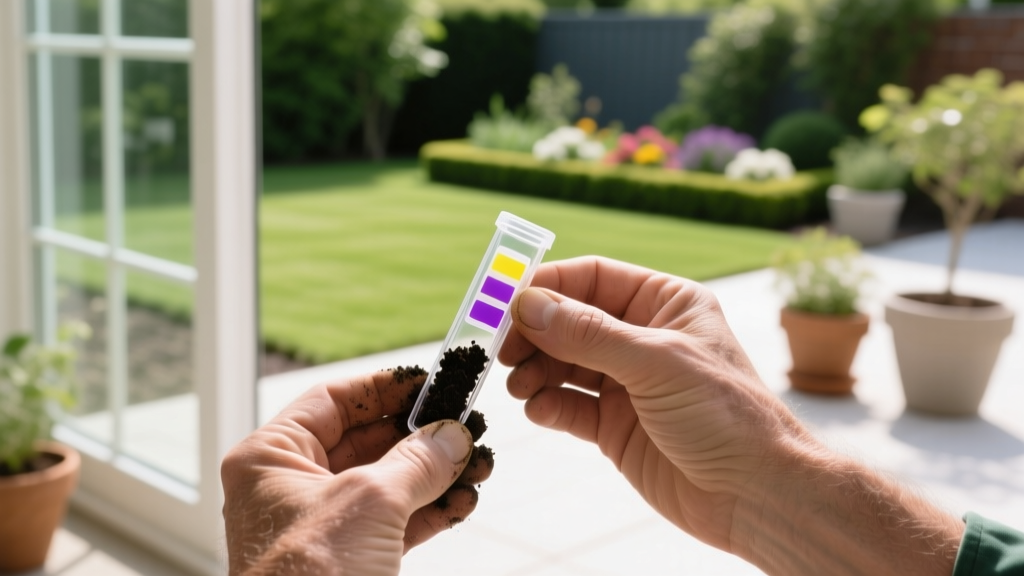
Soil Testing for Potassium: How to Read and Fix Deficiencies
Potassium (K) is the primary regulator of plant metabolism, water retention, and disease resistance. While nitrogen drives vegetative growth and phosphorus supports root development, potassium operates behind the scenes to ensure cellular turgor and enzyme activation. However, because potassium does not volatilize like nitrogen, many gardeners incorrectly assume it remains stable in the soil. In reality, K levels fluctuate based on crop removal rates, soil texture, and cation exchange capacity (CEC). Guessing your potassium needs leads to either wasted fertilizer or severe crop lockout. Accurate soil testing for potassium is the only reliable method to diagnose deficiencies and calculate precise amendment rates.
The Hidden Mechanics of Potassium in Soil
Potassium exists in soil in three distinct forms: unavailable (locked in primary minerals like feldspar), slowly available (trapped between clay layers), and readily available (dissolved in soil solution). Standard soil tests only measure the readily available and some of the slowly available fractions.
The availability of K is heavily dictated by your soil's Cation Exchange Capacity (CEC). Clay and organic matter carry a negative charge, holding onto positively charged potassium ions (K+). If your soil has a low CEC (sandy soils, typically under 10 meq/100g), potassium leaches easily with heavy rainfall. Conversely, high CEC soils (heavy clays, >25 meq/100g) hold potassium tightly but require higher total amendment volumes to shift the soil test readings. Furthermore, potassium competes with calcium (Ca2+) and magnesium (Mg2+) for binding sites. An over-application of magnesium-rich lime can induce a potassium deficiency through cation competition, even if total soil K is adequate.
Executing a Precision Soil Sample for Potassium
Lab results are only as accurate as the physical sample provided. Potassium stratifies in the topsoil, meaning improper sampling depth will skew your data.
- Tool Selection: Use a stainless steel soil probe or a clean spade. Avoid galvanized or brass tools, as zinc and copper contamination can interfere with trace mineral tests, though they won't affect K directly.
- Sampling Depth: For lawns and established perennials, sample to a depth of 4 inches. For vegetable gardens and new planting beds, sample to 6-8 inches to capture the active root zone.
- Composite Strategy: Take 10 to 15 sub-samples in a zig-zag pattern across the target area. Mix these cores thoroughly in a clean plastic bucket. Do not use metal buckets, which can introduce rust (iron) contaminants.
- Moisture Control: Air-dry the composite sample in the shade for 24 hours before bagging. Never bake soil in an oven or microwave, as extreme heat alters the chemical extractability of potassium.
According to the Texas A&M Agrilife Extension, submitting a properly homogenized, air-dried sample of at least two cups ensures the lab's automated extractants can process the soil matrix uniformly.
Decoding the Lab Report: Extractants and ppm
When your lab results arrive, the potassium reading will be listed in parts per million (ppm) or pounds per acre (lbs/ac). The extraction method used by the lab dictates how you interpret these numbers. The two most common extractants are Mehlich-3 (standard in the acidic soils of the Eastern and Southern US) and Ammonium Acetate (standard in the neutral-to-alkaline soils of the Midwest and West).
| Soil Test Rating | Mehlich-3 K (ppm) | Ammonium Acetate K (ppm) | Recommended Action |
|---|---|---|---|
| Very Low | 0 - 40 | 0 - 60 | Apply heavy base dressing; expect 30-50% yield loss without intervention. |
| Low | 41 - 80 | 61 - 120 | Apply maintenance plus build-up fertilizer rates. |
| Optimum | 81 - 150 | 121 - 200 | Apply only crop-removal replacement rates. |
| High | 151 - 250 | 201 - 300 | Zero K application needed; monitor for cation imbalance. |
| Very High | > 250 | > 300 | Stop all K inputs; risk of luxury consumption and Mg/Ca lockout. |
Understanding Base Saturation
Some advanced labs report potassium as a percentage of Base Saturation. For optimal plant health, potassium should occupy roughly 3% to 5% of the soil's CEC. If your K base saturation is below 3%, but your calcium is above 80%, the calcium is actively outcompeting potassium for root uptake sites, requiring targeted K applications regardless of total ppm.
Visual Diagnostics: Deficiency vs. Lockout
Because potassium is a mobile nutrient within the plant, deficiency symptoms always appear on older, lower leaves first. The plant cannibalizes K from aging tissue to support new growth.
- Marginal Chlorosis and Necrosis: The leaf edges turn yellow (chlorosis), eventually progressing to brown, crispy tissue (necrosis). This 'scorched' look is the hallmark of K deficiency.
- Weak Stems and Lodging: Potassium builds cellulose. Deficient plants exhibit weak stalks that easily bend or break (lodge) under wind or heavy fruit loads.
- Poor Fruit Quality: Tomatoes, melons, and peppers will show uneven ripening, blotchy coloration, and reduced sugar content (Brix levels).
The pH Lockout Factor: If your soil test shows adequate potassium but plants exhibit these symptoms, check your soil pH. In highly acidic soils (pH < 5.5), aluminum and manganese toxicity damages root hairs, preventing K uptake. In alkaline soils (pH > 7.8), potassium can precipitate with calcium. The Penn State Extension emphasizes that correcting soil pH to the 6.2–6.8 range is a prerequisite for efficient potassium utilization.
Amendment Selection and Application Math
Not all potassium sources are created equal. Choosing the wrong amendment can introduce toxic levels of chloride or take years to break down.
| Amendment | N-P-K Ratio | Release Rate | Best Use Case |
|---|---|---|---|
| Sulfate of Potash (SOP) | 0-0-50 | Fast (Water Soluble) | Chloride-sensitive crops (tomatoes, berries, potatoes). |
| Muriate of Potash (MOP) | 0-0-60 | Fast (Water Soluble) | Lawns, corn, and heavy-feeding agronomic crops. Avoid on salt-sensitive plants. |
| Greensand (Glauconite) | 0-0-6 | Very Slow (Years) | Long-term soil conditioning and trace mineral building. |
| Wood Ash (Hardwood) | 0-0-(3 to 7) | Moderate | Acidic soils needing both K and a pH raise. Do not use on alkaline soils. |
Warning: Chloride Toxicity from MOP
Muriate of Potash (0-0-60) is roughly 47% chloride by weight. While chloride is a necessary micronutrient, the massive doses introduced by MOP can cause leaf burn and stunted growth in chloride-sensitive species like strawberries, avocados, and legumes. For home vegetable gardens, Sulfate of Potash (SOP) is universally safer despite its slightly higher cost (typically $35-$45 per 50lb bag compared to MOP at $25-$30).
Calculating Exact Application Rates
Let's translate lab data into physical product. Suppose your soil test reports a Mehlich-3 K level of 50 ppm (Low), and your target is 100 ppm. You need to raise the soil K by 50 ppm.
- The Conversion Rule: Raising soil K by 1 ppm requires approximately 2 lbs of K2O per acre.
- Total Acreage Need: 50 ppm x 2 = 100 lbs of K2O per acre.
- Scale to 1,000 sq ft: An acre is 43,560 sq ft. 100 lbs / 43.56 = 2.29 lbs of K2O needed per 1,000 sq ft.
- Product Calculation (Using SOP 0-0-50): SOP is 50% K2O. Divide the required K2O by 0.50. (2.29 / 0.50 = 4.58 lbs).
Result: You must apply exactly 4.58 pounds of Sulfate of Potash per 1,000 square feet of garden space to achieve a 50 ppm increase. Broadcast this evenly and water it in to move the K+ ions into the root zone.
Frequently Asked Questions
Can I test for potassium using an at-home DIY chemical kit?
At-home dye-based kits (like the Luster Leaf Rapitest) can indicate if potassium is 'Low', 'Medium', or 'High', but they cannot provide the exact ppm or lbs/acre readings required to calculate precise amendment math. For less than $25, sending a sample to a university-affiliated lab via the UMass Amherst Soil Testing Lab provides exact Mehlich-3 or Ammonium Acetate extractant data, CEC metrics, and base saturation percentages that DIY kits simply cannot measure.
Why did my potassium levels drop after adding dolomitic lime?
Dolomitic lime contains high levels of magnesium. Because magnesium (Mg2+) and potassium (K+) are both cations, they compete for the same binding sites on clay and organic matter. A heavy application of magnesium can displace potassium from the soil colloid, pushing it into the soil solution where it is subsequently leached away by rain. Always balance your cations; if your magnesium base saturation is already above 10%, use calcitic lime instead of dolomitic.
Is foliar feeding a viable way to correct a potassium deficiency?
Foliar sprays of potassium nitrate or potassium sulfate can provide a rapid, temporary rescue for severe mid-season deficiencies, particularly during fruit set. However, the leaf surface can only absorb a fraction of the plant's total K requirement before suffering osmotic burn. Foliar feeding is a triage method, not a replacement for correcting the underlying soil deficiency via granular soil applications.

