
Gardening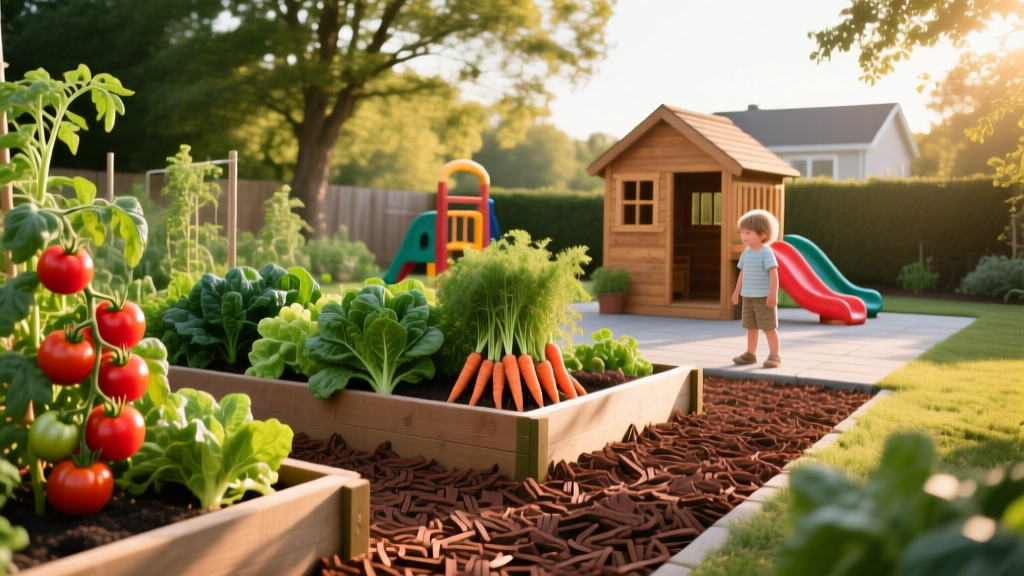
Is Rubber Mulch Safe for Vegetable Gardens and Play Yards?
The short answer to whether rubber mulch is safe depends entirely on where you intend to put it. For vegetable gardens and edible landscapes, rubber mulch is categorically unsafe due to heavy metal leaching. For playgrounds and permanent pathways, it offers superior impact attenuation and longevity, but introduces distinct environmental and fire hazards that homeowners must weigh carefully. As landscaping trends shift toward sustainable and non-toxic yards in 2026, understanding the exact chemical profile of crumb rubber is critical before making a purchase.
The Chemistry of Crumb Rubber: What is Leaching into Your Soil?
Rubber mulch is manufactured from recycled vehicle tires, which are vulcanized using a cocktail of chemicals to withstand extreme friction, heat, and weathering. When these tires are shredded into mulch, they do not become inert. Instead, they act as a slow-release mechanism for several compounds:
- Zinc Oxide: Used as a catalyst in vulcanization, tire rubber contains between 10,000 and 20,000 parts per million (ppm) of zinc. To put this in perspective, plant toxicity thresholds for zinc in soil typically begin around 200 to 300 ppm.
- Polycyclic Aromatic Hydrocarbons (PAHs): These are organic pollutants linked to carcinogenic effects. While the Environmental Protection Agency (EPA) continues to study crumb rubber exposure pathways, PAHs can leach into surrounding soil and groundwater over time, particularly in acidic environments.
- Polybrominated Diphenyl Ethers (PBDEs): Historically used as flame retardants in tire manufacturing, these persistent organic pollutants can accumulate in the local food web.
Data Highlight: Zinc Leaching Rates
Studies indicate that in soils with a pH below 6.0 (mildly acidic), zinc leaching from rubber mulch accelerates exponentially. A single cubic yard of rubber mulch can release enough bioavailable zinc to induce severe chlorosis (yellowing of leaves) and root stunting in sensitive ornamental and edible plants within a single growing season.
Studies indicate that in soils with a pH below 6.0 (mildly acidic), zinc leaching from rubber mulch accelerates exponentially. A single cubic yard of rubber mulch can release enough bioavailable zinc to induce severe chlorosis (yellowing of leaves) and root stunting in sensitive ornamental and edible plants within a single growing season.
Is Rubber Mulch Safe for Vegetable Gardens? (The Hard No)
If you are growing edibles—whether in raised beds, in-ground rows, or container gardens—rubber mulch should never be used. Root systems of common garden crops like tomatoes, peppers, and leafy greens are highly efficient at absorbing heavy metals. When zinc and cadmium accumulate in the soil profile, plants uptake these metals through their root systems, translocating them into edible tissues.
⚠️ Toxicity Warning for Edibles: Never use rubber mulch within 10 feet of a vegetable garden, fruit tree drip line, or berry bush. Runoff from rain events can carry dissolved heavy metals and microplastics from tire wear particles (TWP) directly into your edible soil beds, even if the mulch is not physically touching the garden.
Playground and Landscape Safety: Weighing the Trade-offs
Where rubber mulch shines is in non-edible, high-traffic utility areas. The Consumer Product Safety Commission (CPSC) recognizes shredded rubber as an effective loose-fill surfacing material for playgrounds due to its impact attenuation properties. When installed at a minimum depth of 6 inches, rubber mulch meets ASTM F1292 standards for critical fall height protection up to 10 feet, outperforming many organic alternatives.
The Maintenance and Longevity Advantage
Unlike arborist wood chips or pine bark, rubber mulch does not decompose. It will not harbor artillery fungus (which stains house siding), it does not provide a habitat for carpenter ants or termites, and it does not need to be topped up annually. A properly installed rubber mulch bed with a high-quality geotextile weed barrier underneath can remain structurally intact for 10 to 15 years.
Thermal and Fire Hazards in the Garden
An often-overlooked danger of rubber mulch is its combustibility and thermal retention. In an era of increasing suburban wildfire risks and dry summers, landscaping fire loads matter.
- Ignition Risk: Rubber mulch is highly susceptible to ignition from discarded cigarettes, fireworks, or nearby fire pits. Once ignited, it burns at temperatures exceeding 1,000°F.
- Toxic Smoke: Burning tire rubber releases dense, toxic plumes containing sulfur dioxide (SO2), hydrogen cyanide (HCN), and carbon monoxide. It is vastly more dangerous to breathe than wood smoke.
- Extinguishing Difficulty: Water often fails to penetrate the hydrophobic surface of burning rubber. Fire departments frequently have to dig out and physically remove burning rubber mulch to extinguish a landscape fire.
- Heat Sink Effect: Black rubber mulch absorbs intense solar radiation. On a 90°F summer day, surface temperatures of black rubber mulch can easily exceed 140°F, which can scorch the lower stems of delicate ornamental plants and burn the paws of pets.
Material Comparison Matrix: Rubber vs. Organic Alternatives
When deciding on a mulch material for your 2026 landscaping projects, use this matrix to evaluate the true cost and safety profile of your options. Pricing reflects average bulk delivery rates per cubic yard.
| Material | Cost per Cu. Yard | Lifespan | Edible Safe? | Fall Protection |
|---|---|---|---|---|
| Shredded Rubber | $250 - $380 | 10-15+ Years | No | Excellent |
| Arborist Wood Chips | $20 - $45 | 1-3 Years | Yes | Moderate |
| Pine Bark Nuggets | $40 - $65 | 2-4 Years | Yes | Poor |
| Pea Gravel (3/8 inch) | $35 - $60 | Permanent | Yes | Poor (Hard surface) |
Actionable Alternatives for Specific Garden Zones
If you have decided against rubber mulch based on the toxicity and fire data, here is what you should use instead based on your specific landscaping zone:
- For Vegetable Gardens and Fruit Orchards: Use untreated, aged arborist wood chips or straw. Wood chips slowly break down, feeding soil mycorrhizal fungi and improving the soil's cation exchange capacity (CEC), which actually helps lock up heavy metals and prevent plant uptake. Apply a 3-to-4-inch layer, keeping it 3 inches away from plant stems to prevent collar rot.
- For Permanent Pathways and Drainage Swales: Use 3/4-inch crushed angular gravel. Unlike pea gravel, angular gravel locks together, preventing it from scattering underfoot. It is completely inert, non-combustible, and provides excellent drainage without altering soil pH.
- For Playgrounds and Fall Zones: If you want an organic, non-toxic alternative to rubber that still meets ASTM F1292 fall-height standards, use Engineered Wood Fiber (EWF). EWF is specifically milled to interlock, providing a firm, wheelchair-accessible surface that absorbs impacts effectively when maintained at a 9-inch depth.
"The premise that recycled tire rubber is a 'green' landscaping product is a misnomer. While it keeps tires out of landfills, placing vulcanized rubber in direct contact with biologically active soil simply transfers the waste problem from a solid state to a dissolved, bioavailable state in your local ecosystem."
— Soil Science Synthesis, Landscape Toxicology Reports
The Final Verdict
Is rubber mulch safe? For the biological health of your soil, the safety of your homegrown food, and the fire resilience of your property, the answer is no. The upfront cost savings and zero-maintenance appeal of rubber mulch are rapidly outweighed by the long-term liabilities of zinc toxicity, microplastic shedding, and severe fire hazards. By investing in regionally sourced organic mulches or inert crushed stone, you protect both the immediate safety of your family and the long-term ecological baseline of your garden soil.

