
Gardening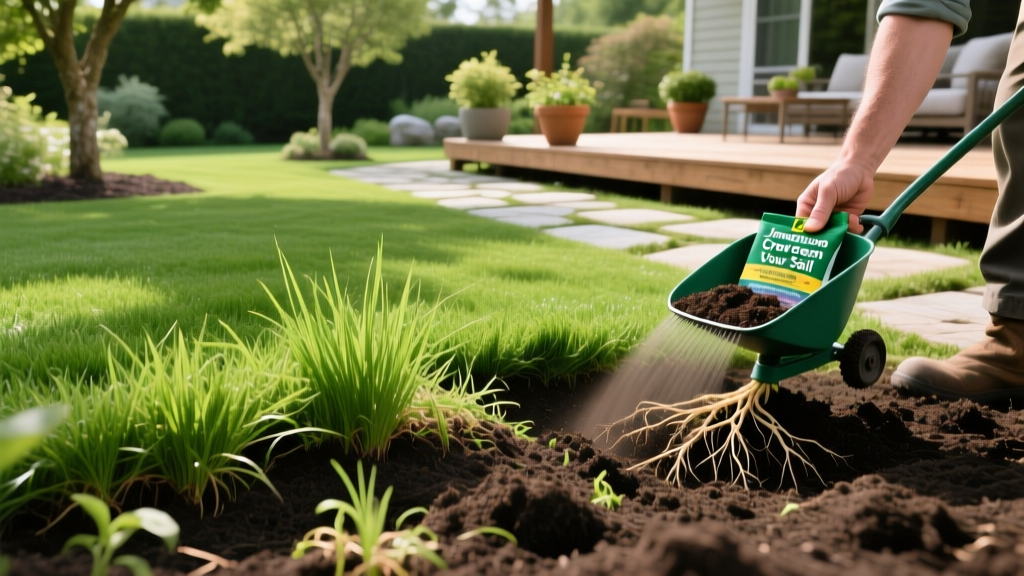
How to Use Jonathan Green Love Your Soil for Compacted Gardens
The Hidden Problem of Compacted Garden Soil
When vegetable roots struggle to penetrate the earth, or water pools on the surface of your garden beds long after a rainstorm, you are dealing with soil compaction. Compacted soil lacks the pore space necessary for oxygen exchange, water infiltration, and root expansion. For beginners tackling heavy clay or heavily trafficked garden areas, mechanical tilling often makes the problem worse by creating a hardpan layer just below the surface. According to the University of Minnesota Extension, repeated tilling destroys soil structure, making chemical and biological amendments a superior long-term strategy.
This is where Jonathan Green Love Your Soil enters the picture. Marketed primarily for lawn care, this granular soil conditioner is a highly effective, beginner-friendly tool for loosening compacted garden beds, raised beds, and perennial borders without the backbreaking labor of manual aeration.
What Exactly is in the Bag?
Jonathan Green Love Your Soil is not a traditional fertilizer. If you look at the N-P-K (Nitrogen-Phosphorus-Potassium) ratio, it is virtually zero. Instead, it is a soil amendment designed to alter the physical and biological properties of the dirt. Understanding its active ingredients is crucial for knowing how it will behave in your garden:
- Humic Acids: Derived from leonardite, these act as chelating agents, binding to tightly packed clay particles and helping to flocculate (clump) them together, which creates microscopic air pockets.
- Calcium Sulfate (Gypsum): Provides soluble calcium that displaces sodium in the soil profile, further breaking up heavy clay structures without altering the soil pH.
- Molasses and Amino Acids: These serve as immediate carbon and nitrogen food sources for indigenous soil microbes. As microbial populations boom, their movement and exudates naturally aerate the soil matrix.
Beginner Tip: Because this product contains no primary macronutrients, it will not burn your plants or vegetables. You can apply it on the same day as your standard organic or synthetic vegetable fertilizers.
Application Rates and 2026 Cost Breakdown
One of the most common beginner mistakes is over-applying soil conditioners under the assumption that "more is better." Jonathan Green Love Your Soil is highly concentrated. The standard 30-pound bag (Item #79516) covers up to 15,000 square feet for lawns, but for intensive garden beds, the application rate shifts slightly to ensure deep penetration.
| Scenario | Application Rate | Spreader Setting | Estimated Cost (2026) |
|---|---|---|---|
| Standard Garden Beds (Loam/Silt) | 2 lbs per 1,000 sq ft | Scotts Rotary: 3.5 | ~$0.10 per sq ft |
| Heavy Clay / Severely Compacted | 3 lbs per 1,000 sq ft | Scotts Rotary: 4.5 | ~$0.15 per sq ft |
| Established Raised Beds | 1.5 lbs per 1,000 sq ft | Hand broadcast | ~$0.07 per sq ft |
Note: A 30-pound bag typically retails between $45.00 and $52.00 at major home improvement stores in 2026. For small urban gardens under 500 square feet, a single bag will easily last an entire growing season.
Step-by-Step Application for Garden Beds
Applying granular amendments to garden beds requires a slightly different approach than treating a wide-open lawn. Follow this exact sequence for the best results:
- Clear the Debris: Rake away heavy mulch, dead leaves, or thick weed mats from the soil surface. The granules need to make direct contact with the soil.
- Moisten the Soil: If the ground is bone dry, water the garden lightly the night before. Damp soil helps the granules begin dissolving immediately upon contact.
- Broadcast the Granules: For large, open beds, use a handheld broadcast spreader. For tight spaces between established perennials or vegetables, use a small cup to hand-scatter the granules evenly, avoiding direct piling against plant stems.
- Lightly Scratch the Surface: Use a hand cultivator or a stiff rake to gently scratch the top 1/2 inch of soil. Do not deep-till; you just want to integrate the granules into the upper crust.
- Water Heavily: This is the most critical step. Apply at least 0.25 to 0.5 inches of water immediately after application. The humic acids and molasses must be washed into the soil profile to activate. Without water, the product will sit on the surface and degrade in the sun.
Love Your Soil vs. Traditional Aeration Methods
Beginners often wonder if they should physically aerate their garden beds instead of using a chemical/biological conditioner. The USDA Natural Resources Conservation Service (NRCS) emphasizes that minimizing soil disturbance is key to long-term soil health. Here is how Jonathan Green Love Your Soil compares to mechanical methods:
| Method | Pros | Cons | Best Use Case |
|---|---|---|---|
| Love Your Soil | No physical labor; feeds microbes; safe around existing roots. | Takes 3-4 weeks to see structural changes; requires watering in. | Established beds, perennial gardens, heavy clay lawns. |
| Core Aeration | Immediate physical relief; creates holes for topdressing. | Destroys shallow roots; impossible in tight garden beds. | Large, open turf lawns only. |
| Broadforking | Deep physical fracturing without turning the soil. | Extremely labor-intensive; requires specific expensive tools. | New, empty vegetable beds before spring planting. |
Common Beginner Mistakes and Edge Cases
Even with a high-quality product like Jonathan Green Love Your Soil, improper usage can lead to disappointment. Watch out for these specific failure modes:
- Expecting Instant Results: Unlike synthetic fertilizers that green up a plant in 48 hours, soil conditioners alter physical structure over time. Expect to see improvements in water drainage and root penetration after 3 to 4 weeks, with peak structural benefits appearing after the second application.
- Ignoring Extreme pH Levels: Humic acids are highly effective, but if your garden soil pH is below 5.5 (highly acidic) or above 8.0 (highly alkaline), nutrient lockout will still occur regardless of soil structure. Always run a basic $15 soil test before beginning an amendment regimen.
- Applying to Frozen or Saturated Ground: If the soil is already completely saturated with water, the granules will wash away into storm drains or neighboring beds before they can penetrate the soil matrix. Apply when the soil is moist, but not waterlogged.
- Skipping the Follow-Up: For severe clay soils, a single spring application is rarely enough. Plan a second application in early fall (September/October) to continue breaking down clay particles over the winter months.
Frequently Asked Questions
Can I use this in potted containers and raised beds?
Yes, but with caution. Container soils and raised beds are typically already loose, relying on potting mixes rather than native clay. If your raised bed has settled and become hydrophobic (repelling water), apply at half the standard rate (1 lb per 1,000 sq ft) and water thoroughly to re-wet the humic acids.
Will this product attract pests or rodents to my garden?
While the product contains molasses, which is a sugar source, the concentration is low and it is rapidly consumed by soil bacteria. Once watered into the soil profile, it does not leave a residual surface scent that attracts rodents, raccoons, or insects.
Is it safe for organic vegetable gardening?
Jonathan Green Love Your Soil is composed of naturally occurring organic compounds and mined minerals (gypsum, leonardite). While you should always verify with your specific local organic certification body, the ingredients are generally accepted in organic agriculture practices for soil conditioning.

