
Gardening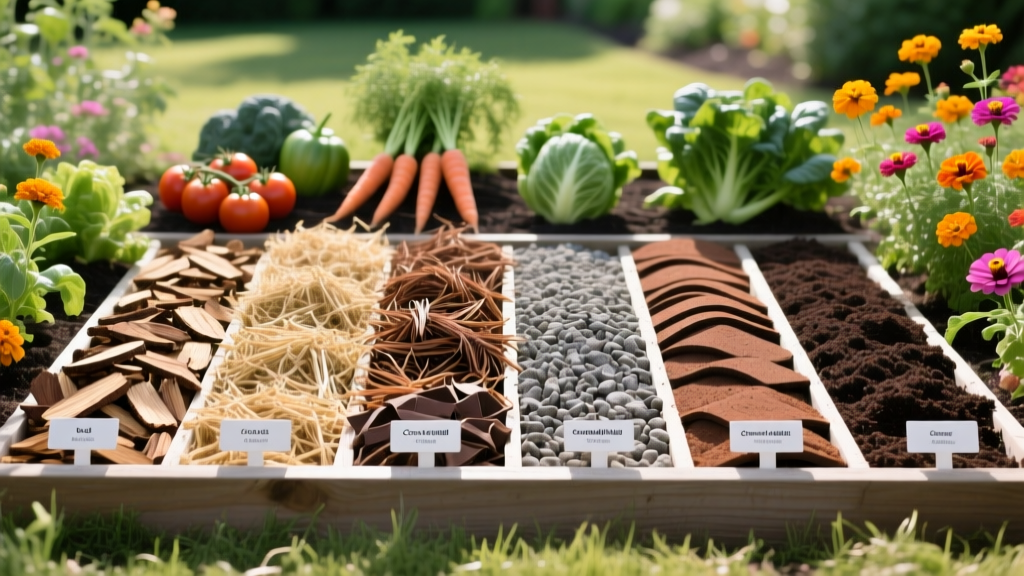
7 Kinds of Mulch Compared for Vegetable and Flower Beds
The Mechanics of Mulch: Why Material Choice Dictates Soil Health
Selecting the right ground cover is not merely an aesthetic choice; it is a fundamental soil management decision. The various kinds of mulch available to home gardeners alter soil temperature, moisture retention, microbial activity, and nutrient cycling in vastly different ways. According to Penn State Extension, a properly applied mulch layer reduces soil water evaporation by up to 70% and keeps root-zone temperatures 8°F to 13°F cooler during peak summer heat.
However, applying the wrong material to the wrong planting zone can lead to nitrogen immobilization, allelopathic toxicity, or the introduction of invasive weed seeds. To make the correct choice, you must evaluate the carbon-to-nitrogen (C:N) ratio, decomposition rate, and physical structure of the material against the specific needs of your plants.
Organic Kinds of Mulch: Feeding the Soil Food Web
Organic mulches decompose over time, adding humus to the soil and feeding mycorrhizal fungi. They are mandatory for vegetable gardens, annual flower beds, and newly established perennials.
1. Shredded Hardwood Bark
Hardwood bark is the most widely available bulk mulch in North America. It interlocks well, resisting washout on sloped beds.
- C:N Ratio: ~400:1
- Decomposition: 12 to 18 months
- 2026 Bulk Cost: $35 to $45 per cubic yard
2. Pine Bark and Pine Needles (Straw)
Pine bark nuggets and shredded pine needles are highly acidic when fresh, making them ideal for ericaceous plants like blueberries, azaleas, and rhododendrons. Pine needles allow excellent water infiltration and do not compact, which prevents the anaerobic conditions that breed root rot.
Contrary to popular belief, pine needles do not permanently acidify the soil; their pH neutralizes as they decompose. However, their initial acidity provides a temporary buffer that acid-loving plants thrive on. Apply pine straw at a depth of 3 to 4 inches, as it settles significantly.
3. Arborist Wood Chips
Sourced from local tree trimming operations, arborist chips contain a mix of wood, bark, and green leaves.
- C:N Ratio: ~600:1
- Decomposition: 2 to 4 years
- 2026 Bulk Cost: Free to $20 per cubic yard
4. Straw and Salt Marsh Hay
Straw is the gold standard for vegetable gardens, particularly for cucurbits (squash, cucumbers) and solanaceous crops (tomatoes, peppers) to keep fruit off bare soil and prevent soil-borne fungal spores from splashing onto lower leaves.
- C:N Ratio: ~80:1
- Decomposition: 1 growing season
- 2026 Bale Cost: $8 to $14 per standard bale
Organic Mulch Comparison Matrix
| Mulch Type | C:N Ratio | Decomposition Rate | Avg Cost (2026) | Best Application |
|---|---|---|---|---|
| Shredded Hardwood | 400:1 | 12-18 Months | $35-$45 / cu yd | Perennial beds, shrub borders |
| Pine Bark / Needles | 300:1 | 18-24 Months | $40-$55 / cu yd | Acid-loving plants, slopes |
| Arborist Wood Chips | 600:1 | 2-4 Years | $0-$20 / cu yd | Tree rings, pathways |
| Wheat Straw | 80:1 | 3-6 Months | $8-$14 / bale | Vegetable gardens, strawberries |
| Finished Compost | 20:1 | Continuous | $30-$40 / cu yd | Top-dressing, seed beds |
Inorganic Kinds of Mulch: Permanent Weed Barriers
Inorganic mulches do not improve soil structure or feed microbial life. They are strictly for weed suppression, moisture retention, and thermal regulation in xeriscapes or permanent hardscape-adjacent plantings.
5. Lava Rock and Pea Gravel
Lava rock is highly porous, lightweight, and retains heat, making it ideal for Mediterranean herbs (lavender, rosemary) and alpine rock gardens. Pea gravel reflects solar radiation, which can increase the ambient temperature around plant canopies by 5°F to 10°F.
- 2026 Bulk Cost: $90 to $120 per ton
6. Recycled Rubber Mulch
Made from shredded tires, rubber mulch is heavily marketed for playgrounds and low-maintenance commercial landscapes. While it never decomposes and suppresses weeds effectively, it is highly controversial in residential gardening.
Warning: Heavy Metal Leaching
Research published by the Royal Horticultural Society (RHS) and various environmental agencies indicates that rubber mulch leaches zinc, cadmium, and BPA into the soil as it degrades under UV light. Zinc levels in soil beneath rubber mulch can exceed 1,000 ppm, which is highly toxic to brassicas and leafy greens. Never use rubber mulch in or near edible gardens.
Research published by the Royal Horticultural Society (RHS) and various environmental agencies indicates that rubber mulch leaches zinc, cadmium, and BPA into the soil as it degrades under UV light. Zinc levels in soil beneath rubber mulch can exceed 1,000 ppm, which is highly toxic to brassicas and leafy greens. Never use rubber mulch in or near edible gardens.
Application Framework: Calculating Depth and Volume
Over-mulching (creating "mulch volcanoes") is a primary cause of trunk rot and shallow root asphyxiation. Follow this strict depth framework based on particle size:
- Fine Mulches (Compost, Pine Needles): 2 to 3 inches maximum. Finer particles restrict oxygen diffusion to the root zone if applied too thickly.
- Coarse Mulches (Wood Chips, Bark Nuggets): 3 to 4 inches. The larger air spaces allow gas exchange even at greater depths.
- The Donut Rule: Always pull mulch 3 to 5 inches away from the base of tree trunks and woody shrub stems to prevent crown rot and rodent girdling.
Volume Calculation Formula
To order the correct amount of bulk mulch, use this formula to convert square footage to cubic yards:
(Length in feet × Width in feet × Depth in inches) ÷ 324 = Cubic Yards
Example: A 10-foot by 15-foot flower bed requiring 3 inches of hardwood bark:
(10 × 15 × 3) ÷ 324 = 1.38 cubic yards. You would order 1.5 cubic yards from a local landscape supplier.
Frequently Asked Questions
Does wood mulch rob the soil of nitrogen?
This is a persistent myth. High-carbon mulches like arborist chips only cause nitrogen immobilization at the exact interface where the mulch touches the soil, because the microbes breaking down the carbon need nitrogen to do their work. This zone is less than an inch deep. The deeper root zone remains unaffected. However, if you till raw wood chips into the soil, you will trigger massive nitrogen drawdown throughout the root zone. Always apply wood mulch on top of the soil, never mix it in.
Are dyed mulches safe for vegetable gardens?
Most commercial black mulches are dyed with carbon black (a naturally occurring pigment), and red mulches are dyed with iron oxide. Both are generally considered safe for soil contact. The real danger lies in the wood source. Dyed mulches are frequently made from recycled shipping pallets. If those pallets were treated with Chromated Copper Arsenate (CCA) or methyl bromide, the heavy metals and toxins will leach into your garden. For edibles, only use undyed, certified virgin-wood mulch or straw.
Should I put landscape fabric under organic mulch?
No. Landscape fabric (geotextile) blocks the natural integration of organic mulch into the soil profile. As the mulch decomposes on top of the fabric, it creates a distinct, nutrient-rich layer that encourages weeds to root directly into the fabric. Furthermore, the fabric eventually clogs with soil particles, destroying its permeability and causing water to run off rather than infiltrate the root zone. Apply organic mulch directly to bare, weeded soil.

