
Gardening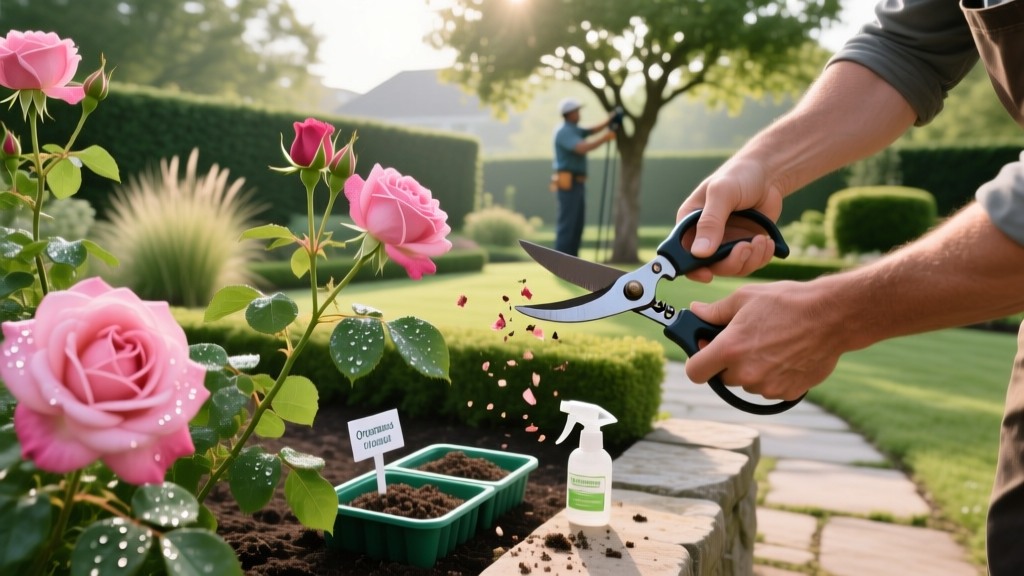
Knock Out Roses Care: Step-by-Step Pruning, Feeding, and Pest Guide
Knock Out roses (Rosa 'Radrazz' and subsequent cultivars) revolutionized modern landscaping by offering high disease resistance and continuous blooming without the intensive maintenance required by hybrid teas. However, the "low maintenance" label often leads homeowners to neglect essential horticultural practices, resulting in leggy growth, diminished bloom cycles, and vulnerability to specific pathogens. Proper knock out roses care requires a structured approach to canopy management, soil chemistry, and targeted irrigation.
The 3-Step Annual Pruning Framework
Unlike traditional roses that require meticulous cane-by-cane analysis, Knock Outs respond best to a volumetric hard prune in early spring, followed by strategic summer maintenance. Timing is critical: wait until the buds on the lower canes begin to swell and show red tissue, which typically occurs when daytime temperatures consistently reach 50°F to 55°F.
Step 1: The Early Spring Hard Prune (The 12-Inch Rule)
Using sharp bypass pruners (such as the Felco F-2 or ARS VS-8R), cut the entire shrub back to a height of 12 to 18 inches. This aggressive cut forces the plant to push vigorous new basal breaks from the rootstock or lower graft union.
- Cut Angle: Make every cut at a precise 45-degree angle.
- Placement: Position the cut exactly 1/4 inch above an outward-facing bud eye. This directs new growth away from the center of the plant, maximizing interior airflow and reducing fungal humidity traps.
- Sanitation: Remove all crossing canes, dead wood, and spindly growth thinner than a pencil. Disinfect pruner blades with 70% isopropyl alcohol between every single plant to prevent the mechanical transmission of Rose Rosette Disease (RRD).
Step 2: Summer Deadheading (Myth vs. Reality)
A common misconception in knock out roses care is that they are entirely "self-cleaning." While the petals do drop naturally, the developing rose hips (seed pods) will sap energy from the plant, slowing the next bloom cycle. To maintain a 5-to-6-week rebloom interval, shear the plant lightly with long-handled hedge shears immediately after a major flush fades. Remove the top 2 to 3 inches of flowering stems to eliminate hips and stimulate lateral budding.
Soil Chemistry and the 6-Week Fertilizer Schedule
Knock Out roses are heavy feeders that require a steady supply of macro and micronutrients to sustain their rapid vegetative growth and continuous flowering. Soil pH must be maintained between 6.0 and 6.5; outside this range, iron and manganese become chemically locked out, causing interveinal chlorosis (yellowing leaves with green veins). Test your soil annually and amend with elemental sulfur to lower pH or garden lime to raise it.
According to Clemson University HGIC, granular organic fertilizers provide a slower, more consistent nutrient release compared to synthetic water-soluble options, reducing the risk of fertilizer burn during summer heat spikes.
| Application Window | Recommended Product (NPK) | Application Rate | Estimated Cost (2026) |
|---|---|---|---|
| Early Spring (Post-Prune) | Espoma Rose-Tone (4-3-2) | 1/2 cup per plant, scratched into top 2 inches of soil | $16.00 / 4 lb bag |
| Late May (First Flush) | Espoma Rose-Tone (4-3-2) | 1/2 cup per plant | $16.00 / 4 lb bag |
| Early July (Peak Summer) | FoxFarm Happy Frog (6-4-5) | 1/2 cup per plant | $18.00 / 4 lb bag |
| Mid-August (Final Feed) | Bone Meal (3-15-0) | 1/4 cup per plant (promotes root hardiness for winter) | $12.00 / 4 lb bag |
Critical Warning: Never apply nitrogen-heavy fertilizers after mid-August. Late-season nitrogen pushes soft, succulent vegetative growth that will not have time to lignify (harden off) before the first autumn frost, leading to severe winter cane dieback.
Irrigation Mechanics: Deep Soak vs. Frequent Sprinkle
Overhead watering is the primary catalyst for black spot (Diplocarpon rosae) and powdery mildew. Knock Out roses require 1 to 1.5 inches of water per week during the growing season, delivered directly to the root zone.
Install a drip irrigation system utilizing 2 GPH (gallons per hour) pressure-compensating emitters. Place two emitters per mature shrub, positioned 12 inches from the main cane on opposite sides. Run the system for 45 to 60 minutes twice a week. This deep-soak methodology drives water 8 to 10 inches into the soil profile, encouraging deep taproot development that sustains the plant during July and August droughts.
Troubleshooting Pathogens and Pests
While bred for resistance to traditional black spot, Knock Out roses are not immune to all threats. Wisconsin Horticulture notes that the widespread planting of Knock Outs in dense, monoculture hedges has created new vulnerabilities to specific pests and viruses.
Rose Rosette Disease (RRD)
RRD is a fatal viral disease transmitted by the microscopic eriophyid mite (Phyllocoptes fructiphilus). Symptoms: Rapid, elongated "witches' broom" growth, hyper-thorny reddish canes, and deformed, strap-like leaves. Action Protocol: There is no chemical cure for RRD. If you observe these symptoms, dig up the entire plant, including the root ball, seal it in a heavy-duty contractor trash bag, and dispose of it in the municipal landfill. Do not compost the material. Treat adjacent roses with a miticide containing bifenthrin to suppress the vector mite population.
Japanese Beetles (Popillia japonica)
These metallic green and copper beetles skeletonize rose foliage in mid-summer. Action Protocol: Avoid pheromone traps, which attract more beetles to your yard than they catch. Instead, apply Bacillus thuringiensis galleriae (sold as beetleGONE!) to the foliage, or manually knock the beetles into a bucket of soapy water during the early morning hours when they are sluggish. For long-term grub control, apply Milky Spore (Paenibacillus popilliae) to the surrounding lawn in early fall.
Winterizing in USDA Zones 4 Through 6
In colder climates, the graft union (the swollen knob at the base of the canes) is highly susceptible to freeze-thaw cycle damage. Proper knock out roses care in autumn requires physical insulation.
- Stop Pruning: Cease all cutting by late September.
- Clean the Base: Rake away all fallen leaves and old mulch to eliminate overwintering fungal spores.
- The Soil Mound Method: In late November, after the ground has experienced its first hard freeze, mound 10 to 12 inches of loose topsoil or finished compost directly over the base of the plant. Do not use the soil from immediately around the rose, as digging near the base will sever critical feeder roots; bring in soil from another part of the yard.
- Spring Uncovering: Gradually wash the mound away with a gentle hose stream in early April as the soil thaws to prevent the canes from rotting in trapped moisture.
By adhering to these precise measurements, chemical schedules, and structural frameworks, your Knock Out roses will maintain dense, vigorous canopies and produce heavy, continuous blooms from late spring through the first hard frost of autumn.