
Gardening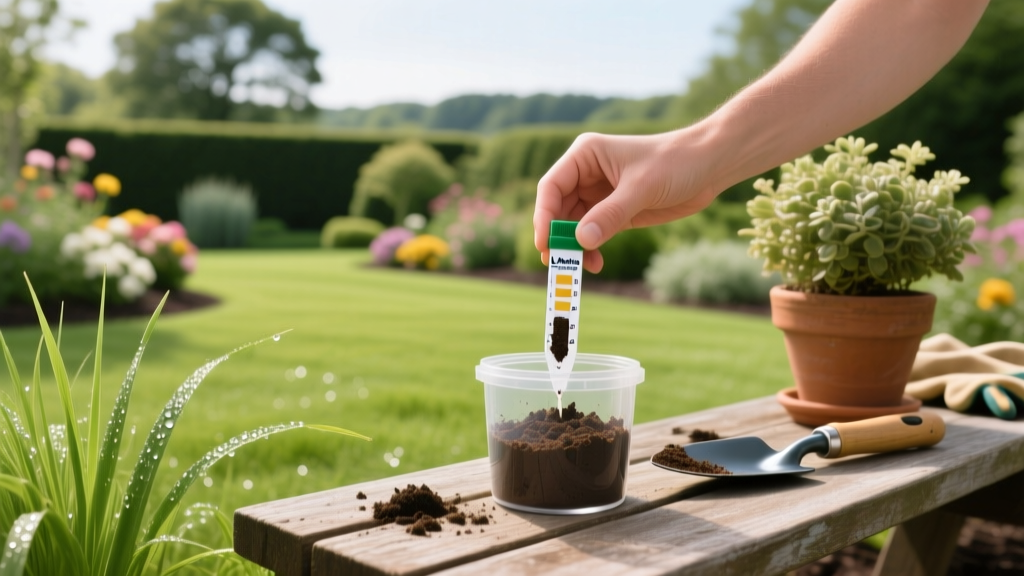
Mastering the LaMotte Soil Test Kit for Targeted Amendments
The Hidden Cost of Blind Soil Amendment
Blindly applying 10-10-10 synthetic fertilizers or dumping pelletized lime onto your garden beds without a baseline soil analysis is a fast track to nutrient lockout, salt toxicity, and wasted capital. While mail-in laboratory tests offer high precision, they take weeks to process and cost $25 to $50 per sample. For gardeners managing multiple raised beds, container mixes, or diverse mulch zones, the LaMotte soil test kit (specifically the Model 1936 STH-14) provides an optimal middle ground: laboratory-grade colorimetric analysis delivered in under 20 minutes.
This guide bypasses the generic instructions in the box. We will break down exactly how to extract accurate N-P-K and pH readings using the LaMotte colorimetric system and, more importantly, how to translate those specific color codes into precise organic soil amendment and mulch application rates.
Colorimetric vs. Digital Probes: Why LaMotte Wins for Amendments
Before diving into the methodology, it is critical to understand why chemical reagent kits outperform the $15 digital 3-in-1 soil probes sold at big-box stores. Digital probes measure electrical conductivity (EC) and estimate nutrient levels based on soil moisture and salinity. They cannot differentiate between sodium salts and actual potassium, leading to wildly inaccurate amendment recommendations.
| Testing Method | Accuracy for N-P-K | Turnaround Time | Cost Per Test | Best Use Case |
|---|---|---|---|---|
| Cheap Digital Probes | Poor (Measures EC, not specific ions) | Instant | $0.00 (after $15 purchase) | Basic moisture checking |
| LaMotte Model 1936 | High (Chemical extraction & reaction) | 15-20 minutes | ~$2.90 (based on $145 kit / 50 tests) | Targeted organic amendments |
| University Mail-In Lab | Very High (Spectroscopy) | 1-3 weeks | $25.00 - $50.00 | Baseline annual testing, heavy metals |
According to soil fertility experts at the UMass Soil and Plant Nutrient Testing Lab, chemical extraction methods that isolate specific macronutrients are the only reliable way to calculate precise amendment volumes for home gardens.
Unboxing the LaMotte STH-14: What You Are Actually Working With
The LaMotte Model 1936 (retailing around $145-$160 in 2026) is a comprehensive outfit. Unlike simpler kits that use direct soil-to-water mixing, this model utilizes a Universal Soil Extractant and a vacuum filtration system. This is the secret to its accuracy. By extracting the nutrients into a clear liquid first, you eliminate the visual interference of dark, organic-heavy garden soils and heavy mulch particles.
Key Components and Shelf Life
- Universal Extractant: The chemical solvent that pulls available N-P-K out of the soil matrix. Shelf life: 12-18 months.
- Nitrogen Reagents (N-1, N-2): Creates a pink/red complex for nitrate nitrogen. Shelf life: 6-12 months (store in cool, dark place).
- Phosphorus Reagent (P-1): Molybdenum-based, turns blue in the presence of phosphates. Shelf life: 12 months.
- Potassium Reagent (K-1, K-2): Forms a cloudy white precipitate. Shelf life: 12 months.
- pH Indicator & Buffer: Broad-range color chart from 4.0 to 8.0.
⚠️ Reagent Expiration Warning: The most common cause of false 'Very Low' readings in LaMotte kits is using expired Nitrogen reagents. The N-1 powder degrades rapidly when exposed to humidity. Always check the expiration date on the reagent bottles before planning your spring amendment strategy. If the N-1 powder has clumped or turned yellow, discard it and order replacements directly from LaMotte's official replacement portal.
Step-by-Step: Precision Extraction and Testing
Do not skip the extraction phase. Testing muddy water directly in the comparator block will skew the colorimetric readings.
- Core Sampling: Use a soil probe or trowel to take 4 to 6 cores from the top 6 inches of your garden bed. Avoid sampling directly under thick layers of undecomposed wood chip mulch, as this skews the carbon-to-nitrogen ratio. Mix the cores in a clean plastic bucket.
- The Extraction Mix: Fill the provided extraction vial to the 25mL mark with your soil sample. Add the Universal Extractant up to the 50mL mark.
- Agitation: Cap and shake vigorously for exactly 60 seconds. This physical agitation is required to break the soil aggregates and allow the extractant to bind with the nutrient ions.
- Vacuum Filtration: Assemble the LaMotte vacuum extractor. Pour the muddy slurry into the top funnel. The vacuum pulls the clear, nutrient-rich liquid through the filter paper into the collection vial. This clear liquid is your 'Extract'.
- Reagent Reaction: Transfer 2.5mL of the clear Extract into the specific test tube (N, P, or K). Add the designated reagents. Critical timing: Wait exactly 5 minutes for Phosphorus, and exactly 10 minutes for Potassium before comparing colors. Reading too early or too late will result in inaccurate ppm estimations.
Translating LaMotte Results into Exact Amendment Rates
The LaMotte color charts categorize results into five tiers: Very Low, Low, Medium, High, and Very High. The goal of targeted soil amendment is to bring 'Very Low' and 'Low' tiers up to 'Medium', while avoiding additions to 'High' tiers to prevent nutrient runoff and toxicity.
Below is a practical decision matrix for translating LaMotte N-P-K results into specific organic amendment applications per 100 square feet of garden bed space.
| LaMotte Reading | Nitrogen (N) Amendment | Phosphorus (P) Amendment | Potassium (K) Amendment |
|---|---|---|---|
| Very Low | 3.0 lbs Blood Meal OR 2.0 lbs Feather Meal | 3.0 lbs Bone Meal OR 2.5 lbs Rock Phosphate | 2.5 lbs Sul-Po-Mag (Langbeinite) |
| Low | 1.5 lbs Blood Meal OR 1.0 lbs Feather Meal | 1.5 lbs Bone Meal OR 1.0 lbs Rock Phosphate | 1.0 lbs Sul-Po-Mag OR 2.0 lbs Greensand |
| Medium | Maintain with 1-inch compost top-dress | Maintain with 1-inch compost top-dress | Maintain with 1-inch compost top-dress |
| High / Very High | Do NOT add N. Plant nitrogen-fixing cover crops. | Do NOT add P. Risk of waterway eutrophication. | Do NOT add K. Excess K blocks Calcium/Magnesium uptake. |
Adjusting for Mulch Decomposition (The C:N Factor)
When managing mulched beds, your LaMotte Nitrogen reading requires context. If you are using high-carbon mulches like arborist wood chips or straw, the soil microbes will consume available soil nitrogen to break down the carbon (nitrogen immobilization). If your LaMotte test reads 'Low' for Nitrogen in a heavily wood-chipped bed, increase your Blood Meal application by 25% to compensate for the microbial nitrogen tie-up. For detailed carbon-to-nitrogen ratios of various mulches, refer to the Cornell Waste Management Institute's composting guidelines.
pH Calibration: The Gatekeeper of Nutrient Availability
Testing N-P-K is useless if your pH is outside the optimal 6.2 to 6.8 range for most vegetable and ornamental gardens. At a pH below 5.5, phosphorus binds with aluminum and iron, becoming completely unavailable to plant roots, regardless of how much bone meal you apply.
- If LaMotte pH reads 4.5 - 5.5 (Too Acidic): Apply 5 to 8 lbs of pelletized calcitic limestone per 100 sq ft. If your soil is also low in Magnesium, substitute with dolomitic lime. Incorporate into the top 4 inches of soil; surface application takes up to 18 months to alter subsoil pH.
- If LaMotte pH reads 7.2 - 8.0 (Too Alkaline): Apply 1.5 to 2.0 lbs of elemental sulfur per 100 sq ft. Note that elemental sulfur relies on soil bacteria (Thiobacillus) to convert it to sulfuric acid. This process requires soil temperatures above 55°F and adequate moisture. Do not apply sulfur in late fall; apply in early spring.
Troubleshooting Edge Cases and Interference
'The most frequent error in home soil testing is misinterpreting a dark extract as a high nutrient reading. Always rely on the vacuum filtration step to ensure a clear baseline liquid.' — Soil Science Society of America best practices for field testing.
Muddy or Tinted Extracts
If your soil is heavily amended with dark compost or biochar, the vacuum filter may pass a brownish tint. This tint will artificially darken the Phosphorus (blue) and Nitrogen (red) comparator colors, leading to false 'High' readings. The Fix: Add a half-scoop of activated charcoal to the extraction vial before shaking. The charcoal will adsorb the dissolved organic acids (humic/fulvic acids) causing the tint, resulting in a crystal-clear extract without stripping the inorganic N-P-K ions.
High Salinity Interference
If you have heavily fertilized with synthetic salts in previous seasons, the high electrical conductivity can interfere with the Potassium precipitate test, causing the liquid to remain clear even when K is present. If you suspect high salinity, dilute your clear extract 1:1 with distilled water, run the K test again, and multiply the resulting chart reading by two.
Frequently Asked Questions
Can I test potting mixes and container soils with the LaMotte kit?
Yes, but with a caveat. Soilless potting mixes (peat, coco coir, perlite) have very low cation exchange capacity (CEC) and often contain slow-release synthetic prills. The Universal Extractant may pull a massive, immediate spike of nutrients from the prills, showing 'Very High' on the chart, while the actual long-term availability is much lower. For container mixes, test 4 weeks after potting to allow the initial fertilizer flush to stabilize.
How often should I re-test my garden beds?
Test in early spring before applying base amendments, and again in late summer if you are managing heavy-feeding crops like tomatoes or corn. Because the LaMotte kit costs roughly $2.90 per test, testing multiple zones bi-annually is highly cost-effective compared to annual lab fees.
Does the kit measure secondary macronutrients like Calcium and Magnesium?
The standard Model 1936 STH-14 does not. It is strictly N-P-K and pH. If your local extension office indicates your region is deficient in Calcium (common in sandy coastal soils), you will need to purchase LaMotte's separate Calcium test module or rely on a mail-in lab for secondary nutrient profiling.

