
Gardening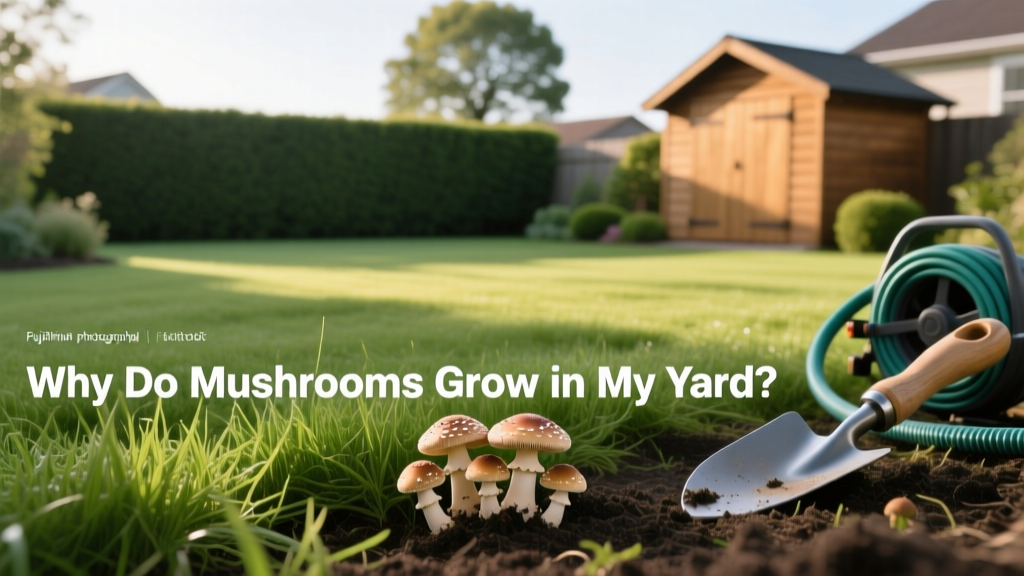
Why Do Mushrooms Grow in My Yard? Causes & Solutions
The Hidden Network: Why Mushrooms Appear in Lawns
If you have ever stepped onto your damp morning lawn and wondered, why do mushrooms grow in my yard? you are not alone. The short answer is that mushrooms are simply the fruiting bodies of a much larger, hidden underground organism called mycelium. Think of the mycelium as an apple tree, and the mushrooms as the apples it produces when conditions are right for reproduction. While seeing a sudden flush of fungi can be alarming, their presence is actually a biological indicator of specific soil conditions—namely, high moisture, abundant decaying organic matter, and compacted earth.
According to turfgrass pathologists at Penn State Extension, the vast majority of lawn mushrooms are saprophytic, meaning they feed on dead and decaying organic material. They do not attack living grass roots. However, their presence signals that your lawn's microenvironment requires cultural adjustments to restore optimal turf health and aesthetic appeal.
The 4 Primary Environmental Triggers
Mushrooms require a precise combination of moisture, temperature, and food sources to fruit. Here is a breakdown of the exact metrics that trigger fungal flushes in residential yards:
💡 The Moisture & Compaction Matrix:
Mushrooms thrive when soil moisture exceeds the turf's drainage capacity. If your lawn receives more than 1.5 inches of water per week, or if heavy clay soils prevent percolation below the top 4 inches of the soil profile, the trapped moisture creates an ideal incubator for mycelial growth.
Mushrooms thrive when soil moisture exceeds the turf's drainage capacity. If your lawn receives more than 1.5 inches of water per week, or if heavy clay soils prevent percolation below the top 4 inches of the soil profile, the trapped moisture creates an ideal incubator for mycelial growth.
- Excessive Thatch Layers: A thatch layer (the spongy mat of dead stolons and roots between the grass and soil) thicker than 0.5 inches acts like a sponge. It retains moisture at the soil surface and provides a direct food source for saprophytic fungi.
- Buried Organic Debris: Leftover construction lumber, buried tree stumps, and decaying root systems from previously removed shrubs serve as massive, slow-release food banks for species like Ink Caps and Fairy Rings.
- Shade Canopy Density: Lawns receiving less than 4 hours of direct, unfiltered sunlight struggle to dry out morning dew. This prolonged leaf and soil wetness is a primary catalyst for fungal fruiting.
- Acidic Soil Profiles: Many turf-damaging fungi prefer acidic environments. If your soil pH drops below 6.0, beneficial soil bacteria slow down, allowing fungal networks to dominate the decomposition process.
Common Yard Mushroom Identification Matrix
Before attempting removal, it is critical to identify what you are dealing with. While most are harmless to the grass, some pose severe risks to pets and children. The following matrix outlines the most frequent offenders found in North American lawns:
| Species | Cap Appearance | Pet Toxicity | Indicator Meaning |
|---|---|---|---|
| Fairy Ring (Marasmius oreades) | Tough, tan cap; forms distinct circles or arcs | Mild GI upset | Deep thatch accumulation; hydrophobic soil |
| Meadow Mushroom (Agaricus campestris) | White, dome-shaped cap; brown gills underneath | Safe (but easily confused with toxic lookalikes) | High organic matter; damp shade |
| Ink Cap (Coprinopsis atramentaria) | Gray/brown bell shape; melts into black ink | Toxic if combined with alcohol | Buried wood, stumps, or construction debris |
| Green-Spored Parasol (Chlorophyllum molybdes) | Large white cap with brown scales; green spore print | Highly Toxic (Severe vomiting) | Fertilized, nutrient-rich, heavily watered lawns |
Step-by-Step Remediation Framework
Kicking or mowing over mushrooms does not solve the problem; it merely chops the fruiting body and can actually spread spores across the lawn. To stop the flush, you must alter the subterranean environment. Follow this targeted remediation sequence:
- Perform Deep Core Aeration: Rent a walk-behind core aerator (such as a Billy Goat PL18 or Classen CA-18, typically $85 to $130 per day at local equipment rental centers). Extract 3-inch to 4-inch soil plugs on a 2-inch grid. This breaks up the compacted clay pan, allowing trapped moisture to drain deeply away from the thatch layer.
- Dethatch the Profile: If your thatch exceeds 0.5 inches, use a power dethatcher. Set the blades to penetrate exactly 1/4 inch into the soil surface. Rake and remove all extracted organic debris immediately to eliminate the fungal food source.
- Adjust Irrigation Timing: Switch from daily light watering to deep, infrequent cycles. Apply 0.75 inches of water twice a week, strictly between 4:00 AM and 8:00 AM. This ensures the grass blades dry completely before nightfall, depriving surface mycelium of the humidity it needs to fruit.
- Apply Biological Fungicides (If Necessary): Chemical fungicides like copper sulfate are largely ineffective against deep mycelial networks and harm soil biology. Instead, apply a biological control containing Bacillus amyloliquefaciens strain D747 (found in products like Monterey Complete Disease Control). This beneficial bacteria colonizes the root zone and outcompetes pathogenic and nuisance fungi for resources.
⚠️ Pet Safety Warning: Never attempt to feed lawn mushrooms to pets, and never rely on amateur identification apps to determine toxicity. The NC State Extension advises that if a dog ingests an unknown lawn mushroom, immediately collect a sample of the exact fungus, place it in a paper bag (not plastic, which accelerates decay), and take it directly to a veterinary toxicologist.
The Ecological Exception: Mycorrhizal Fungi
"Not all yard mushrooms are a symptom of turf distress. If you notice mushrooms growing exclusively in the drip line of mature oak, pine, or birch trees, you are likely witnessing mycorrhizal fungi. These are symbiotic organisms that attach to tree roots, extending their reach for water and phosphorus in exchange for plant sugars. Removing them can actually harm the host tree."
— Turfgrass & Soil Ecology Guidelines, University of Minnesota Extension
Frequently Asked Questions
Does pouring white vinegar on mushrooms kill the mycelium?
No. While household vinegar (5% acetic acid) will burn the visible mushroom cap, it does not penetrate the soil deeply enough to affect the mycelial network. Furthermore, indiscriminately applying vinegar will drastically lower your soil pH, potentially burning your grass roots and creating an even more acidic environment that favors future fungal growth.
Will applying nitrogen fertilizer get rid of them?
Applying a fast-acting nitrogen fertilizer (like a 24-4-12 synthetic blend) can accelerate the decomposition of organic matter, effectively "starving" fungi like Fairy Rings by burning through their food supply faster than they can consume it. However, this is a temporary fix and must be paired with core aeration to prevent nitrogen runoff and groundwater contamination.
How long do lawn mushrooms last?
The visible fruiting bodies typically emerge within 24 to 48 hours after a heavy rain and will naturally collapse, dry out, or melt into ink within 3 to 7 days. However, the underlying mycelium can persist in the soil for decades, waiting for the next optimal moisture and temperature trigger to produce a new flush.

