
Gardening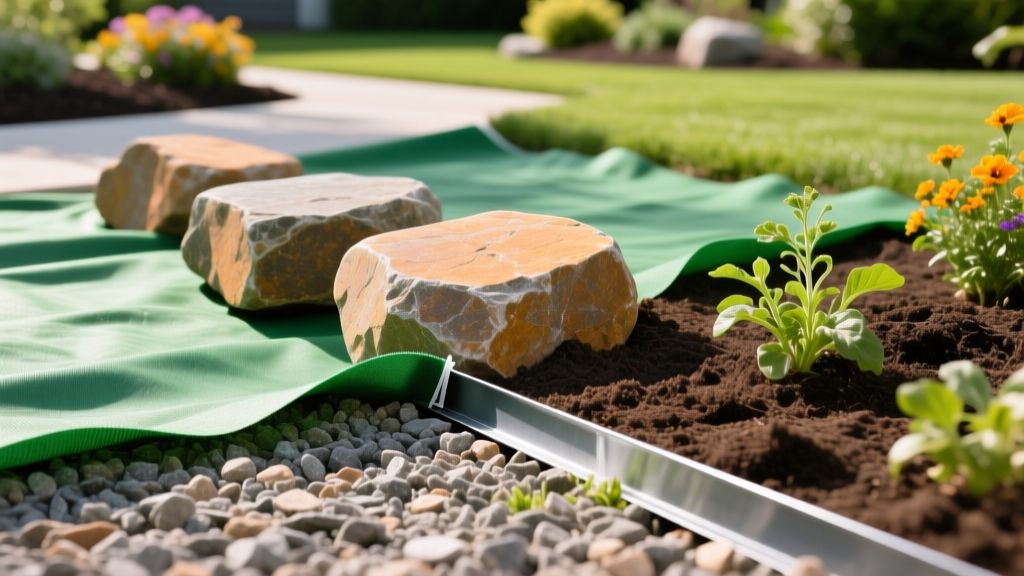
How to Lay Flower Bed Rocks: Base Prep, Edging, and Weed Control
Installing flower bed rocks is one of the most effective ways to reduce garden maintenance, improve drainage, and create sharp visual contrast in your landscaping. However, the vast majority of DIY rock installations fail within three to five years. Rocks sink into heavy clay soils, aggressive weeds like bindweed and nutsedge penetrate cheap plastic barriers, and stones migrate into adjacent turfgrass due to improper edging. To build a permanent, low-maintenance rock bed, you must engineer the base, select the correct geotextile, and install rigid borders. This guide details the exact specifications, material weights, and installation sequences required for a professional-grade flower bed rock layout.
Selecting the Right Flower Bed Rocks for Your Soil and Plants
Before ordering materials, you must match the rock type to your soil chemistry and the specific plants in the bed. Different stones interact with moisture and soil pH in distinct ways. For instance, using alkaline rocks around acid-loving plants like azaleas or blueberries will cause severe chlorosis over time. Below is a technical comparison of the most common landscape stones used in flower beds.
| Rock Type | Size Range | Avg. Cost (Per Ton) | pH Impact | Best Application |
|---|---|---|---|---|
| River Rock | 3/4' to 2' | $80 - $120 | Neutral | General flower beds, dry creek beds, high-drainage zones |
| Lava Rock | 1/2' to 1' | $110 - $150 | Slightly Acidic | Xeriscaping, heat-retention zones, succulent gardens |
| Crushed Granite | 3/8' minus | $60 - $90 | Neutral | Compacted pathways, tight borders, modern geometric beds |
| Marble Chips | 1/2' | $130 - $180 | Alkaline | Bright accent beds, alkaline-tolerant perennials, formal gardens |
Expert Insight: Avoid using stones smaller than 1/2 inch in open flower beds. Pea gravel and crushed fines easily scatter into lawn areas when hit by string trimmers and are nearly impossible to rake clean of autumn leaf litter. For standard perennial and shrub beds, 3/4-inch to 1.5-inch river rock offers the best balance of weight, drainage, and ease of maintenance.
The Hidden Failure Point: Base Preparation and Grading
The most critical step in laying flower bed rocks happens before a single stone is dropped. If you place rocks directly on top of existing topsoil, the weight of the stone combined with freeze-thaw cycles and foot traffic will drive the rocks deep into the soil matrix, effectively burying your investment and creating a muddy, weed-choked mess.
Step-by-Step Excavation Protocol
- Mark and Strip: Outline the bed using a garden hose. Strip all existing sod and topsoil to a uniform depth of 3.5 to 4 inches.
- Grade for Drainage: Use a line level to ensure the base slopes away from your home's foundation or retaining walls at a minimum grade of 1/4 inch per foot.
- Compact the Subgrade: Rent a manual or motorized plate compactor. Compact the native soil to prevent future settling. If the soil is heavy clay, score the surface with a steel rake before compacting to improve mechanical bonding with the base layer.
Warning: The Sand Trap Mistake
Many outdated landscaping guides recommend laying a 1-inch layer of sand beneath the weed barrier to smooth the base. Do not do this. When fine sand mixes with underlying clay and the weight of the rocks above, it creates a concrete-like slurry that destroys drainage and makes future rock removal nearly impossible. Always place your geotextile directly on the compacted native subgrade.
Many outdated landscaping guides recommend laying a 1-inch layer of sand beneath the weed barrier to smooth the base. Do not do this. When fine sand mixes with underlying clay and the weight of the rocks above, it creates a concrete-like slurry that destroys drainage and makes future rock removal nearly impossible. Always place your geotextile directly on the compacted native subgrade.
Installing Heavy-Duty Edging to Prevent Rock Migration
Flower bed rocks are heavy and shift laterally over time, especially on sloped terrain or when subjected to the lateral force of commercial string trimmers. Standard black plastic coil edging is entirely insufficient for rock retention; it degrades under UV exposure, becomes brittle in freezing temperatures, and buckles under the lateral pressure of 1.5-inch river rock.
Material Specifications for Permanent Edging
For a permanent installation, specify 14-gauge Corten steel or 1/8-inch heavy-gauge aluminum edging (brands like Col-Met or PermaEdge are industry standards). Corten steel develops a protective rust patina that halts further corrosion, while aluminum remains completely rust-proof in highly acidic or coastal environments.
- Height Requirement: Use a minimum 4-inch tall edging profile. This allows 3 inches to be buried below grade and 1 inch to protrude above the rock line to contain the stones.
- Anchoring: Drive 18-inch steel anchoring spikes through the pre-punched holes every 24 inches along straight runs, and every 12 inches along curved radii.
- Joint Connections: Overlap edging sections by a minimum of 6 inches and secure with heavy-duty carriage bolts, not simple slide-in stakes, to prevent joints from separating under soil pressure.
Geotextile vs. Woven Weed Barrier: Making the Right Choice
Selecting the correct fabric is where most DIY budgets fail. The thin, black, non-woven plastic sheets sold in big-box stores tear easily, block water permeability, and degrade within two seasons. According to research published by the University of Minnesota Extension, improper use of impermeable landscape fabrics can severely restrict gas exchange and water infiltration, ultimately harming the root systems of the very plants you are trying to showcase.
You must use a woven polypropylene geotextile fabric. Look for the following technical specifications on the product data sheet:
- Weight: 3.0 oz to 4.5 oz per square yard. (Lighter tears under rock weight; heavier restricts water flow).
- Permeability: Minimum 100 gallons per minute per square foot (gpm/ft²).
- Puncture Resistance: Minimum 150 lbs (ASTM D4833 standard).
Installation Technique: Roll the fabric out over the compacted subgrade. Overlap all seams by a minimum of 6 inches. When cutting holes for existing shrubs or perennials, use the 'X-slit' method: cut an X just large enough to pass the plant through, then fold the flaps tightly around the base of the stem. Never cut large circular holes, as this leaves exposed soil where weeds will immediately germinate.
Calculating Tonnage and Ordering Logistics
Ordering too little rock results in a patchy, thin layer that exposes the weed barrier to UV degradation. Ordering too much wastes money and leaves you with heavy, immovable piles of stone. Use this precise formula to calculate your requirements:
- Calculate the square footage of the bed (Length in feet × Width in feet).
- Multiply by the desired depth in feet (for standard flower bed rocks, use 3 inches, which is 0.25 feet).
- Divide the total by 27 to convert cubic feet to Cubic Yards.
- Multiply the Cubic Yards by 1.35 (the average density multiplier for landscape rock) to get the required Tonnage.
Example: A bed that is 20 feet long and 5 feet wide (100 sq ft). 100 × 0.25 = 25 cubic feet. 25 ÷ 27 = 0.92 cubic yards. 0.92 × 1.35 = 1.24 tons. Always round up to the nearest half-ton when ordering from a local quarry or landscape supply yard.
Frequently Encountered Installation Mistakes
Even with premium materials, poor execution can ruin the bed. The University of Wisconsin-Madison Extension frequently highlights the dangers of improper mulching and hardscaping around plant crowns. Avoid these critical errors:
- The Volcano Effect: Piling rocks high against the trunks of trees or the crowns of shrubs. This traps moisture against the bark, inviting fungal pathogens, rot, and rodent nesting. Always maintain a 3-inch clear, rock-free halo around all woody stems.
- Fabric Overlap Failure: Failing to overlap geotextile seams adequately. Weeds are opportunistic; a 1-inch gap in the fabric seam will result in a linear row of deep-rooted weeds that are incredibly difficult to pull without tearing the fabric.
- Ignoring the Sub-Base on Slopes: On slopes greater than a 10% grade, rocks will slowly migrate downhill over time, even with edging. On sloped beds, install cross-terracing using the same steel edging material every 4 to 6 feet to break the slope into smaller, manageable retention zones.
By adhering to these structural specifications and material grades, your flower bed rocks will remain clean, level, and weed-free for decades, providing a permanent, architectural foundation for your garden plantings.

