
Gardening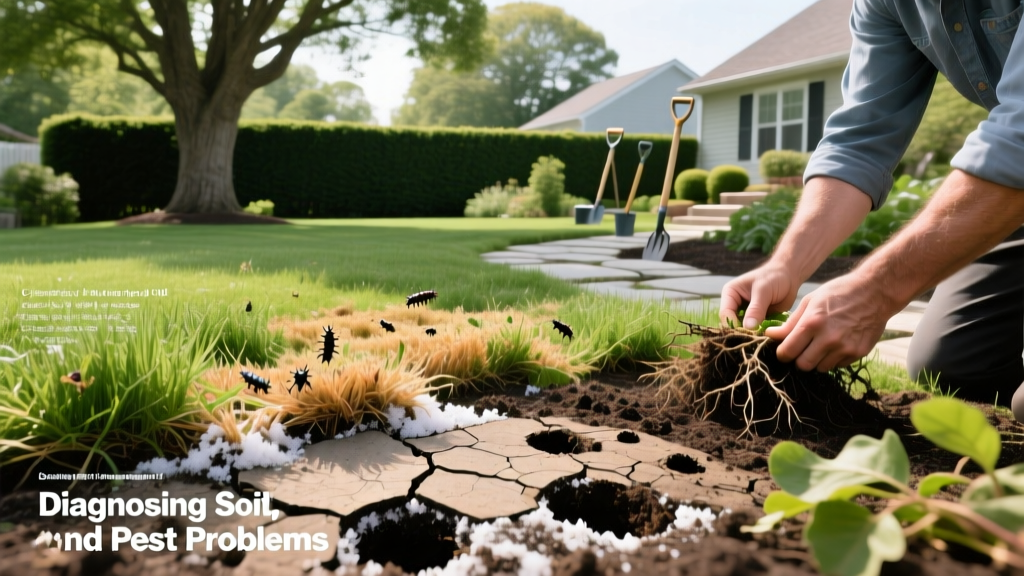
Gardening in Long Island: Diagnosing Soil, Salt, and Pest Problems
The Long Island Microclimate Matrix: Diagnosing Your Garden's Stressors
Gardening in Long Island presents a unique set of horticultural challenges dictated by its glacial geology and maritime climate. Straddling USDA Hardiness Zones 7a and 7b, the region experiences moderate winters but intense summer humidity, late spring frosts, and highly variable soil profiles. A garden in the glacial till of the North Shore faces entirely different structural failures than a coastal property on the South Shore or the North Fork. Effective problem diagnosis requires moving beyond generic planting advice and addressing the specific abiotic and biotic stressors native to this 118-mile-long island.
Before applying amendments or pesticides, accurately identify the root cause of your plant decline. Use the diagnostic matrix below to map your symptoms to their underlying environmental drivers.
| Visual Symptom | Primary Suspect | Geographic Hotspot |
|---|---|---|
| Yellowing leaves, stunted growth, rapid water drainage | Nutrient leaching in sandy loam | South Shore, Hamptons, Barrier Islands |
| Marginal leaf necrosis, dieback on windward side | Sodium chloride (salt) spray or road salt runoff | Coastal fronts, within 500ft of major parkways |
| Cleanly sliced stems, missing hosta/arbvitae foliage | White-tailed deer browsing | North Fork, Suffolk County suburbs, preserve borders |
| White powdery residue on leaves, premature defoliation | Powdery mildew (Erysiphe spp.) driven by humidity | Island-wide, worsened in stagnant air pockets |
| Waterlogged roots, chlorotic new growth, poor percolation | Heavy clay compaction and poor drainage | North Shore, Nassau County inland |
Solution 1: Correcting the North Shore Clay vs. South Shore Sand Divide
The most frequent cause of plant failure in Long Island gardens is a mismatch between plant root requirements and native soil structure. The South Shore and North Fork are dominated by sandy outwash plains. While this provides excellent drainage, it lacks cation exchange capacity (CEC), meaning water-soluble nutrients like nitrogen and potassium leach away after every heavy rainstorm. Conversely, the North Shore and inland Nassau County sit on glacial till, characterized by heavy, poorly drained clay that suffocates roots and promotes phytophthora root rot.
Amending Sandy Soils (South Shore / East End)
Do not rely solely on peat moss or standard topsoil, which break down rapidly in high-sand environments. Instead, integrate horticultural biochar (such as Wakefield Biochar, approximately $35 per cubic foot). Biochar provides a permanent, porous carbon structure that increases the soil's CEC and retains moisture. Apply a 2-inch layer of biochar mixed with 2 inches of finished compost, and till to a depth of 8 inches. This creates a sponge-like matrix that holds fertilizer in the root zone.
Fracturing Clay Soils (North Shore / Nassau)
Avoid adding sand to clay, which creates a concrete-like matrix. The correct amendment is expanded shale (often sold under the brand name PermaTill or ESCS, costing roughly $45 to $60 per cubic yard). Expanded shale permanently fractures heavy clay, creating macropores for oxygen and water movement without altering the soil pH. Incorporate 3 inches of expanded shale into the top 10 inches of the planting bed before installing perennials or shrubs.
Solution 2: Mitigating Coastal Salt Spray and Winter Road Salting
Properties within a half-mile of the Atlantic Ocean, Long Island Sound, or major thoroughfares like the Southern State Parkway face severe sodium chloride exposure. Salt draws moisture out of plant tissues via osmosis, causing "salt burn" that mimics drought stress but occurs even when soil is moist.
Diagnostic Tip: To differentiate salt damage from winter desiccation, examine the plant's orientation. Salt spray damage will be heavily concentrated on the windward side (typically the south or southwest side facing the prevailing winter winds), while the leeward side remains green. Winter desiccation affects the entire plant uniformly.
The Gypsum Flush Protocol: If your soil tests high in sodium, apply pelletized gypsum (calcium sulfate) at a rate of 50 lbs per 1,000 square feet in early April. The calcium ions in gypsum displace the sodium ions on the soil clay particles, allowing the sodium to be flushed below the root zone by spring rains. Follow this with a deep, 2-hour irrigation cycle using a sprinkler to physically wash residual salt off evergreen foliage.
For new installations in high-salt zones, bypass sensitive species like Japanese Maples or Hydrangeas. Opt for verified halophytic (salt-tolerant) natives such as Rosa rugosa (Beach Rose), Prunus maritima (Beach Plum), and Morella pensylvanica (Northern Bayberry).
Solution 3: Managing High-Humidity Fungal Pathogens
Long Island's maritime summers bring prolonged periods of 80°F+ temperatures combined with 80%+ relative humidity. This creates an ideal incubation environment for powdery mildew (Erysiphe spp.) on susceptible ornamentals like Phlox paniculata, Monarda didyma (Bee Balm), and Syringa vulgaris (Lilac), as well as downy mildew on cucurbits in vegetable gardens.
Targeted Fungicide Protocol
Many gardeners default to Neem oil for fungal issues. However, applying horticultural oils when Long Island daytime temperatures exceed 85°F will cause severe phytotoxicity (leaf burn). Instead, utilize potassium bicarbonate (available in products like GreenCure). Potassium bicarbonate acts as a contact fungicide that instantly raises the pH on the leaf surface, creating an alkaline environment where fungal spores cannot germinate.
- Preventative Application: Mix 1 tablespoon of potassium bicarbonate and 1/2 teaspoon of liquid non-detergent soap (as a surfactant) per gallon of water. Spray every 10 days starting in mid-June, before visible symptoms appear.
- Curative Application: If white mycelium is already visible, increase the concentration to 2 tablespoons per gallon. Apply in the early evening to allow the solution to dry slowly and maximize contact time without sun scorch.
- Biological Control: For edible crops like squash and cucumbers, apply a preventative drench of Bacillus amyloliquefaciens strain D747 (e.g., BioWorks Cease) to establish a protective bacterial barrier on the leaf cuticle.
Pest Pressure: Deer Browsing and Tick Vector Management
The white-tailed deer population in Suffolk County frequently exceeds 100 deer per square mile in rural-suburban transition zones, leading to catastrophic browsing damage. Concurrently, the black-legged tick (Ixodes scapularis), the primary vector for Lyme disease, thrives in the leaf litter and tall grasses of Long Island's suburban edges.
Warning on Deer Fencing: A standard 8-foot vertical deer fence is frequently breached by Long Island deer populations accustomed to human barriers. For high-value garden beds, install a slanted fence (angled outward at 45 degrees, 6 feet high) or a double-row fence (two 4-foot fences spaced 4 feet apart). Deer will not jump into a space where they cannot gauge the landing zone or feel they have room to clear the second barrier.
To manage tick populations without broadcasting broad-spectrum pesticides that harm native pollinators, deploy Tick Control System (TCS) boxes or Damminix Tick Tubes. Tick tubes contain permethrin-treated cotton. White-footed mice (the primary juvenile tick host) gather the cotton for their nests, which kills the larval ticks feeding on them. Place tubes every 30 feet along stone walls, woodlines, and brush piles in late May and again in late July to target both larval and nymphal life stages. For comprehensive property management, consult the NYS IPM tick guidelines for the latest integrated pest management strategies.
Seasonal Triage Checklist for Long Island Gardeners
Maintain this chronological workflow to preemptively address regional stressors before they cause irreversible plant decline:
- Early April (Post-Thaw): Test soil salinity near roadways and oceanfronts. Apply gypsum to sodium-affected beds. Prune out winter-killed, salt-burned wood from evergreens.
- Mid-May (Frost Risk): Hold off on planting tender annuals and warm-season vegetables (tomatoes, peppers) until after the historical last frost date (typically May 15-20 for inland, May 5-10 for coastal).
- June (Fungal Prevention): Deploy tick tubes along property perimeters. Begin potassium bicarbonate spray regimen for powdery mildew-susceptible perennials.
- July/August (Heat & Drought): South Shore sandy soils require deep, infrequent watering (1 inch per week, applied in a single 2-hour session) to drive roots downward, rather than daily shallow sprinkling.
- November (Winterization): Wrap vulnerable broadleaf evergreens (like Rhododendrons) in burlap to protect against desiccating northwest winds and salt spray from nearby roads.
By aligning your cultural practices with Long Island's specific geological and climatic realities, you transition from reactive plant replacement to proactive landscape management. For localized soil testing and cultivar recommendations, always refer to the Cornell Cooperative Extension of Suffolk County or the NYS IPM deer management resources to ensure your strategies remain ecologically sound and highly effective.

