
Gardening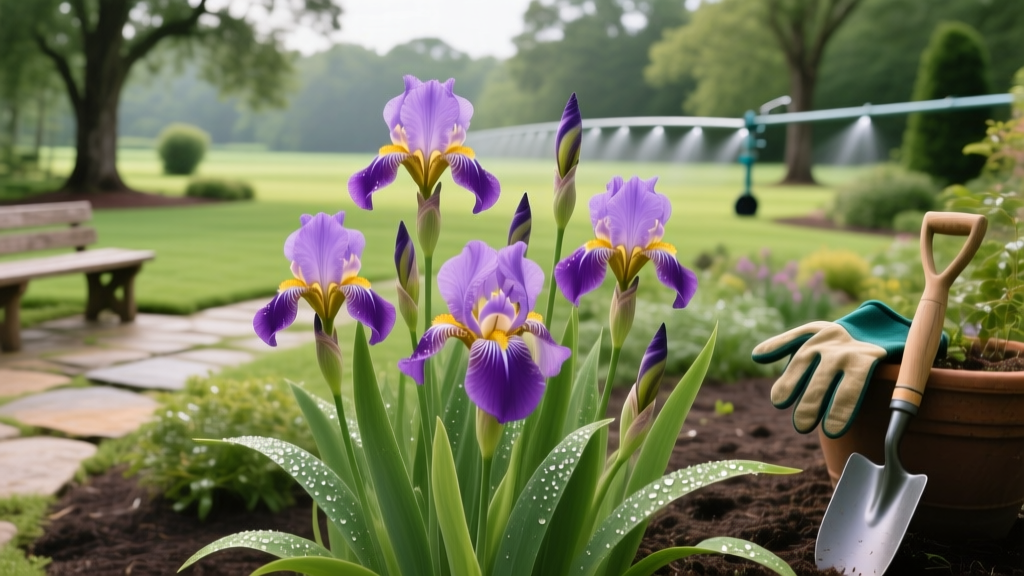
Louisiana Flower Iris: Practical Planting and Care Guide
The Louisiana flower iris (comprising Iris giganticaerulea and its complex hybrids) stands apart from nearly every other iris species in cultivation. Unlike the popular bearded irises that demand dry, alkaline conditions and shallow planting, the Louisiana flower is a water-loving, acid-soil native that thrives in heavy clays and shallow bogs. When cultivated correctly, these hexaploid giants produce massive, flat-faced blooms up to 7 inches across in striking shades of deep violet, copper, yellow, and pure white.
This practical guide details the exact soil chemistry, hydration metrics, and planting protocols required to successfully establish and maintain Louisiana irises in your landscape, whether you are integrating them into a terrestrial perennial bed or a submerged water feature.
Botanical Profile and Hexaploid Genetics
To understand the cultural requirements of the Louisiana flower, you must understand its genetic makeup. Modern hybrids are derived from five native North American species: I. giganticaerulea, I. fulva, I. hexagona, I. brevicaulis, and I. nelsonii. According to the American Iris Society, the interbreeding of these species has resulted in hexaploid hybrids (possessing six sets of chromosomes, or 42 in total). This genetic density is directly responsible for their unusually large flower diameter, thick petal substance, and vigorous, sprawling rhizome growth.
Quick Cultural Statistics
- USDA Hardiness Zones: 6b through 10b
- Target Soil pH: 5.5 to 6.5 (Strictly Acidic)
- Planting Depth: 1 inch of soil over the rhizome
- Mature Spread: 18 to 36 inches per clump
- Bloom Window: Late March through May (Zone dependent)
Soil Preparation: The Acidic Imperative
The most common failure point for gardeners attempting to grow the Louisiana flower is improper soil pH. These irises require acidic soil to absorb iron and manganese. If planted in neutral or alkaline soils (pH 7.0 or higher), the plants will rapidly develop iron chlorosis, characterized by severe yellowing of the foliage with distinct green veins, followed by stunted growth and bloom failure.
Before planting, test your native soil. If your pH is above 6.5, you must amend the bed. Incorporate elemental sulfur at a rate of 1.5 pounds per 100 square feet to drop the pH by approximately 0.5 points. For immediate acidification and organic matter enrichment, mix sphagnum peat moss and composted pine bark into the top 8 inches of the soil profile.
| Native Soil Type | Amendment Ratio (per 10 sq ft) | Primary Objective |
|---|---|---|
| Heavy Clay (Gumbo) | 3 cu ft composted pine bark + 1 lb gypsum | Improve drainage while retaining moisture |
| Sandy Loam | 4 cu ft sphagnum peat moss + 2 lbs bentonite clay | Increase water retention and lower pH |
| Alkaline Clay (pH > 7.2) | Raised bed with 100% peat/pine bark mix + elemental sulfur | Bypass native alkalinity entirely |
Step-by-Step Planting Protocol
Unlike bearded irises, which are planted with the top half of the rhizome exposed to the sun, Louisiana irises will desiccate and die if left uncovered. The rhizomes must be buried, but not so deeply that they suffocate.
- Hydrate the Rhizomes: If your rhizomes were shipped bare-root, soak them in a bucket of water mixed with a root-stimulating hormone (such as 0.1% IBA) for 12 to 24 hours before planting.
- Dig the Trench: Excavate a trench 3 inches deep and wide enough to accommodate the root fan without bending or crowding the fleshy roots.
- Positioning: Place the rhizome horizontally. Ensure the growing tip (the fan of leaves) is pointing in the direction you want the clump to expand.
- Cover and Firm: Backfill with exactly 1 inch of your amended acidic soil. Gently firm the soil with your hands to eliminate large air pockets, but do not compact it heavily.
- Mulch Heavily: Apply 2 to 3 inches of pine straw or shredded pine bark over the bed. Never use hardwood mulch, as it breaks down to produce alkaline conditions that will raise your soil pH.
Hydration and Water Table Management
The Louisiana flower is uniquely adapted to hypoxic (low-oxygen) soil environments. While they can be grown in standard garden beds, they require significantly more water than typical perennials. According to data compiled by the National Gardening Association, these irises require a minimum of 1.5 to 2 inches of water per week during the active growing season (February through May).
Terrestrial vs. Aquatic Cultivation
Terrestrial Beds: Plant in a low-lying area of the garden or near a downspout. Use drip irrigation to keep the soil consistently soggy. The soil should feel like a wrung-out sponge at all times.
Aquatic/Pond Margins: Louisiana irises can be planted in aquatic baskets and submerged in pond margins. However, the water level must not exceed 2 to 4 inches above the soil crown. Submerging the foliage crown for extended periods will cause bacterial soft rot.
Fertilization and Nutrient Loading
Because they are heavy feeders growing in high-moisture environments, nutrients leach quickly from the soil profile. Avoid standard lawn fertilizers or high-nitrogen synthetic blends, which promote excessive, weak foliage growth at the expense of blooms and increase susceptibility to fungal diseases.
Apply an acidic, slow-release organic fertilizer such as Espoma Holly-tone (4-3-4 NPK) or a specialized azalea/camellia blend. Apply 2.5 pounds per 100 square feet in late February as the fans begin to emerge, and make a second application immediately after the bloom cycle finishes in late May to fuel next year's rhizome expansion.
Expert Insight: If your municipal water supply is highly alkaline (common in the Midwest and Southwest), regular watering will slowly neutralize your acidic soil amendments. Drench the beds with a liquid chelated iron supplement and an acidifying soil drench (like aluminum sulfate) twice a year to counteract the buffering effect of hard tap water.
Troubleshooting: Pests and Fungal Pathogens
While the iris borer (Macronoctua onusta) is a devastating pest for bearded irises in northern climates, it is rarely a significant threat to Louisiana irises in the deep South. The primary adversaries of the Louisiana flower are fungal pathogens exacerbated by poor air circulation and overhead watering.
- Leaf Spot (Mycosphaerella macrospora): Manifests as small, water-soaked lesions that turn brown with yellow halos. Fix: Remove and destroy all infected foliage in the fall. Apply a preventative copper-based fungicide or chlorothalonil spray every 14 days during humid spring weather.
- Rhizome Rot (Erwinia carotovora): Causes the rhizome to turn into a foul-smelling, mushy liquid. This is almost always caused by planting too deeply or allowing water to pool over the leaf crown. Fix: Dig up the clump, cut away the rotting tissue with a sterilized knife until only firm, white tissue remains, dust the cut with agricultural sulfur, and replant at the proper 1-inch depth.
Frequently Asked Questions
How often should I divide my Louisiana flower irises?
Divide the clumps every 3 to 4 years, or when the center of the clump becomes barren and stops producing foliage. The optimal window for division is late summer (late August through September), allowing the rhizomes 8 weeks to establish new roots before the winter dormancy period.
Can Louisiana irises survive freezing winter temperatures?
Yes, they are surprisingly cold-hardy. While they are native to the Gulf Coast, established clumps of I. giganticaerulea hybrids can survive winter temperatures down to -5°F (Zone 6b), provided the soil remains consistently moist and the rhizomes are protected by a 3-inch layer of pine straw mulch.
Why are my irises producing lush green leaves but no flowers?
Failure to bloom is typically caused by one of three factors: insufficient sunlight (they require a minimum of 6 hours of direct, unfiltered sun), planting the rhizomes too deeply (which suppresses the floral initiation nodes), or excessive nitrogen fertilization, which forces the plant to prioritize vegetative growth over reproductive structures.

