
Gardening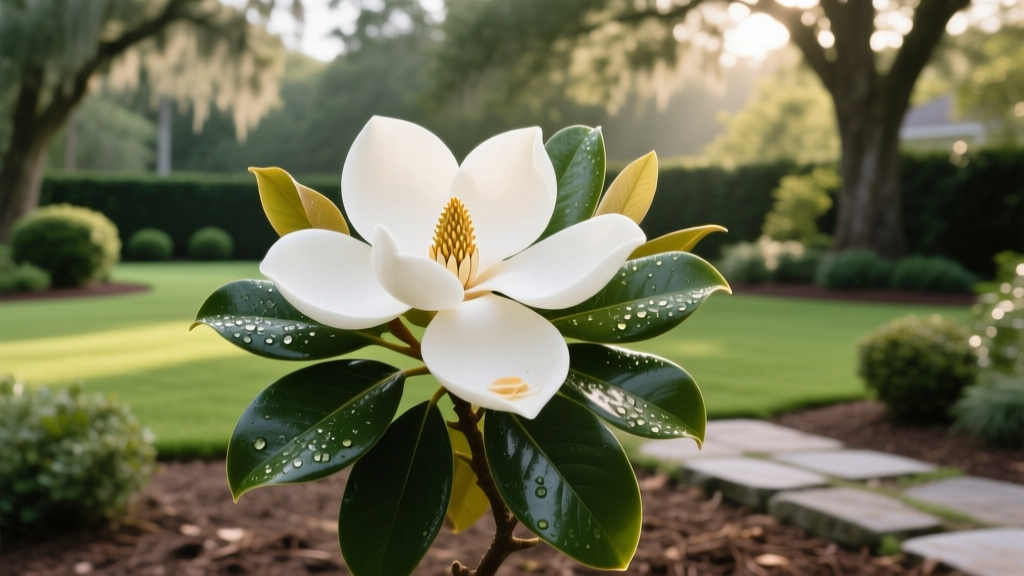
What Is Louisiana's State Flower? Growing the Southern Magnolia
The Official State Flower: Magnolia grandiflora
The answer to the question of what is Louisiana's state flower is the Southern Magnolia (Magnolia grandiflora). Officially designated by the state legislature in 1900, this broadleaf evergreen tree was chosen for its abundant, fragrant white blossoms and its deep historical roots in the Deep South. While many associate Louisiana with the vibrant blooms of the French Quarter or the bayous, the Magnolia remains the definitive floral emblem of the state, thriving in USDA Hardiness Zones 7 through 9.
Beyond its symbolic value, Magnolia grandiflora is a cornerstone of Southern landscaping. According to the USDA Forest Service, these trees can reach towering heights of 60 to 80 feet in the wild, with trunk diameters exceeding 36 inches. For home gardeners, however, modern breeding has introduced compact cultivars that deliver the same iconic, lemon-scented 12-inch blooms without overwhelming a residential yard.
Botanical Identification: How to Spot a Southern Magnolia
Identifying a Southern Magnolia requires looking at three distinct morphological features. Unlike deciduous magnolias (such as the Saucer Magnolia) that bloom on bare wood in early spring, the Southern Magnolia is evergreen and blooms intermittently from late May through the summer.
- Foliage: Leaves are large (5 to 10 inches long), leathery, and feature a striking two-tone appearance. The upper surface is a glossy, deep forest green, while the underside is covered in a dense, rusty-brown fuzz known as an indumentum. This fuzzy layer protects the leaf from excessive moisture loss and intense UV radiation.
- Flowers: The blossoms are solitary, terminal, and massive—often spanning 8 to 12 inches in diameter. They consist of 6 to 12 thick, waxy white tepals and emit a heavy, sweet citrus fragrance.
- Fruit: Following pollination, the tree produces a 3- to 5-inch woody, cone-like aggregate fruit. As it matures in autumn, the follicles split open to reveal bright, fleshy red seeds that are highly attractive to songbirds and squirrels.
State Flower vs. State Wildflower: A Common Confusion
When researching what is Louisiana's state flower, gardeners often confuse the official state flower with the state wildflower. In 1990, Louisiana designated the Louisiana Iris (specifically the Iris hexagonae series and its hybrids) as the official state wildflower. While the Magnolia represents the state's arboreal and historical heritage, the Louisiana Iris represents its unique wetland ecosystems. If you are planting a pollinator garden focused on native state flora, incorporating both a dwarf Magnolia cultivar and a bog garden for Louisiana Irises provides a complete representation of the state's botanical identity.
Top Cultivars for Home Landscapes
The straight species of Magnolia grandiflora is often too massive for modern suburban lots, and its tendency to drop large, leathery leaves year-round can smother underlying turfgrass. To solve this, horticulturists have developed several cultivars tailored for smaller footprints and denser flowering. Below is a comparison matrix of the most reliable cultivars for residential planting.
| Cultivar | Mature Height | Growth Rate | Key Characteristics |
|---|---|---|---|
| 'Little Gem' | 15 - 20 ft | Slow | Compact, dense canopy; blooms heavily at a very young age; ideal for patios and large containers. |
| 'Kay Parris' | 20 - 30 ft | Fast | Smaller, glossy leaves with coppery undersides; extremely prolific bloomer; faster growing than 'Little Gem'. |
| 'Bracken's Best Beauty' | 30 - 40 ft | Moderate | Exceptional cold hardiness; uniform branching; excellent choice for the northern edges of the Magnolia's hardiness range. |
| 'D.D. Blanchard' | 40 - 50 ft | Moderate | Striking two-tone foliage with very dark green tops and rich rusty-brown indumentum; classic pyramidal form. |
Step-by-Step Planting and Soil Preparation
Southern Magnolias are highly sensitive to improper planting depth and poor drainage. According to the Clemson Cooperative Extension, magnolias require well-drained, slightly acidic soil to thrive. Follow these exact parameters for successful establishment:
- Test and Amend Soil pH: Magnolias require a soil pH between 5.0 and 6.5. If your soil tests above 7.0, incorporate elemental sulfur at a rate of 1 pound per 100 square feet to lower the pH gradually over several months. Iron chlorosis (yellowing leaves with green veins) is a primary failure mode in alkaline soils.
- Excavate the Planting Hole: Dig a hole that is exactly the same depth as the root ball, but 2.5 times as wide. Never plant a magnolia deeper than it was growing in its nursery container. Burying the root flare invites collar rot and fatal fungal infections like Phytophthora.
- Address Circling Roots: Before placing the tree in the hole, use a sterilized pruning saw to shave off the outer 1 inch of the root ball. This severs circling nursery roots and stimulates outward radial growth, preventing the tree from girdling itself a decade later.
- Backfill and Hydrate: Backfill with the native soil you excavated. Do not amend the backfill with heavy compost or peat moss, as this creates a 'bathtub effect' where water pools in the loose soil and drowns the roots. Water deeply with 10 to 15 gallons immediately after planting to collapse air pockets.
- Apply Mulch Correctly: Spread a 3- to 4-inch layer of pine bark mulch over the root zone to retain moisture and moderate soil temperature. Crucially, keep the mulch at least 4 inches away from the trunk bark to prevent rodent damage and fungal trunk cankers.
Ongoing Care, Pruning, and Pest Management
Once established (typically after 2 to 3 growing seasons), Southern Magnolias are remarkably drought-tolerant and require minimal intervention. However, specific maintenance routines will maximize bloom production and canopy density.
Fertilization Protocol
Feed established trees in early March, just before the spring growth flush. Use a slow-release, acid-forming fertilizer with an NPK ratio of 8-8-8 or 12-4-12. Apply 1 cup of fertilizer per inch of trunk diameter, broadcasting it evenly from the drip line inward to about 1 foot away from the trunk. Avoid high-nitrogen synthetic fertilizers, which promote excessive, weak vegetative growth at the expense of flower bud formation.
Pruning Guidelines
Magnolias bleed sap heavily if pruned at the wrong time and heal slowly. Limit pruning to the removal of dead, damaged, or crossing branches. If you must prune for clearance or shape, do so immediately after the main flowering period concludes in late July. Never use pruning sealants or wound paints on magnolia cuts; these trap moisture and accelerate wood decay. Allow the tree to compartmentalize the wound naturally.
Troubleshooting Pests: Magnolia Scale
The most destructive pest targeting Magnolia grandiflora is the Magnolia scale (Neolecanium cornuparvum). These insects appear as small, waxy, brown or pink bumps on the undersides of young twigs. They suck phloem sap and excrete a sugary substance called honeydew, which rapidly cultivates black sooty mold on the leaves below.
Treatment Timing is Critical: Spraying contact insecticides on adult scale insects is ineffective due to their protective waxy armor. You must target the 'crawler' stage. In most regions, crawlers emerge in late August through September. Apply a 2% to 3% horticultural oil spray during this window to suffocate the nymphs. Alternatively, apply a systemic soil drench containing imidacloprid in early spring (mid-April), using a rate of 1.5 tablespoons per inch of trunk diameter, allowing the tree's vascular system to distribute the treatment to the feeding insects.
Frequently Asked Questions
Why is my Southern Magnolia dropping yellow leaves in the spring?
This is a normal physiological process. As the tree pushes out new spring growth, it sheds its oldest, interior leaves to redirect energy. As long as the leaf drop is confined to the inner canopy and the branch tips remain green and vibrant, no action is required.
Can I grow a Southern Magnolia in a container?
Yes, but only if you select a true dwarf cultivar like 'Little Gem' or 'Teddy Bear'. Use a minimum 24-inch diameter pot filled with a well-draining, pine-bark-based potting mix. Container-grown magnolias require daily watering during the summer and must be fertilized monthly with a liquid acid-loving plant food during the growing season.
How long does it take for a Southern Magnolia to bloom from seed?
Trees grown from seed can take 10 to 15 years to produce their first flowers. For immediate landscape impact, always purchase grafted or cutting-propagated nursery stock, which will typically bloom within the first two years of planting.

