
Gardening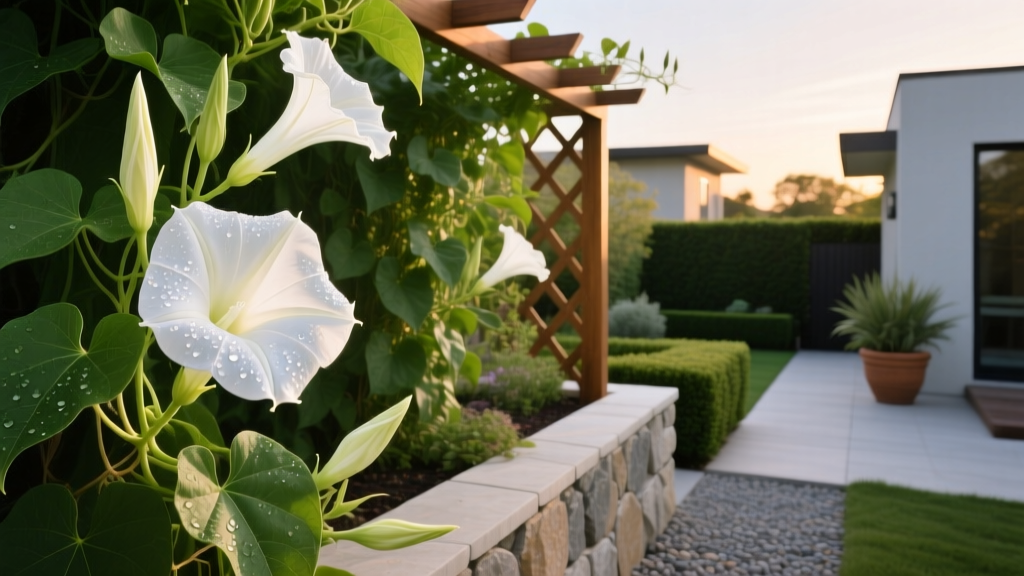
How to Grow a Lunar Flower Garden: Moonflower Vine Guide
The Appeal of the Lunar Flower Garden
While most gardeners focus on daytime blooms, the lunar flower garden offers a unique, sensory-rich experience that peaks after sunset. At the center of this nocturnal landscape is the Moonflower vine (Ipomoea alba), a fast-growing annual whose massive, fragrant white blossoms unfurl in minutes as dusk falls. Often referred to as the quintessential lunar flower, Ipomoea alba is specifically adapted to attract night-flying pollinators like the sphinx moth and the lesser long-nosed bat.
Designing a night garden requires a shift in horticultural strategy. You must prioritize structural support for heavy vines, manage soil nitrogen to prevent excessive vegetative growth, and curate ambient lighting that does not disrupt nocturnal pollinator navigation. This guide provides the exact specifications, measurements, and maintenance schedules required to cultivate a thriving lunar flower garden.
Top Night-Blooming Companions for Your Lunar Flower
A successful night garden relies on layered blooming times and varied heights. The Moonflower vine serves as the vertical anchor, but you need mid-level and ground-cover companions to create a cohesive landscape. Below is a comparison matrix of the most reliable night-blooming companions to plant alongside your lunar flower.
| Plant Name | Botanical Name | Bloom Window | Mature Height | Hardiness Zones |
|---|---|---|---|---|
| Moonflower Vine | Ipomoea alba | Dusk to Dawn | 15 - 20 ft | Grown as Annual |
| Evening Primrose | Oenothera biennis | Late Afternoon to Night | 3 - 5 ft | 4 - 9 |
| Night-Blooming Jasmine | Cestrum nocturnum | Night (Intense Fragrance) | 4 - 8 ft | 8 - 11 |
| Flowering Tobacco | Nicotiana alata | Evening to Morning | 1.5 - 3 ft | Grown as Annual |
| Angel's Trumpet | Brugmansia suaveolens | Night (Heavy Scent) | 10 - 15 ft | 7 - 11 |
Step-by-Step Seed Scarification and Sowing
Moonflower seeds possess a notoriously hard, impermeable outer coat. If planted directly into soil without preparation, germination rates drop below 20%, and sprouting can take up to a month. To achieve a 90%+ germination rate within 7 to 14 days, you must manually scarify the seeds.
- Scarify the Seed Coat: Using a metal nail file or 80-grit sandpaper, gently nick the outer shell of each seed. You only need to scratch through the hard outer layer until you see a tiny sliver of the white endosperm beneath. Do not file deeply, or you will damage the embryo.
- Warm Water Soak: Submerge the scarified seeds in a bowl of water heated to exactly 100°F to 110°F. Maintain this temperature using a seedling heat mat placed under the bowl. Soak for 24 hours. The seeds will swell to nearly double their original size.
- Sow in Biodegradable Pots: Ipomoea alba has a highly sensitive taproot and despises transplant shock. Sow one seed per 3-inch peat or cow-pot, burying it 1/4 inch deep in a sterile seed-starting mix (like Black Gold Seedling Mix).
- Germination Environment: Cover the pots with a clear humidity dome and place them under T5 HO fluorescent grow lights for 14 hours a day. Maintain an ambient air temperature of 75°F to 80°F. Remove the dome the moment the cotyledons break the soil surface.
Trellising and Structural Support Specifications
A mature lunar flower vine can reach 20 feet in length and, when fully hydrated and in bloom, can weigh over 40 pounds. Flimsy bamboo teepees or lightweight plastic netting will collapse under this weight by mid-August.
For permanent or semi-permanent installations, use 16-foot galvanized cattle panels (typically 50 inches high and 16 feet long, with 6x6 inch or 8x8 inch grid openings). Secure the panels to 7-foot steel T-posts driven 2 feet into the ground, using heavy-duty UV-resistant zip ties or 14-gauge aluminum wire. The 6x6 inch grid is crucial; it provides ample space for the vine's twining stems to wrap around while allowing you to reach through for pruning and pest inspection. Position the trellis on a north-south axis to ensure the vine receives even sunlight on both sides during the day, promoting uniform blooming.
Soil Chemistry and Fertilization Schedule
The most common failure mode for lunar flower gardens is excessive nitrogen, which results in a massive, dark green canopy with zero blooms. Moonflowers require a phosphorus-heavy diet to trigger flower set.
- Soil pH: Test your soil and amend it to a pH between 6.0 and 6.8. Use elemental sulfur to lower pH or garden lime to raise it, applying at a rate of 5 lbs per 100 square feet for every 0.5 pH point adjustment needed.
- Base Amendment: Before transplanting, mix 2 inches of fully composted organic matter and 1/2 cup of bone meal (high in phosphorus) into the bottom of the planting hole.
- Ongoing Fertilization: Once the vine reaches 3 feet in height, switch to a low-nitrogen, high-phosphorus liquid fertilizer. A formulation like Espoma Organic Flower-tone (3-4-5) or a synthetic bloom-booster (10-30-20) applied every 14 days at half the label's recommended strength will sustain heavy blooming without burning the roots.
- Watering: Provide 1 to 1.5 inches of water per week. Use drip irrigation at the base of the plant. Overhead watering in the evening promotes powdery mildew on the large, heart-shaped leaves.
⚠️ Toxicity Warning: All parts of the Moonflower vine, particularly the seeds, contain toxic alkaloids including LSA (ergine). Ingestion can cause severe gastrointestinal and neurological symptoms in humans and pets. Always wear gloves when handling scarified seeds, and plant them in areas inaccessible to foraging dogs or small children. For more safety details, consult the NC State Extension Plant Database.
Lighting and Pollinator Attraction
To fully appreciate a lunar flower garden, you need ambient lighting. However, standard outdoor security lights will ruin the experience and disrupt the nocturnal ecosystem. Bright, cool-white LEDs (4000K to 6000K) confuse night-flying moths, causing them to circle the light until they die of exhaustion rather than pollinating your flowers.
Instead, install low-lumen path lights equipped with 2200K to 2700K warm-amber LED bulbs. Keep the output under 100 lumens per fixture, and use fixtures with downward-facing shields to prevent light spill into the sky. According to the National Wildlife Federation, minimizing light pollution is the single most effective way to support local moth populations, which are the primary pollinators for Ipomoea alba and other lunar blooms.
Frequently Asked Questions
Will Moonflower reseed itself aggressively like Morning Glory?
Unlike its cousin Ipomoea purpurea (Common Morning Glory), Ipomoea alba is a tropical perennial grown as an annual in most of North America. It rarely self-seeds reliably in zones below 9 because the seeds require a long, hot growing season to mature and drop before the first frost. You will generally need to collect and manually scarify seeds each spring.
Why are my Moonflower buds turning yellow and dropping before opening?
Bud drop is almost always caused by inconsistent soil moisture or a sudden spike in nighttime temperatures. Ensure your drip irrigation is delivering a consistent 1 inch of water weekly, and apply a 2-inch layer of shredded hardwood mulch over the root zone to insulate the soil and retain moisture during late-summer heat waves.
Can I grow lunar flowers in containers?
Yes, but you must use a minimum 20-gallon container (like a half-whiskey barrel or a 24-inch fabric grow bag) filled with a heavy, loam-based potting mix. Standard lightweight potting soil will not provide enough ballast, and the massive vine will tip the pot over in high winds. Secure a heavy-duty obelisk trellis directly into the soil of the container.
For further botanical profiles and hardiness data, refer to the Missouri Botanical Garden's PlantFinder database. By carefully managing soil nutrition, structural support, and ambient lighting, your lunar flower garden will become a fragrant, ecological haven long after the sun goes down.

