
Gardening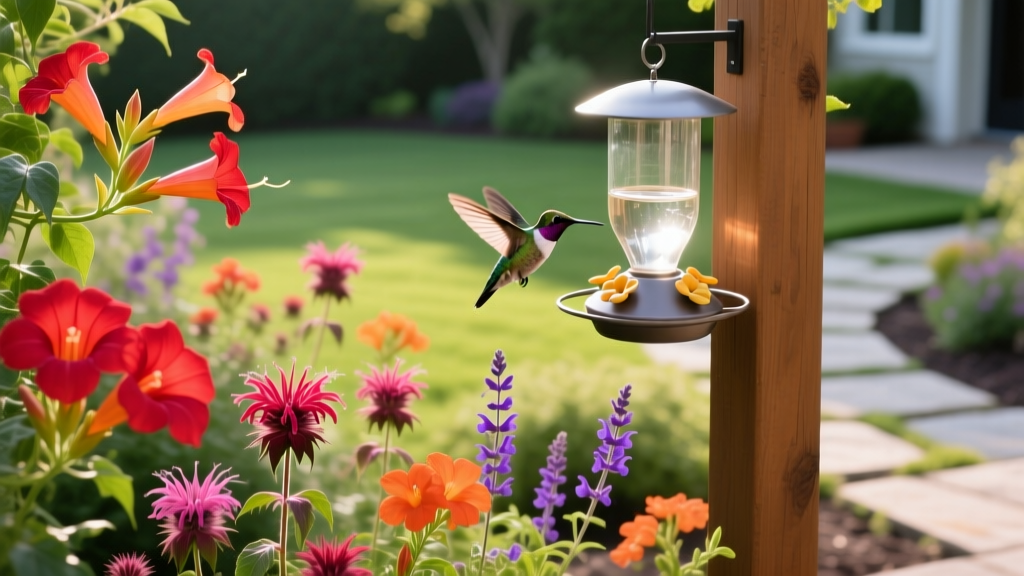
How to Lure Hummingbirds: Best Native Plants and Feeder Setup Guide
The Biology of the Hover: Why Nectar Isn't Enough
To understand how to lure hummingbirds effectively, you must first understand their extreme metabolic demands. A ruby-throated hummingbird possesses a resting heart rate of roughly 250 beats per minute and can consume up to half its body weight in pure sugar daily. However, nectar only provides the carbohydrates required for flight. According to the Cornell Lab of Ornithology, these birds also require massive amounts of protein to build muscle, maintain feathers, and feed their young. A successful garden strategy replicates their entire natural foraging ecology, providing both high-octane fuel and essential insect protein.
Cultivating the Nectar Network: Native Plant Matrix
The foundation of any hummingbird garden is a succession of tubular, nectar-rich blooms. Hummingbirds possess specialized bills and elongated tongues designed to extract nectar from deep corollas, bypassing the competition from bees and butterflies. When selecting plants, strictly avoid "double-bloom" hybridized varieties. In these cultivars, the plant's energy is diverted into producing extra petals at the direct expense of nectar production and pollen, rendering them ecologically useless to foraging birds.
| Common Name | Botanical Name | Bloom Window | USDA Hardiness Zones | Ecological Value |
|---|---|---|---|---|
| Cardinal Flower | Lobelia cardinalis | Mid-Summer to Early Fall | 3 - 9 | Exceptional nectar volume; thrives in moist, partially shaded rain gardens. |
| Bee Balm | Monarda didyma | Early to Mid-Summer | 4 - 9 | Highly aromatic foliage deters deer; tubular red blooms perfectly fit hummingbird bills. |
| Wild Columbine | Aquilegia canadensis | Spring (April - May) | 3 - 9 | Critical early-season food source when migrating birds first arrive and few other plants are blooming. |
| Anise Hyssop | Agastache foeniculum | Mid-Summer to First Frost | 4 - 9 | Drought-tolerant; provides late-season fuel for southbound migration. |
Plant these species in dense clusters of three or more. Hummingbirds map their foraging routes spatially; a single isolated plant is easily ignored, whereas a dense "drift" of color signals a reliable, high-yield food source from the air.
The Chemistry of Artificial Feeders
While native plants are the primary draw, artificial feeders serve as critical supplemental nodes, especially during extreme heat or late autumn migration. The National Audubon Society strictly recommends a 1:4 ratio of plain white cane sugar to water. This specific osmolarity closely mimics the natural sucrose concentration found in the nectar of native North American flowers.
⚠️ Toxicity & Fermentation Warning
- Never use honey: Honey diluted in water rapidly cultivates fatal fungal spores that cause Candidiasis, a deadly infection that glues the bird's tongue to its bill.
- Never use brown sugar or molasses: These contain iron levels that are highly toxic to hummingbirds, leading to fatal iron storage disease.
- Avoid artificial red dyes: There is no peer-reviewed evidence proving FD&C Red Dye #40 is safe for avian consumption. The red color on the exterior of the feeder plastic is entirely sufficient to attract their attention.
The 48-Hour Hygiene Rule
Sugar water ferments rapidly in direct sunlight and high heat. Fermented nectar produces alcohol and cultivates black mold (Aspergillus), which is lethal. During the peak of summer (temperatures above 85°F), you must empty, scrub, and refill feeders every 48 hours. Use a dedicated bottle brush and a weak bleach solution (1 part household bleach to 9 parts water) to sterilize the interior reservoirs and feeding ports. Rinse aggressively with cold water for a full minute before refilling to ensure zero chemical residue remains.
Strategic Placement: Mitigating Territorial Aggression
A common beginner mistake is hanging a single, highly visible feeder. Male hummingbirds are fiercely territorial and will establish a "perch and patrol" zone around a solitary food source, aggressively dive-bombing females and juveniles to starve them out. To counteract this behavioral trait, employ one of two spatial strategies:
- The Blind-Corner Method: Hang multiple feeders on different sides of your house or behind dense shrubbery where they are completely out of sightlines from one another. A male cannot defend what he cannot see.
- The Overwhelm Method: Cluster five or more feeders tightly together on a single multi-arm hanger. The sheer volume of feeding stations makes it physically impossible for a single male to patrol the entire perimeter, allowing subordinate birds to feed safely.
The Protein Secret: Cultivating Fruit Flies
Because nectar lacks the amino acids required for tissue repair and chick rearing, hummingbirds consume upwards of 300 small insects daily, primarily fruit flies, gnats, and aphids. You can actively lure hummingbirds by engineering a localized insect hatch.
Place a slightly overripe banana or a piece of melon rind inside a small mesh produce bag and hang it from a branch roughly three feet away from your primary nectar feeder. Within 48 hours, the fruit will attract a localized swarm of harmless fruit flies (Drosophila melanogaster). The hummingbirds will quickly learn to associate your feeder zone with both their carbohydrate and protein requirements, drastically increasing their site fidelity and the amount of time they spend in your garden.
Hydrodynamics: Misters Over Birdbaths
Hummingbirds do not wade into deep water like robins or sparrows. Their tiny legs are adapted for perching, not swimming, and deep birdbaths pose a severe drowning hazard. Furthermore, their waterproofing oils are easily stripped by submersion. Instead, they prefer to fly through a fine, airborne mist to bathe and cool off.
"Install a solar-powered brass mister nozzle attached to your garden hose or a dedicated birdbath dripper. Position the mister so the spray intersects with the leaves of a nearby shrub. Hummingbirds will rub their heads and backs against the wet, vibrating leaves to clean their feathers and remove parasites."
By integrating a continuous succession of native tubular blooms, maintaining chemically pure and sterile artificial feeders, and providing both protein sources and aerial bathing stations, you transition your yard from a passive stopover into a primary ecological habitat. This comprehensive approach ensures that migrating and nesting hummingbirds will reliably return to your garden year after year.

