
Gardening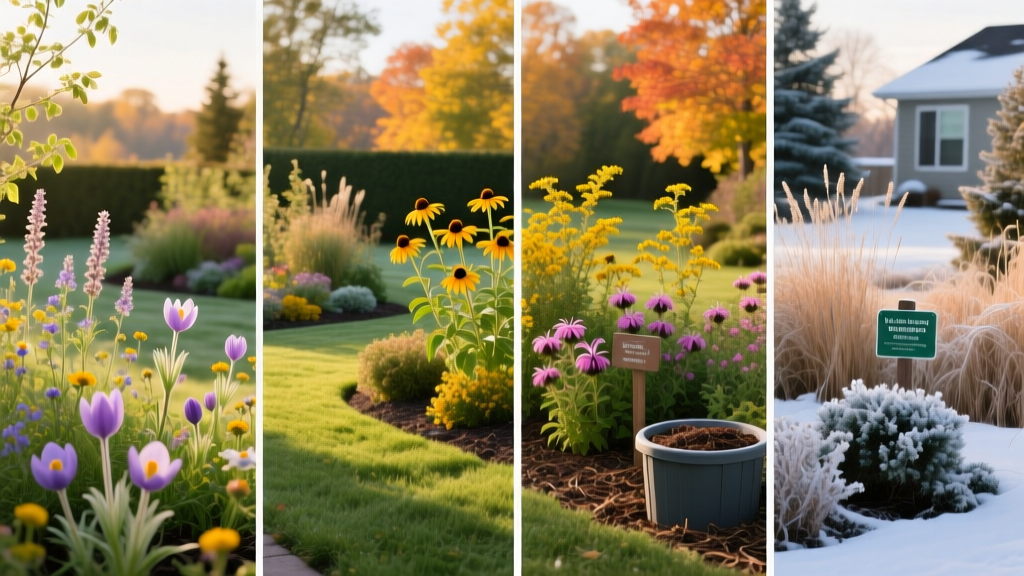
When to Plant Minnesota Native Plants: A Regional Calendar
Minnesota's USDA hardiness zones, ranging from 3a in the northern borders to 5a in the southeastern river valleys, dictate a narrow but highly productive window for establishing deep-rooted prairie and woodland species. Timing the installation of Minnesota native plants around the state's specific frost dates and soil temperature thresholds is the difference between a thriving pollinator corridor and a costly replanting effort. Unlike shallow-rooted annuals, natives like Asclepias tuberosa (Butterfly Weed) and Schizachyrium scoparium (Little Bluestem) require precise seasonal cues to drive energy into taproot development before winter dormancy or summer drought.
The Minnesota Native Plant Planting Window
Choosing between spring and fall installation depends heavily on the root architecture of the specific species and your regional microclimate. The following matrix breaks down the agronomic advantages of each season for Minnesota landscapes.
| Variable | Spring Planting (Mid-May to Late June) | Fall Dormancy Planting (Sept 15 to Oct 31) |
|---|---|---|
| Soil Temperature | Minimum 50°F at 4-inch depth | Dropping below 55°F, triggering root growth |
| Best Plant Types | Fibrous-rooted grasses, woodland ephemerals, potted shrubs | Deep taproot perennials, bare-root stock, prairie sedges |
| Moisture Risk | High (requires supplemental irrigation during July heat) | Low (reduced evapotranspiration, natural fall rains) |
| Plug Cost (2026) | $1.75 - $3.50 per 2.5-inch deep plug | $1.50 - $2.75 per dormant bare-root division |
Spring Planting Protocol: Soil Temps and Frost Dates
Spring planting in Minnesota should never be dictated by the calendar date, but strictly by soil thermometry. Inserting a standard 4-inch probe soil thermometer into your prepared bed is mandatory. Wait until the soil consistently reads 50°F at a 4-inch depth for three consecutive mornings. Planting Minnesota native plants into cold, saturated spring clay soils invites Pythium root rot and stalls mycorrhizal fungal colonization.
Warning: Do not amend native planting holes with peat moss or heavy compost. Minnesota natives are adapted to low-organic, mineral-heavy soils. Adding rich organic matter creates a 'bathtub effect' in heavy clay, drowning the taproots during spring snowmelt and heavy June rains.
When sourcing plants, opt for 2.5-inch deep 'cone' plugs rather than standard shallow flats. These deeper cells accommodate the initial taproot descent of species like Echinacea purpurea (Purple Coneflower). Space plugs 12 to 18 inches apart in a staggered grid to accelerate canopy closure, which naturally suppresses invasive weeds like Canada Thistle.
Fall Dormancy Planting for Deep Taproots
For many horticulturists, fall is the superior season for establishing Minnesota native plants. As air temperatures drop in late September, top-growth ceases, but soil temperatures remain warm enough to fuel aggressive subterranean root expansion. Species with massive taproots, such as Baptisia australis (False Indigo) and Silphium integrifolium (Rosinweed), benefit immensely from fall planting.
Step-by-Step Fall Installation
- Timing: Target the window between September 15 and October 31. The goal is to plant 4 to 6 weeks before the ground freezes solid.
- Preparation: Eliminate existing turf using a sod cutter or solarization. Do not use glyphosate within 14 days of planting, as it disrupts the soil microbiome necessary for native root symbiosis.
- Planting Depth: Set the crown of the plant exactly at the soil line. Burying the crown of Monarda fistulosa (Wild Bergamot) even half an inch too deep will cause winter crown rot.
- Mulching: Apply 2 inches of shredded hardwood mulch, keeping it 3 inches away from the plant stems to prevent vole habitation and stem girdling.
Regional Frost & Thaw Calendar
Minnesota's geography creates distinct planting deadlines. Use the regional parameters below to calibrate your seasonal calendar.
Northern Minnesota (Zones 3a - 3b: Duluth, International Falls)
- Last Spring Frost: May 20 - June 5
- First Fall Frost: Sept 10 - Sept 25
- Planting Strategy: Rely heavily on spring planting (June 1 - July 1) to give plants maximum time to establish before the brutal, early winters. Fall planting is highly risky here unless using established 1-gallon potted stock ($9-$14 each) rather than small plugs.
Central Minnesota (Zone 4a - 4b: Twin Cities, St. Cloud)
- Last Spring Frost: May 1 - May 15
- First Fall Frost: Oct 5 - Oct 15
- Planting Strategy: Ideal conditions for both windows. Spring planting should commence May 15 once soil warms. Fall planting is excellent from Sept 15 to Oct 20, leveraging the longer autumn warm spell.
Southern Minnesota (Zone 5a: Rochester, Winona)
- Last Spring Frost: April 20 - May 1
- First Fall Frost: Oct 15 - Oct 25
- Planting Strategy: The extended autumn allows for aggressive fall planting of bare-root stock well into late October. Take advantage of the longer growing season to establish woodland edge species like Aquilegia canadensis (Wild Columbine).
Seed Stratification & Cold Moist Requirements
If you are establishing a large prairie restoration or meadow via seed rather than plugs, timing shifts entirely. Most Minnesota native seeds possess deep physiological dormancy and require cold-moist stratification to break germination inhibitors. According to propagation data from regional experts, seeds must experience temperatures between 33°F and 38°F in a moist medium for 30 to 90 days.
For direct sowing, the optimal window is late November through February. Broadcast the seed mix directly onto frozen ground or light snow. The natural freeze-thaw cycles of the Minnesota winter will naturally stratify the seed, pressing it into the soil matrix for perfect spring germination. For spring-sown seed, you must artificially stratify by mixing seeds with damp vermiculite in sealed bags in your refrigerator for 60 days prior to sowing in May.
First-Year Watering & Establishment Metrics
While mature Minnesota native plants are famously drought-tolerant, their first-year establishment requires precise irrigation. The most common failure mode for native plant installations is underwatering during the first 90 days, or overwatering via automated daily sprinkler cycles which promotes shallow, weak root systems.
- Weeks 1-2: Water deeply every 2 days. Apply approximately 0.5 gallons per square foot to ensure moisture reaches the bottom of the plug's root zone.
- Weeks 3-6: Transition to watering twice a week. Apply 1 inch of water per session. Use a rain gauge to measure output.
- Weeks 7-12: Water once a week with 1.5 inches of water, forcing the roots to chase the moisture deeper into the soil profile.
- Tool Requirement: Use a digital soil moisture meter. Insert the probe 6 inches deep near the root zone. Only water when the meter reads in the 'dry' to 'slightly moist' range, never when it registers 'wet'.
By aligning your planting schedule with Minnesota's specific thermal and hydrological cycles, you ensure that your native landscape develops the deep, resilient root systems required to survive the state's extreme seasonal shifts. For comprehensive species lists and local ecotype seed sourcing, consult the Minnesota Board of Water and Soil Resources or the Minnesota DNR Native Plant Portal. Detailed germination and stratification codes for specific regional ecotypes can be verified through the Prairie Moon Nursery Germination Guide.

