
Gardening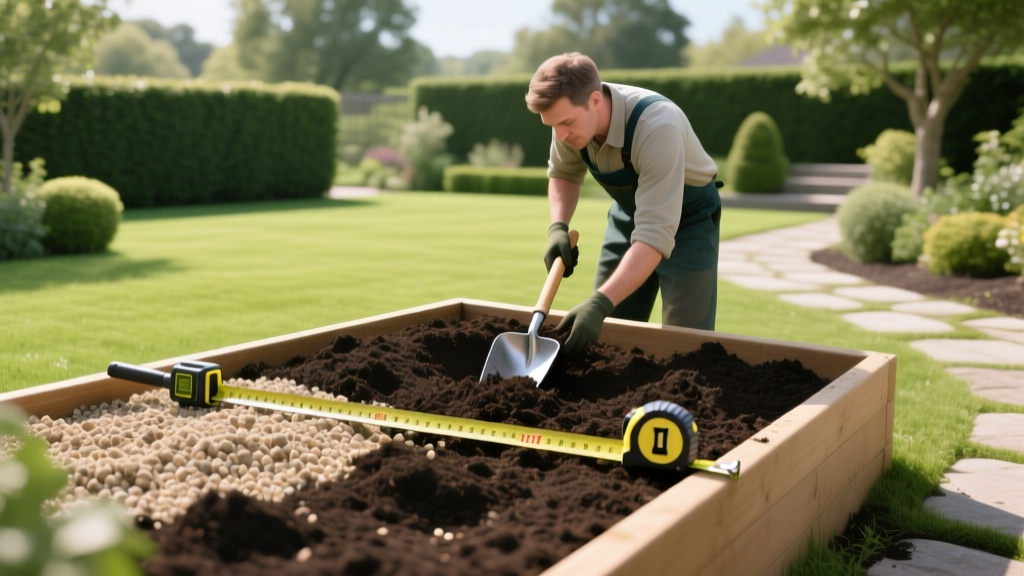
Mixing Compost and Topsoil: Exact Ratios for Raised Beds & Lawns
The Mineral-Organic Synergy: Why Topsoil Needs Compost
Topsoil and compost are fundamentally different materials that serve distinct biological and structural functions. Topsoil provides the mineral skeleton—composed of sand, silt, and clay—that dictates drainage, aeration, and physical root anchorage. Compost provides the biological engine, supplying humus, microbial inoculants, and slow-release nutrients. Mixing compost and topsoil is not merely about darkening the color of your dirt; it is a calculated manipulation of soil physics and chemistry.
The primary chemical benefit of blending these materials is the enhancement of Cation Exchange Capacity (CEC). CEC measures a soil's ability to hold onto positively charged nutrients like calcium, magnesium, and potassium. A standard sandy loam topsoil typically has a CEC of 10 to 15 meq/100g. In contrast, mature, high-quality compost boasts a CEC between 100 and 150 meq/100g. By integrating compost into topsoil, you exponentially increase the soil's nutrient-holding reservoir, reducing fertilizer leaching and minimizing the need for synthetic amendments.
Physically, the blending process corrects bulk density. Mineral topsoil averages a bulk density of 1.33 g/cm³, which can become compacted and restrict root penetration. Finished compost has a much lower bulk density, typically around 0.4 g/cm³. Combining them creates an optimal pore-space distribution, allowing water to infiltrate rapidly while retaining enough moisture in the micro-pores to sustain plants during dry spells.
The Definitive Ratio Matrix for Planting Scenarios
There is no universal "one-size-fits-all" mixture. The ideal ratio of topsoil to compost depends entirely on the target application, the existing soil texture, and the specific nutrient demands of the plants. Below is the precise volumetric ratio matrix for the most common landscaping and gardening scenarios.
| Application Scenario | Topsoil (by Volume) | Compost (by Volume) | Target Organic Matter % | Critical Notes |
|---|---|---|---|---|
| Raised Vegetable Beds | 60% | 40% | 20% - 25% | High nutrient demand. Add 10% perlite if drainage is poor. |
| Lawn Topdressing / Seeding | 80% | 20% | 5% - 8% | Prevents thatch buildup. Screen compost to 1/4 inch to avoid smothering seed. |
| Tree & Shrub Planting | 85% | 15% | 3% - 5% | Do not exceed 20% compost to avoid the "bathtub effect" in heavy clay native soils. |
| Container Gardening | 40% | 30% | N/A | Must include 30% aeration material (pine bark fines or pumice) to prevent anaerobic conditions. |
| Perennial Flower Borders | 70% | 30% | 10% - 15% | Excessive compost causes lush foliage but weak stems and reduced flowering. |
Sourcing Economics: Bulk vs. Bagged Material Costs
Understanding the economics of soil amendments is crucial for scaling your garden projects. Purchasing bagged materials at retail garden centers is convenient for small containers but financially ruinous for raised beds or lawn renovations.
- Bulk Topsoil: Typically costs $25 to $40 per cubic yard, plus a delivery fee ranging from $75 to $120 depending on your proximity to the supplier.
- Bulk Compost: Generally ranges from $35 to $60 per cubic yard. Premium mushroom compost or specialized leaf mold may push this to $75 per cubic yard.
- Bagged Equivalents: A standard 1.5 cubic foot bag of topsoil costs around $4, and premium bagged compost costs $6 to $8. When scaled up, bagged materials equate to roughly $110 to $160 per cubic yard—making bulk delivery roughly 60% to 70% cheaper for any project requiring more than two cubic yards.
Certification Red Flags and Quality Assurance
Never purchase bulk compost without verifying its testing data. Look for suppliers that participate in the US Composting Council's Seal of Testing Assurance (STA) program. An STA-certified compost will provide a lab analysis detailing pH, soluble salts (electrical conductivity), and the Carbon-to-Nitrogen (C:N) ratio. According to research from the Cornell Soil Health Laboratory, a finished, stable compost should have a C:N ratio between 15:1 and 20:1. If the C:N ratio exceeds 25:1, the compost is immature and will cause nitrogen immobilization, robbing your plants of essential nutrients as microbes continue to break down excess carbon.
⚠️ Warning: The Soluble Salt Trap
Always check the Electrical Conductivity (EC) on the compost lab report. An EC level above 4.0 mmhos/cm indicates excessive soluble salts, which will chemically burn the root tips of sensitive seedlings and transplants. If you receive high-salt compost, it must be heavily leached with water or diluted with a much higher ratio of low-salt topsoil before planting.
The 4-Step Mechanical Blending Protocol
Simply dumping compost on top of topsoil does not create a functional growing medium. The materials must be intimately integrated to prevent distinct textural layers, which impede water percolation and root crossing.
- The Moisture Squeeze Test: Before blending, check the moisture content of both materials. Grab a handful of the topsoil and squeeze it tightly. It should hold its shape but crumble easily when poked. If water drips out, the soil is too wet and will form clods when worked. If it immediately turns to dust, it is too dry and will create hydrophobic pockets when mixed with peat-heavy compost.
- Layering (The Lasagna Method): For manual mixing, spread a 2-inch layer of compost over a 4-inch layer of topsoil. Repeat this stratification until your pile is complete. This pre-distributes the materials, reducing the physical labor required in the next step.
- Primary Integration: Use a broadfork or a powered rotary harrow to blend the layers to a depth of 8 to 12 inches. Avoid using standard rear-tine rototillers if possible. Rototiller blades pulverize soil aggregates into a fine dust that destroys macro-porosity and leads to severe surface crusting upon drying. A rotary harrow or manual broadfork lifts and folds the soil without destroying its structural aggregates.
- Settling and Re-grading: Freshly mixed soil contains massive amounts of trapped air. Water the blended area deeply (applying roughly 1 inch of water) and allow it to settle for 48 hours. Re-grade the surface to fill any depressions before sowing seeds or transplanting plugs.
Troubleshooting Common Amendment Failures
Even with precise ratios, environmental variables can cause blending failures. Here is how to diagnose and correct the most frequent issues encountered when mixing compost and topsoil.
1. Hydrophobic Soil Repelling Water
The Cause: Many commercial composts use peat moss or highly decomposed wood as a base. When these materials dry out completely, they become hydrophobic, causing irrigation water to sheet off the surface rather than infiltrating the root zone.
The Fix: Incorporate a non-ionic soil surfactant (wetting agent) during the initial blending process. Alternatively, mix in 10% coarse horticultural sand or pine bark fines to physically break the surface tension and create permanent macropores that force water infiltration.
2. The "Bathtub Effect" in Tree Planting
The Cause: When planting trees in heavy, unamended native clay, gardeners often dig a wide hole and fill it exclusively with a 50/50 mix of compost and loose topsoil. Because the surrounding native clay is impermeable, the loose amended hole acts like a bathtub, trapping rainwater and drowning the tree roots in anaerobic conditions.
The Fix: As recommended by Penn State Extension, the backfill soil for trees should match the native soil as closely as possible. Limit compost to 10% to 15% of the backfill volume, and instead, apply a 3-inch layer of pure compost as a surface mulch extending out to the tree's drip line, allowing biology to integrate the organic matter naturally over time.
3. Nitrogen Tie-Up and Yellowing Foliage
The Cause: Utilizing unfinished or "hot" compost with a high carbon content (C:N ratio > 30:1). Soil microbes consume all available soil nitrogen to break down the excess carbon, leaving plants starved and chlorotic (yellow).
The Fix: Apply a fast-acting, water-soluble nitrogen source, such as blood meal or a liquid fish emulsion, at a rate of 1 pound of actual nitrogen per 1,000 square feet to bridge the gap until the compost fully stabilizes in the soil matrix.

