
Gardening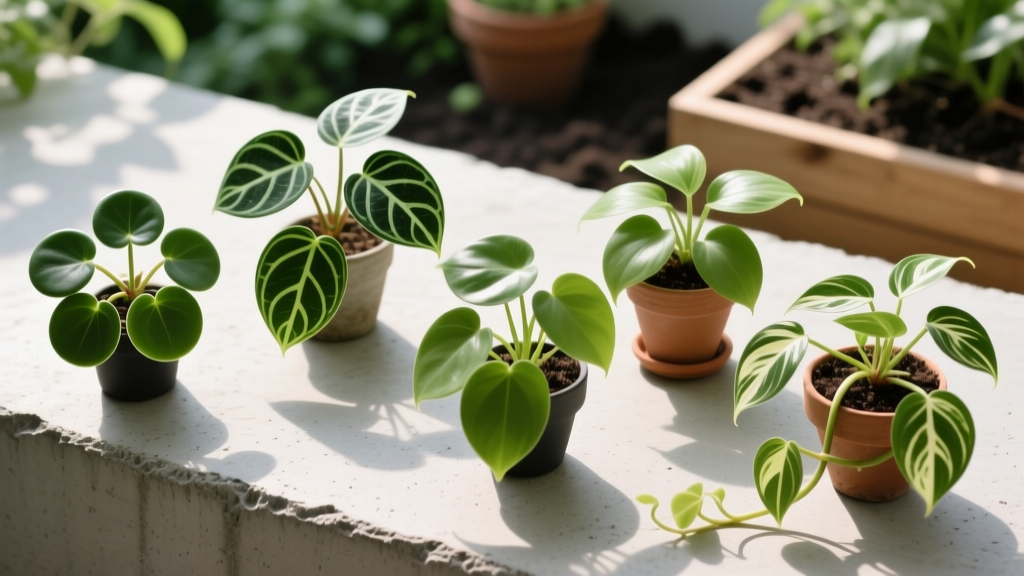
What Does a Money Plant Look Like? 5 Species ID Guide
The "Money Plant" Naming Confusion Explained
Walk into any garden center and ask for a money plant, and you could walk out with a vining tropical, a succulent shrub, a braided tree, or a biennial garden flower. The common name "money plant" is a marketing umbrella term applied to at least five entirely unrelated botanical species. These plants share a reputation for bringing prosperity and good fortune in various cultural traditions, particularly in Feng Shui and Vastu Shastra, but their visual characteristics, growth habits, and care requirements are drastically different.
To accurately identify which money plant you are looking at, you must examine the leaf morphology, petiole attachment, stem structure, and overall growth habit. This visual identification guide breaks down the exact botanical markers for the five most common plants sold under this name.
1. The Classic Vining Money Plant (Epipremnum aureum)
Also known as Pothos or Devil’s Ivy, Epipremnum aureum is the most widely recognized "money plant" globally, particularly in South Asia and tropical regions. According to the NC State Extension Plant Toolbox, this aroid is a vigorous, evergreen vine that thrives in low-light indoor environments.
Key Visual Identifiers
- Leaf Shape: Cordate (heart-shaped) with a distinct, slightly pointed tip. Leaves are asymmetrical, meaning the two halves of the leaf blade are rarely perfectly identical.
- Texture and Finish: The leaves have a thick, waxy cuticle that gives them a glossy, reflective sheen under indoor lighting.
- Variegation Patterns: While the wild type is solid deep green, cultivated varieties display distinct patterns. 'Golden Pothos' features irregular yellow-gold marbling; 'Marble Queen' has fine, white and green speckling; 'Neon' is a solid, vibrant chartreuse.
- Stem and Roots: The stems are slender, flexible, and distinctly ridged. A definitive identifier is the presence of aerial roots—small, brown, nub-like protrusions at each leaf node that allow the plant to climb tree trunks in its natural habitat.
2. The Chinese Money Plant (Pilea peperomioides)
Trendy in modern interior design, the Chinese Money Plant (often called the Pancake Plant or UFO Plant) is native to the Yunnan province of China. It is a member of the nettle family (Urticaceae) and looks nothing like the vining Pothos.
Key Visual Identifiers
- Leaf Shape: Perfectly peltate and orbicular. The leaves are flat, circular discs that resemble small green pancakes or lily pads, typically measuring 2 to 4 inches in diameter.
- Petiole Attachment: This is the most critical ID marker. The petiole (leaf stem) attaches directly to the center of the leaf blade's underside, rather than at the margin or base. This peltate attachment is rare among common houseplants.
- Growth Habit: It grows upright from a central, fleshy, pale-green caudex (thickened stem). It does not vine. Instead, it produces numerous "pups" (offsets) directly from the soil line or the base of the main stem.
- Leaf Orientation: The petioles are long and arching, causing the circular leaves to face outward and slightly downward, creating a radiating, umbrella-like silhouette.
3. The Braided Money Tree (Pachira aquatica)
When people refer to a "Money Tree" in a commercial or Feng Shui context, they are usually talking about Pachira aquatica. Native to the wetlands of Central and South America, this plant is often sold with multiple trunks braided together while young.
Key Visual Identifiers
- Leaf Structure: The leaves are palmately compound, meaning multiple leaflets radiate from a single central point at the end of the petiole, resembling a hand or an umbrella. A single leaf cluster typically contains 5 to 9 elongated, lanceolate leaflets.
- Trunk and Base: The most striking feature is the swollen, bulbous base (caudex) which stores water. Commercial specimens usually feature 3 to 5 flexible young trunks that have been tightly braided by growers before the wood hardened.
- Bark Texture: As the plant matures and the braid expands, the bark develops a rough, corky texture with vertical fissures and prominent lenticels (breathing pores).
4. The Jade Money Plant (Crassula ovata)
In succulent collections and traditional Feng Shui layouts, the Jade Plant is the designated money plant. It represents wealth and prosperity due to its coin-shaped leaves and robust, tree-like longevity.
Key Visual Identifiers
- Leaf Morphology: The leaves are thick, fleshy, and obovate (egg-shaped with the broader end at the tip). They are heavily succulent, designed to store water in arid environments.
- Coloration and Stress Markers: In moderate light, the leaves are a deep, solid jade green. However, when exposed to high light intensity or slight drought stress, the margins of the leaves develop a distinct, vibrant red or yellowish-red border.
- Stem and Branching: Unlike the soft stems of Pothos or Pilea, mature Jade Plants develop thick, woody, gray-brown stems that resemble miniature tree trunks, making them highly popular for bonsai cultivation.
5. The Silver Dollar Plant (Lunaria annua)
Unlike the previous four indoor tropicals, Lunaria annua (commonly called Honesty, Money Plant, or Silver Dollar) is an outdoor biennial or annual grown in temperate garden beds. It is called a money plant strictly because of its seed pods, not its foliage.
Key Visual Identifiers
- Foliage: The leaves are broad, ovate to heart-shaped, with coarsely toothed margins and a slightly fuzzy texture. They grow alternately along an upright, branching stem.
- Flowers: In spring, it produces clusters of four-petaled flowers ranging from pale purple to white.
- The "Money" Feature: The true identifier appears in late summer. The plant produces flat, disc-shaped silicles (seed pods). Once the outer brown husks and seeds are rubbed away, a translucent, silvery-white membrane remains, looking exactly like a silver dollar or full moon.
Comparative Identification Matrix
Use this quick-reference table to narrow down your plant based on its primary structural features.
| Species | Leaf Shape & Type | Growth Habit | Stem Characteristics | Pet Safety (ASPCA) |
|---|---|---|---|---|
| Pothos (E. aureum) | Heart-shaped, waxy, vining | Trailing / Climbing | Slender, ridged, aerial roots | Toxic to pets |
| Chinese Money (P. peperomioides) | Circular, flat, peltate | Upright, clumping | Fleshy, pale green, upright | Non-toxic |
| Money Tree (P. aquatica) | Palmate compound (5-9 leaflets) | Tree-like, upright | Braided, swollen base | Non-toxic |
| Jade Plant (C. ovata) | Obovate, thick, succulent | Shrub / Bonsai | Woody, gray-brown, thick | Toxic to pets |
| Silver Dollar (L. annua) | Ovate, toothed, fuzzy | Upright garden biennial | Herbaceous, branching | Non-toxic |
Common Misidentifications: Pothos vs. Heartleaf Philodendron
Because Epipremnum aureum (Pothos) and Philodendron hederaceum (Heartleaf Philodendron) share similar heart-shaped leaves and vining habits, they are frequently confused at the retail level. While both are sometimes loosely called money plants, you can distinguish them using the cataphyll test.
The Cataphyll Identification Trick
Examine the newest growth at the tip of the vine. Philodendrons produce a modified leaf sheath called a cataphyll that encases the new leaf as it emerges. Once the leaf unfurls, the cataphyll dries out, turns brown, and eventually falls off, leaving a rough, ringed scar on the stem. Pothos (E. aureum) do not produce cataphylls; their new leaves emerge directly from the node without a protective sheath, leaving the stem smooth between nodes.
Toxicity and Placement Considerations
When identifying your money plant for placement in a home with pets or small children, visual ID is directly tied to safety. According to the ASPCA Animal Poison Control Center, both Epipremnum aureum (Pothos) and Crassula ovata (Jade) contain insoluble calcium oxalates and other toxic compounds that cause severe oral irritation, drooling, and vomiting in cats and dogs if ingested. Conversely, Pilea peperomioides and Pachira aquatica are verified as non-toxic, making them the superior choice for low shelves or floor-level placement in pet-heavy households.
Expert Tip: If you are trying to identify a mature, heavily pruned Jade Plant that has lost its lower leaves, look closely at the leaf scars on the woody trunk. Jade plants leave distinct, raised, circular leaf scars that often have a slightly corky texture, distinguishing them from the smooth bark of a Ficus or the peeling bark of a Schefflera.

