
Gardening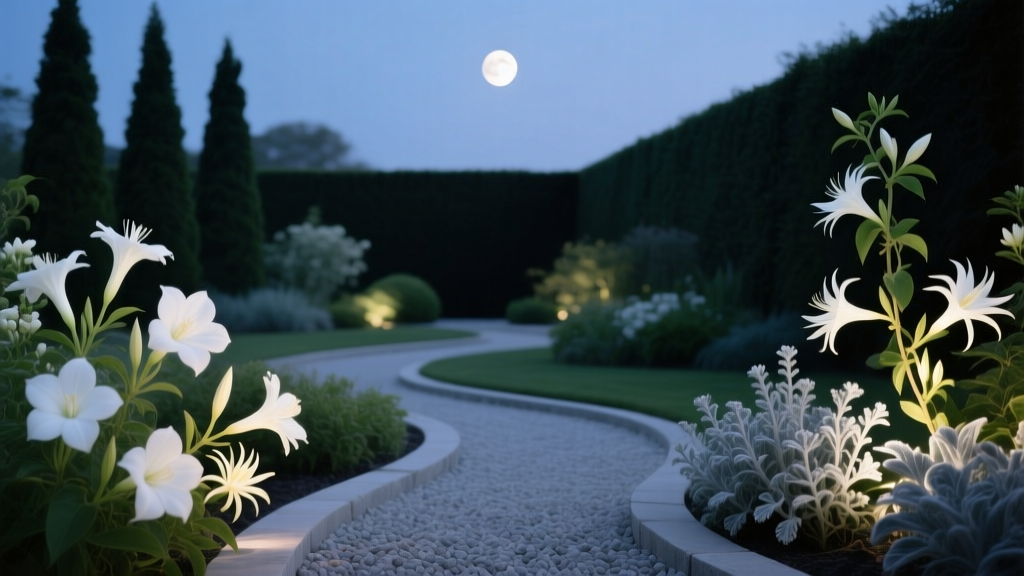
How to Design a Moon Garden: Plants That Bloom at Night
The Ecology and Purpose of Nocturnal Gardens
A moon garden extends the functional hours of your landscape by capitalizing on flora that activate after dusk. Unlike daytime gardens that rely on visual color contrast, night gardens depend on bioluminescence-adjacent reflection, high-contrast white pigmentation, and volatile organic compound (VOC) scent dispersion. The primary ecological drivers for plants that bloom at night are nocturnal pollinators, specifically sphinx moths (hawk moths) and nectar-feeding bats. These pollinators navigate using lunar light and olfactory cues, making the strategic placement of night-blooming species critical for local biodiversity.
Designing this space requires a departure from standard horticultural practices. You must prioritize foliage with high albedo (light reflectance), such as silver or variegated leaves, and manage ambient light pollution to avoid disrupting the navigational biology of your target pollinators. According to the Xerces Society for Invertebrate Conservation, preserving dark corridors in suburban landscapes is increasingly vital as urban skyglow continues to expand.
Core Plant Selection Matrix
Selecting the right species requires balancing hardiness, mature height, and scent throw. The following matrix details five high-performance species ideal for temperate to subtropical moon gardens.
| Botanical Name | Common Name | USDA Zones | Mature Height | Scent Profile & Throw | Toxicity Note |
|---|---|---|---|---|---|
| Ipomoea alba | Moonflower | 9-11 (Annual elsewhere) | 10-15 ft (Vine) | Lemon-citrus; strong throw up to 15 ft | Seeds are highly toxic if ingested |
| Oenothera biennis | Evening Primrose | 4-9 | 3-5 ft | Sweet, mild lemon; opens rapidly at dusk | Non-toxic; safe for pets |
| Cestrum nocturnum | Night-Blooming Jasmine | 8-11 | 4-8 ft (Shrub) | Intense, heavy floral; can be overwhelming in enclosed spaces | Berries and sap are toxic |
| Mirabilis jalapa | Four O'Clocks | 7-10 (Tuberous root) | 2-3 ft | Jasmine-like; moderate throw | Roots and seeds are toxic |
| Brugmansia suaveolens | Angel's Trumpet | 9-11 | 10-15 ft (Tree/Shrub) | Heavy, sweet citrus; peaks between 10 PM and 2 AM | All parts are highly toxic (tropane alkaloids) |
For comprehensive cultivation data on vining species like Ipomoea alba, the University of Florida IFAS Extension provides excellent regional baseline metrics for soil moisture and trellis load-bearing requirements.
Step-by-Step Installation and Soil Preparation
Step 1: Hardscaping for Light Reflection
White flowers absorb and reflect ambient moonlight, but you can amplify this effect through hardscaping. Install pathways using crushed white marble, pale decomposed granite, or light-colored limestone gravel. These materials possess a high Solar Reflectance Index (SRI) and will bounce available moonlight upward into the plant canopy. Avoid dark mulches like black dyed hardwood, which absorb light and create visual dead zones in the evening.
Step 2: Targeted Soil Amendment
Night-blooming plants require a specific nutrient balance to trigger flower set over vegetative growth. High-nitrogen fertilizers (e.g., 24-8-16) will produce massive green foliage but severely delay or suppress nocturnal blooming.
- Base Prep: Test your soil to ensure a pH between 6.0 and 6.8. Amend heavy clay with 30% by volume of coarse horticultural pumice to ensure rapid drainage.
- Fertilization: Use a low-nitrogen, high-phosphorus granular fertilizer (such as a 5-10-10 NPK ratio) applied at a rate of 2 lbs per 100 square feet during early spring bud initiation.
- Thermal Mulching: Apply a 2-inch layer of light-colored pine bark mulch. This insulates the root zone against daytime heat spikes while allowing nighttime soil cooling, which triggers the opening mechanism in species like Oenothera.
Step 3: Spatial Layering for Scent Dispersion
Scent travels differently in the evening due to temperature inversions where cool air sinks. Place your strongest-scented shrubs (Cestrum nocturnum) at the perimeter or downwind of your seating area. Plant lower-growing, moderately scented species (Mirabilis jalapa) within 2 to 3 feet of pathways where the physical agitation of walking past them will release additional volatile oils.
Illumination Specifications for Night Gardens
Supplemental lighting in a moon garden must enhance visibility without disrupting the circadian rhythms of the plants or the navigation of sphinx moths. Standard landscape floodlights will ruin the ecological function of the space.
Lighting Specification Framework:
- Color Temperature: Strictly use 2700K to 3000K warm-white LEDs. Avoid 4000K+ cool white or blue-spectrum lights, which mimic daylight and can prevent buds from opening.
- Lumen Output: Limit path lights to 50-100 lumens per fixture. The goal is to provide safe transit illumination, not to daylight the garden.
- Shielding: Use fully shielded, downward-facing fixtures (often termed "dark-sky compliant"). Upward light spill contributes to skyglow, which the Royal Horticultural Society (RHS) notes can severely disorient nocturnal pollinators.
Troubleshooting Common Nocturnal Garden Failures
Issue 1: Bud Drop Before Opening
Cause: Daytime heat stress exceeding 90°F (32°C) combined with inconsistent soil moisture. Night-blooming plants expend massive amounts of cellular energy to rapidly unfurl petals at dusk. If the plant is dehydrated by 4:00 PM, it will abort the bloom to preserve the root system.
Fix: Install a drip irrigation system with a timer set to run at 2:00 PM for 20 minutes. This ensures the root zone is fully hydrated and cooled just before the energy-intensive blooming sequence begins. Never overhead water in the late afternoon, as wet foliage invites powdery mildew.
Issue 2: Excessive Foliage, Zero Blooms
Cause: Nitrogen toxicity in the soil, usually from using standard lawn fertilizers near the garden beds or applying too much blood meal.
Fix: Leach the soil by running a slow, deep watering cycle for 4 hours to flush excess soluble nitrogen below the root zone. Follow up with a foliar spray of liquid kelp (0-0-1 NPK) to provide trace minerals and cytokinins that encourage reproductive growth over vegetative growth.
Issue 3: Weak or Absent Scent Throw
Cause: High ambient humidity or planting in a heavily shaded, stagnant air pocket. Scent molecules require slight air movement and moderate humidity to travel effectively.
Fix: Prune surrounding dense evergreen shrubs to create a "wind channel" that allows evening breezes to carry the scent toward seating areas. If humidity is consistently above 80%, switch to species that rely on visual reflection (like white Echinacea purpurea 'White Swan') rather than heavy scent dispersion.

