
Gardening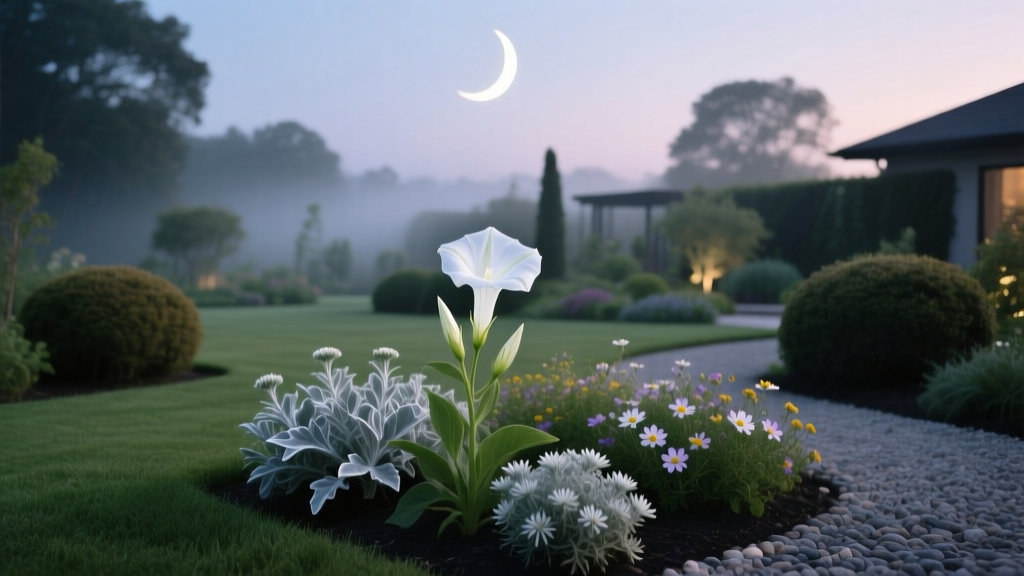
When Flowers Bloom I Think of the Moon: Beginner's Moon Garden Guide
There is a quiet, undeniable poetry to evening horticulture—a feeling that when flowers bloom I think of the moon and its silvery, reflective glow. For gardeners looking to extend their enjoyment of the landscape past sunset, a 'moon garden' offers a sensory experience defined by pale blossoms, silver foliage, and intoxicating nocturnal fragrances. Unlike traditional borders that rely on vibrant daytime colors, a moon garden is engineered specifically to capture and amplify low ambient light.
This guide moves beyond basic planting advice to provide the exact cultivars, lighting specifications, and soil metrics required to build a high-performance lunar landscape in your own backyard.
Visual Moon Gardens vs. Lunar Phase Planting
Beginners often confuse two distinct gardening concepts. It is crucial to separate the aesthetic design of a moon garden from the agricultural practice of lunar planting.
Concept Clarification:
1. The Visual Moon Garden: A landscape design strategy utilizing white flowers, variegated leaves, and silver foliage to reflect moonlight and attract nocturnal pollinators like sphinx moths and bats.
2. Lunar Phase Planting: An agricultural tradition that schedules sowing and harvesting based on the moon's gravitational pull and light cycles. While research into lunar planting phases remains a popular biodynamic practice, this guide focuses strictly on the visual and ecological design of a night garden.
1. The Visual Moon Garden: A landscape design strategy utilizing white flowers, variegated leaves, and silver foliage to reflect moonlight and attract nocturnal pollinators like sphinx moths and bats.
2. Lunar Phase Planting: An agricultural tradition that schedules sowing and harvesting based on the moon's gravitational pull and light cycles. While research into lunar planting phases remains a popular biodynamic practice, this guide focuses strictly on the visual and ecological design of a night garden.
Top Tier Flora for Lunar Landscapes
To achieve maximum reflectance, you must select plants with high albedo (light-reflecting) surfaces. Here are the most reliable, beginner-friendly cultivars that thrive in evening conditions.
1. Moonflower (Ipomoea alba)
A vigorous annual vine that produces massive, 5-to-6-inch white blooms. The flowers unfurl rapidly at dusk, often in under a minute, releasing a sweet, lemony scent.
- Hardiness: Grown as an annual in zones 3-8; perennial in zones 9-11.
- Placement: Requires a sturdy trellis or arbor; can reach 10-15 feet in a single season.
- Pro Tip: Scarify the hard seed coats with sandpaper and soak in warm water for 24 hours before sowing to guarantee germination.
2. Night-Blooming Jasmine (Cestrum nocturnum)
While not a true jasmine, this shrub produces the most powerful nocturnal fragrance in the horticultural world. The small, tubular greenish-white flowers are visually subtle but olfactorily dominant.
- Hardiness: Zones 8-11 (requires overwintering indoors in colder climates).
- Soil Requirement: Well-draining loam with a pH between 6.0 and 7.0.
3. Silver Foliage Accents: Dusty Miller & Lamb's Ear
White flowers need a contrasting backdrop to pop in the dark. Silver leaves reflect ambient light even when the plants are not in bloom.
- Dusty Miller (Jacobaea maritima 'Silverdust'): Features deeply lobed, felt-like silver leaves. Drought-tolerant once established.
- Lamb's Ear (Stachys byzantina 'Helen von Stein'): Choose the 'Helen von Stein' cultivar specifically. Unlike standard lamb's ear, it produces larger, fuzzier leaves and rarely sends up messy flower spikes, keeping the focus entirely on its highly reflective silver foliage.
Hardscaping and Illumination Metrics
A true moon garden should rely primarily on actual moonlight. However, strategic, low-voltage LED lighting is necessary for pathway safety and to accentuate specific architectural plants. The most common beginner mistake is using cool-white LEDs, which destroy the natural lunar illusion.
| Lighting Element | Color Temperature | Lumen Output | Placement Strategy |
|---|---|---|---|
| Pathway Bollards | 2700K (Warm White) | 50 - 80 lm | Staggered, 6 feet apart; shielded downward to prevent glare. |
| Moonlighting (Tree Downlights) | 3000K (Soft White) | 150 - 200 lm | Mounted 20ft high in deciduous trees to cast dappled, moon-like shadows. |
| Hardscape Strip Lights | 2200K (Amber/Warm) | 30 - 50 lm | Hidden under bench lips or retaining wall caps to define edges without visible bulbs. |
For hardscaping, utilize light-colored materials. Crushed white marble, decomposed granite, or pale limestone gravel will act as a passive reflector, bouncing moonlight back up into the garden canopy. Avoid dark mulches like dyed black hardwood, which absorb light and create a visual void at night.
Soil Preparation and Nocturnal Pest Management
Night-blooming plants expend massive amounts of energy producing heavy fragrances and rapid floral growth in short evening windows. They require specific soil nutrition to sustain this cycle.
The Lunar Soil Mix
Amend your planting beds to achieve a slightly acidic to neutral pH of 6.2 to 6.8. Incorporate a 2-inch layer of organic compost, but avoid high-nitrogen fertilizers (like a 20-10-10 NPK ratio), which will promote excessive green foliage at the expense of blooms. Instead, use a bloom-boosting fertilizer with a 5-10-10 NPK ratio, applying it at a rate of 1 cup per 10 square feet at the time of planting.
Managing the Night Shift: Pests vs. Pollinators
Moon gardens attract specific nocturnal wildlife. According to the Royal Horticultural Society's guidelines on night-scented plants, these gardens are vital waypoints for moths and bats. However, the damp, shaded conditions of evening gardens also attract slugs and snails.
Warning: Avoid Metaldehyde Slug Baits
Traditional blue slug pellets contain metaldehyde, which is highly toxic to the birds and mammals that feed on poisoned slugs. For a moon garden, use Iron Phosphate-based baits (e.g., Sluggo). Iron phosphate is OMRI-listed for organic use, breaks down into a natural soil fertilizer, and will not harm the beneficial nocturnal pollinators your garden is designed to attract.
Traditional blue slug pellets contain metaldehyde, which is highly toxic to the birds and mammals that feed on poisoned slugs. For a moon garden, use Iron Phosphate-based baits (e.g., Sluggo). Iron phosphate is OMRI-listed for organic use, breaks down into a natural soil fertilizer, and will not harm the beneficial nocturnal pollinators your garden is designed to attract.
Frequently Asked Questions
Do moon gardens require more water than daytime gardens?
Not necessarily, but watering timing is critical. Water moon garden beds deeply in the early morning. Watering in the evening leaves foliage damp overnight, drastically increasing the risk of powdery mildew and fungal pathogens like Botrytis cinerea, which thrive in the cool, still air of night.
Can I build a moon garden in a heavily shaded yard?
Most night-blooming plants, particularly Moonflowers and Evening Primrose, require a minimum of 6 hours of direct sunlight during the day to store the energy required for nighttime blooming. If your yard is heavily shaded by mature trees, pivot your design away from flowers and focus entirely on high-albedo foliage plants like Hostas ('Patriot' or 'Fire and Ice' varieties), Ferns, and Caladiums, which reflect ambient light beautifully without requiring full sun.
What is the best seating placement for a moon garden?
Place your seating with your back to the primary light source (the moon's southern trajectory in the Northern Hemisphere) or position benches so you are looking toward the eastern sky where the moon rises. This prevents moonlight from washing out your vision and allows you to see the silver foliage and white blooms illuminated against the darker backdrop of the yard's perimeter.

