
Gardening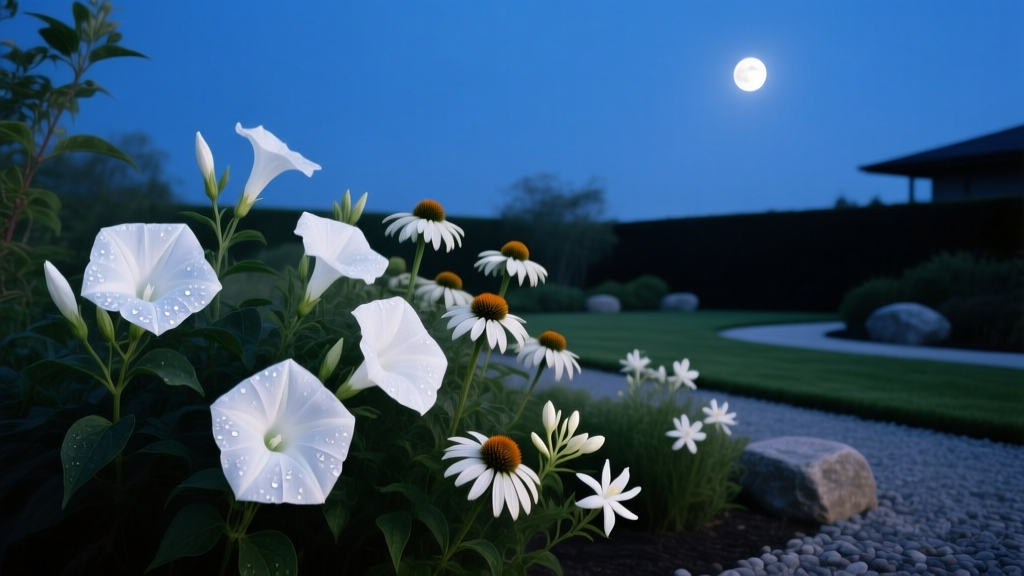
How to Design a Moon Garden Using White Perennial Flowers
A moon garden relies on the high albedo (reflectivity) of white blooms and silver foliage to capture and amplify ambient moonlight and starlight. Unlike daytime gardens that depend on vibrant reds and yellows, a nighttime landscape requires strategic placement of white perennial flowers to create a glowing, ethereal effect after dusk. Beyond aesthetics, these gardens serve a critical ecological function by supporting nocturnal pollinators like sphinx moths and bats.
This guide provides a precise, step-by-step framework for selecting cultivars, preparing soil architecture, and layering plants to build a resilient moon garden that thrives season after season.
The Science of Moon Gardens: Albedo and Scent Plumes
White flowers reflect the full spectrum of visible light, making them highly visible in low-light conditions. However, visual reflectivity is only half the equation. Nocturnal pollinators rely heavily on olfactory cues. According to the National Wildlife Federation, moths navigate using scent plumes. To maximize ecological impact, white perennials must be planted in dense drifts (minimum 3 to 5 plants of the same species) rather than scattered singly. This concentrates the floral volatiles, creating a stronger scent trail that guides night-flying insects to your garden.
Soil Architecture and Site Preparation
Most white-flowering perennials require well-draining soil to prevent root rot, particularly during winter dormancy. Before planting, conduct a soil test to determine your baseline pH and nutrient levels.
- Target pH: 6.2 to 6.8. This slightly acidic range ensures optimal nutrient uptake for heavy feeders like Phlox and Shasta daisies.
- Amendments: Incorporate 2 to 3 inches of fully decomposed leaf mold or compost into the top 8 inches of native soil. Avoid high-nitrogen manures, which promote weak, leggy growth that flops in the wind.
- Drainage Fix: If your soil is heavy clay, do not just add sand (which creates a concrete-like texture). Instead, build raised beds or amend with 30% volume of coarse pine bark fines to improve aeration.
Pro Tip: The Silver Foliage Multiplier
Do not rely solely on white flowers. Integrate plants with glaucous or silver foliage, such as Stachys byzantina (Lamb's Ear) or Artemisia schmidtiana 'Silver Mound'. The microscopic trichomes (hairs) on silver leaves reflect moonlight just as effectively as white petals, ensuring your garden glows even when perennials are between bloom cycles.
Do not rely solely on white flowers. Integrate plants with glaucous or silver foliage, such as Stachys byzantina (Lamb's Ear) or Artemisia schmidtiana 'Silver Mound'. The microscopic trichomes (hairs) on silver leaves reflect moonlight just as effectively as white petals, ensuring your garden glows even when perennials are between bloom cycles.
Top White Perennial Cultivars for Nighttime Reflectivity
When selecting white perennial flowers, prioritize disease-resistant cultivars. Standard varieties are often prone to powdery mildew, which turns foliage gray and ruins the reflective contrast of the garden. The University of Minnesota Extension emphasizes selecting mildew-resistant genetics for long-term perennial health.
| Cultivar | Mature Height | Bloom Window | Spacing & Cost (1-Gal) |
|---|---|---|---|
| Phlox paniculata 'David' | 36-48 inches | Mid-Summer to Early Fall | 24-30 in. / $14-$18 |
| Leucanthemum x superbum 'Becky' | 30-36 inches | Early to Mid-Summer | 18-24 in. / $12-$16 |
| Anemone x hybrida 'Honorine Jobert' | 36-48 inches | Late Summer to Fall | 24-30 in. / $18-$24 |
| Aruncus dioicus (Goatsbeard) | 48-72 inches | Late Spring to Early Summer | 36-48 in. / $22-$28 |
| Galium odoratum (Sweet Woodruff) | 6-12 inches | Mid-Spring | 12-18 in. / $8-$12 |
The 3-Tier Planting Layout Framework
A successful moon garden requires structural layering to prevent a flat, one-dimensional look. Use this framework to arrange your white perennial flowers based on their mature architecture.
Tier 1: The Canopy and Backdrop (4 to 7 Feet)
Place tall, architectural plants against a dark background (like a cedar fence or a row of dark evergreen shrubs). The dark background provides the necessary contrast to make the white plumes of Aruncus dioicus (Goatsbeard) or the delicate wands of Anemone 'Honorine Jobert' pop at night. Plant these in odd numbers (3 or 5) staggered in a zig-zag pattern rather than a rigid straight line.
Tier 2: The Mid-Level Illuminators (2 to 4 Feet)
This is the visual anchor of the garden. Use mass plantings of Phlox 'David' and Leucanthemum 'Becky'. Because Phlox 'David' is highly susceptible to powdery mildew if air circulation is poor, strictly adhere to the 24-to-30-inch spacing rule. Do not crowd them to achieve an 'instant full' look; overcrowding guarantees fungal failure by August.
Tier 3: Groundcover and Edging (Under 1.5 Feet)
Frame the pathways and the front of the borders with low-growing, highly reflective plants. Galium odoratum (Sweet Woodruff) produces tiny, star-shaped white flowers in spring and thrives in the dappled shade cast by the taller perennials. For sunny edges, use Stachys byzantina 'Helen von Stein' (Big Ears Lamb's Ear) for its massive, velvety silver leaves.
Maintenance, Pruning, and Overwintering
Maintaining a moon garden requires specific seasonal interventions to keep the foliage pristine and the blooms prolific.
- Spring Fertilization: Apply a balanced, slow-release granular fertilizer (10-10-10 NPK) at a rate of 1 pound per 100 square feet just as new shoots emerge in early spring. Avoid high-nitrogen formulas (like 20-10-10), which produce weak stems that snap under the weight of wet flower heads.
- The Chelsea Chop: In late May (around the time of the UK's Chelsea Flower Show), cut back the front half of your Phlox and Shasta daisies by one-third. This delays blooming on the front stems by 2 to 3 weeks, creating a staggered, longer-lasting display and reducing the need for staking.
- Fall Cleanup: Unlike many pollinator gardens where leaving stems standing is recommended, Phlox and Shasta daisies are highly prone to overwintering fungal spores. Cut these specific perennials down to 2 inches above the soil line after the first hard frost and remove the debris from the site entirely.
"When designing for nighttime visibility, remember that the human eye relies on rod cells in low light, which are highly sensitive to blue and green wavelengths but perceive red as black. This is why white and pale blue flowers glow at night, while deep crimson flowers disappear into the shadows."
Troubleshooting Common White Perennial Issues
Even with resistant cultivars, environmental stress can trigger issues. Use this decision matrix to diagnose and correct problems quickly.
- Symptom: White, powdery dusting on Phlox leaves.
Cause: Powdery mildew (Erysiphe cichoracearum), exacerbated by high humidity and poor airflow.
Fix: Apply a preventative spray of 1 tablespoon baking soda and 1 teaspoon horticultural oil mixed in 1 gallon of water every 14 days starting in early June. If infection is severe, remove affected leaves immediately. - Symptom: Shasta daisy stems flopping outward, creating a hollow center.
Cause: Over-fertilization, insufficient sunlight (less than 6 hours), or lack of physical support.
Fix: Install grow-through grid supports (pea staking) in early May when plants are only 6 inches tall. Never attempt to stake mature, fully-grown stems in July; they will snap. - Symptom: Japanese Anemone ('Honorine Jobert') spreading aggressively into lawn areas.
Cause: Rhizomatous growth habit in loose, rich soil.
Fix: Install a physical root barrier (18-inch deep high-density polyethylene) around the planting zone, or commit to severing the outer rhizomes with a sharp spade every November.
By carefully selecting disease-resistant white perennial flowers, engineering the soil for optimal drainage, and layering plants to support nocturnal ecology, your moon garden will become a striking, low-maintenance focal point that extends the enjoyment of your landscape well into the evening hours. For further cultivar research and regional hardiness data, consult the Missouri Botanical Garden Plant Finder database.

