
Gardening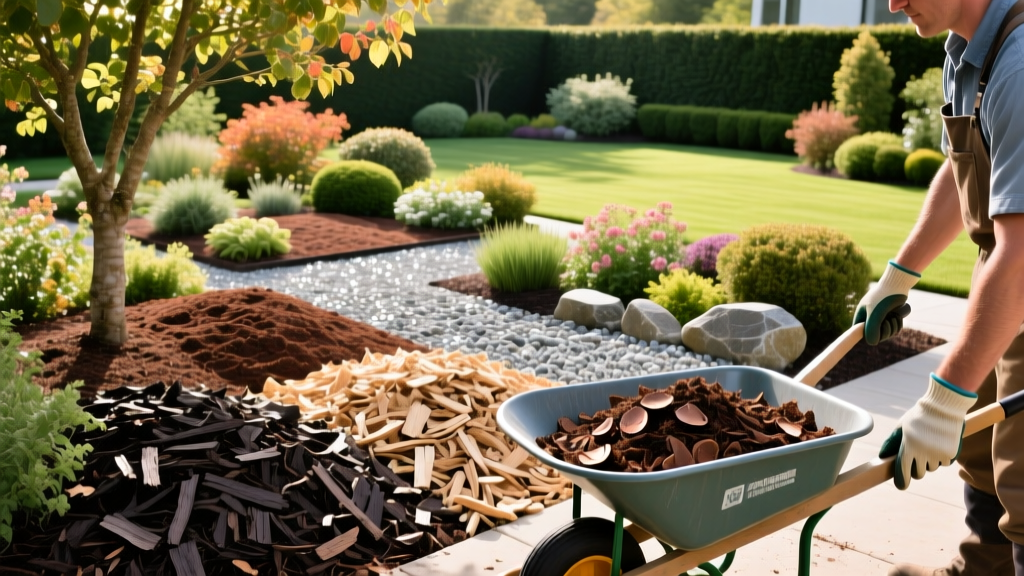
The Mulch Meaning Explained: Types, Benefits, and Uses
Beyond the Dictionary: The Practical Mulch Meaning
When homeowners search for the mulch meaning, they often find a simplistic dictionary definition: "material applied to the soil surface." However, in professional horticulture and landscape management, mulch is understood as a dynamic, multi-functional soil interface. It is not merely a decorative topping; it is a critical microclimate regulator, a moisture retention membrane, and, in the case of organic variants, a slow-release biological engine.
Understanding the true agronomic meaning of mulch requires looking past the aesthetic appeal of freshly dyed wood chips and examining how these materials interact with soil physics and root biology. According to the University of Minnesota Extension, proper mulching mimics the natural forest floor, where decades of decomposing leaf litter create a spongy, nutrient-rich O-horizon that buffers extreme temperature fluctuations and sustains complex mycorrhizal fungal networks.
The Core Purpose of Mulch: To replicate the natural detritus layer of a forest ecosystem, thereby moderating soil temperature, retaining subsurface moisture, suppressing competing weeds, and gradually feeding the soil food web as organic matter breaks down.
Organic vs. Inorganic: Decoding Mulch Categories
The fundamental divide in mulching materials is between organic (carbon-based, decomposable) and inorganic (mineral or synthetic, non-decomposable) options. Choosing between them dictates your long-term soil management strategy.
| Feature | Organic Mulch (Hardwood, Pine Straw, Arborist Chips) | Inorganic Mulch (River Rock, Lava Rock, Landscape Glass) |
|---|---|---|
| Soil Impact | Adds humus, improves cation exchange capacity (CEC), feeds microbes. | Zero nutritional value; can alter soil pH (e.g., limestone rock raises pH). |
| Lifespan | 1 to 3 years (requires annual or biennial top-dressing). | Permanent (does not decompose, but may sink into soil without geotextile fabric). |
| Thermal Buffer | Excellent insulator; keeps soil 8°F to 10°F cooler in peak summer. | Poor insulator; dark rocks absorb and radiate heat, stressing shallow roots. |
| 2026 Avg. Cost | $28 - $45 per cubic yard (bulk natural hardwood). | $75 - $150+ per ton (varies heavily by stone type and region). |
For cultivated garden beds, vegetable plots, and tree rings, organic mulch is overwhelmingly the superior choice. Inorganic mulches are best reserved for xeriscaping, drainage swales, or high-traffic pathways where soil amendment is not a priority.
The Hidden Science: How Mulch Alters Soil Biology
To truly grasp the mulch meaning in a biological context, you must understand the carbon-to-nitrogen (C:N) ratio. Fresh wood chips have a C:N ratio of roughly 400:1. When soil microbes begin breaking down this high-carbon material, they consume available nitrogen to fuel the process.
Debunking the "Nitrogen Tie-Up" Myth
A persistent gardening myth claims that wood chip mulch will rob your plants of nitrogen, causing yellowing leaves. Research published by the University of Wisconsin-Madison Extension clarifies that this nitrogen immobilization occurs only at the exact interface where the mulch touches the soil. It does not penetrate deep into the root zone. As long as you do not till fresh wood chips into the soil, your established plants will not suffer nitrogen deficiency. If you are mulching heavy-feeding annual vegetables, simply apply a thin layer of compost or a balanced organic fertilizer (like a 4-4-4 granular blend) beneath the mulch layer to offset any surface tie-up.
The Moisture Retention Multiplier
Bare soil loses water rapidly to evaporation and wind. A properly applied 3-inch layer of organic mulch reduces soil moisture evaporation by 70% to 80%. This is achieved by breaking the capillary action that draws water from the subsoil to the surface. In practical terms, this means reducing your summer irrigation frequency from three times a week to once a week, saving thousands of gallons of water annually while maintaining consistent soil turgor pressure in plant roots.
Application Framework: The 3-3-3 Rule for Perfect Mulching
Improper application is the leading cause of mulch-related plant decline. Arborists and landscape architects rely on the "3-3-3 Rule" to ensure optimal coverage without suffocating root systems.
- 3 Inches Deep: Maintain a uniform depth of 2 to 4 inches. Less than 2 inches fails to suppress weeds or buffer temperature; more than 4 inches restricts oxygen exchange to the feeder roots, leading to hypoxia and root rot.
- 3-Foot Radius: For trees and large shrubs, extend the mulch ring at least 3 feet from the trunk (ideally out to the drip line). This protects the trunk from string-trimmer damage and reduces competition from turfgrass roots.
- 3 Inches Away: Keep the mulch at least 3 inches away from the actual trunk or plant stem. Exposing the root flare is non-negotiable.
⚠️ WARNING: The Dangers of "Volcano Mulching"
Piling mulch high against a tree trunk (volcano mulching) traps moisture against the bark. This invites fungal cankers, promotes the growth of adventitious "girdling" roots that eventually strangle the tree, and provides a winter habitat for bark-chewing rodents like voles. Always pull mulch back to reveal the root flare.
Piling mulch high against a tree trunk (volcano mulching) traps moisture against the bark. This invites fungal cankers, promotes the growth of adventitious "girdling" roots that eventually strangle the tree, and provides a winter habitat for bark-chewing rodents like voles. Always pull mulch back to reveal the root flare.
Edge Cases: Identifying "Sour Mulch" and Allelopathy
Not all mulch is beneficial right out of the delivery truck. Professional landscapers know to watch for two specific biological hazards:
1. Sour Mulch (Anaerobic Fermentation)
When large piles of mulch are kept wet and compacted at the supplier's yard, the interior becomes anaerobic. Bacteria produce acetic acid and hydrogen sulfide, dropping the pH of the mulch to a highly toxic 2.0 to 3.0.
Identification: It smells sharply of vinegar, sulfur, or rotting silage rather than rich earth.
The Fix: Do not apply it. Spread the sour mulch out in a thin layer on a driveway or tarp, water it heavily, and let it aerate for two to three weeks. Retest with a cheap soil pH probe; once the pH rises above 5.5, it is safe to use.
2. Allelopathic Toxicity (Juglone)
Mulch derived from black walnut (Juglans niglans) trees contains juglone, a natural herbicide that inhibits the respiration of sensitive plants like tomatoes, peppers, azaleas, and hydrangeas. Always verify the wood source with your bulk supplier if you are mulching a vegetable garden or sensitive ornamental beds.
Sourcing and Cost Guide for 2026
Pricing for mulch has stabilized following the supply chain fluctuations of the early 2020s, but regional variations remain significant based on local timber milling availability.
- Bulk Natural Hardwood: $28 to $45 per cubic yard. (Covers ~100 sq ft at 3" deep).
- Bulk Dyed Mulch (Black/Brown/Red): $45 to $65 per cubic yard. Note: Ensure the dye is carbon-based (iron oxide for red), which is environmentally safe, rather than chemical stains.
- Bagged Mulch (2 cu. ft. bags): $4.50 to $7.50 per bag. Only cost-effective for very small urban beds or container topping. Buying 15 bags equals one cubic yard but costs 300% more than bulk.
- Arborist Chips: Often free or just the cost of a delivery fee ($50-$100) if you can connect with local tree-trimming crews via apps like ChipDrop. These are unaged, mixed wood and leaf materials, excellent for pathways and established perennials, but too hot (high nitrogen draw) for delicate annuals.
"The best mulch is the one that is locally abundant, appropriately aged, and applied with the root flare in mind. There is no magic commercial product that outperforms properly composted local hardwood bark." — Regional Urban Forestry Guidelines
Frequently Asked Questions
Does mulch attract termites to my house?
Mulch does not attract termites from afar; rather, it provides an ideal, moist foraging environment if termites are already present in the soil. To mitigate risk, maintain a 12-to-18-inch mulch-free buffer zone directly against your home's foundation, and ensure your soil grading slopes away from the structure to keep the foundation dry.
Should I put landscape fabric under my mulch?
For garden beds and tree rings, no. Woven geotextile fabrics block the natural incorporation of organic matter into the soil, harm earthworm populations, and eventually become clogged with silt, creating a waterproof barrier that suffocates roots. Fabric is only recommended under inorganic mulches (like river rock) to prevent the stones from sinking into the clay subsoil.
How often do I need to replace organic mulch?
Finely shredded hardwood decomposes fastest and typically requires a 1-inch top-dressing annually. Coarse pine bark nuggets or cedar chips can last 2 to 3 years before needing replenishment. Always measure your existing depth before adding more to avoid accidentally creating an overly thick, oxygen-depriving layer.

