
Gardening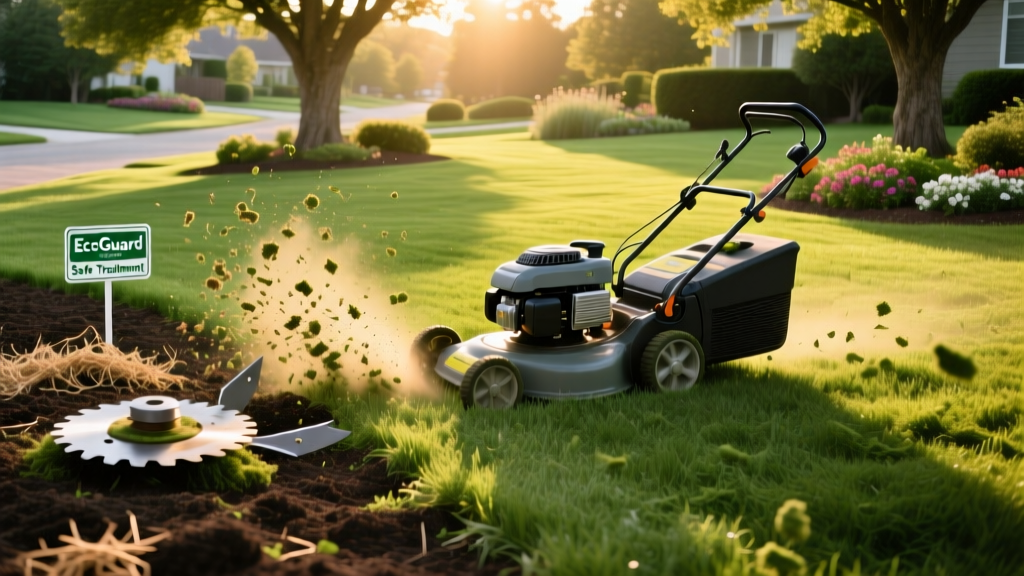
Mulching Blade vs Regular Blade: Soil Health & Mowing Guide
The Core Difference: Airflow vs. Recirculation
When evaluating a mulching blade vs regular blade from a soil amendment perspective, the distinction lies entirely in deck aerodynamics and clipping particle size. A standard regular blade (often called a 2-in-1 blade) features a single cutting edge and an aggressive, angled lift wing at the rear. This lift wing acts as a fan, creating a powerful updraft that stands grass blades upright for a clean cut and violently expels clippings out the side discharge or into a bagger.
Conversely, a mulching blade (3-in-1) features a pronounced curvature, a lower or non-existent lift wing, and multiple cutting surfaces along its length. Instead of expelling clippings, the mulching blade creates a localized vortex under the mower deck. This vortex suspends the grass clippings in mid-air, allowing the blade to chop them repeatedly before they fall back onto the soil surface. For lawn care professionals and homeowners focused on soil biology, this repeated chopping is the critical mechanism that transforms raw yard waste into a fast-acting, nitrogen-rich soil amendment.
Grasscycling as a Soil Amendment Strategy
Leaving clippings on the lawn—known as grasscycling—is one of the most effective passive soil amendment strategies available. According to the University of Minnesota Extension, grass clippings can supply up to 25% of your lawn's total annual nitrogen requirement. However, the efficacy of this natural fertilizer depends entirely on the surface-area-to-volume ratio of the clippings, which is dictated by your blade choice.
Soil Biology Data Highlight:
• C:N Ratio: Fresh grass clippings have a Carbon-to-Nitrogen ratio of roughly 15:1 to 20:1, making them a rapid-release nitrogen source.
• Decomposition Rate: Clippings chopped to under 1/4 inch by a mulching blade decompose in 48 to 72 hours. Clippings left at 1 inch or longer by a regular blade take 2 to 3 weeks to break down.
• Moisture Content: Clippings are 80% water. Finely mulched clippings release this moisture directly into the topsoil, acting as a micro-irrigation event during drought conditions.
• C:N Ratio: Fresh grass clippings have a Carbon-to-Nitrogen ratio of roughly 15:1 to 20:1, making them a rapid-release nitrogen source.
• Decomposition Rate: Clippings chopped to under 1/4 inch by a mulching blade decompose in 48 to 72 hours. Clippings left at 1 inch or longer by a regular blade take 2 to 3 weeks to break down.
• Moisture Content: Clippings are 80% water. Finely mulched clippings release this moisture directly into the topsoil, acting as a micro-irrigation event during drought conditions.
When a regular blade discharges large, unchopped clippings onto the lawn, they tend to clump and mat together. This matting blocks sunlight from reaching the turf canopy and creates anaerobic pockets at the soil line. These anaerobic conditions suppress beneficial aerobic soil microbes and earthworms, ultimately hindering the thatch decomposition process. A mulching blade prevents this by ensuring clippings filter down to the soil surface as a fine, breathable dust that soil bacteria can immediately begin mineralizing.
Performance Matrix: Blade Behavior Across Lawn Conditions
Choosing between a mulching blade vs regular blade requires understanding how each performs under varying environmental stressors. The table below maps blade performance against specific lawn conditions and their subsequent impact on soil health.
| Lawn Condition | Regular (2-in-1) Blade | Mulching (3-in-1) Blade | Soil & Turf Impact |
|---|---|---|---|
| Dry, Normal Height | Clean cut, wide discharge spread. | Fine dust, drops directly to soil. | Mulching wins; maximizes rapid nitrogen mineralization. |
| Wet or Damp Grass | Expels heavy clumps; requires raking. | Clogs deck, stalls engine, leaves wet mounds. | Regular wins; prevents anaerobic soil smothering and fungal breeding. |
| Overgrown (Missed a week) | Handles tall grass via high-lift airflow. | Fails to lift grass; results in uneven, ragged cut. | Regular wins; prevents turf tearing which invites soil-borne pathogens. |
| Active Fungal Outbreak | Discharges spores away from immediate cut line. | Recirculates and shreds infected tissue, spreading spores. | Regular wins (with bagging); prevents re-inoculation of soil microbiome. |
Edge Cases and Failure Modes in Soil Mulching
While mulching blades are superior for routine soil amendment, they possess distinct failure modes that can actively harm your lawn if ignored. The most critical failure mode is pathogen recirculation. If your lawn is suffering from active fungal diseases like Brown Patch (Rhizoctonia solani) or Dollar Spot, using a mulching blade will repeatedly chop infected tissue and blow the spores directly back into the turf canopy and soil surface. During disease outbreaks, you must switch to a regular blade and attach a bagger to physically remove the inoculum from the property.
Warning: The Thatch Myth vs. Reality
A common misconception is that mulching blades cause thatch buildup. Thatch is primarily composed of lignin-rich stems, stolons, and roots, not leaf blades. However, if you use a mulching blade on grass that has grown past the "Rule of Thirds" (cutting more than 1/3 of the blade height at once), the sheer volume of clippings will overwhelm the soil's microbial capacity. This excess organic matter can mat on the surface, mimicking thatch and blocking water infiltration. Always mow frequently enough that clippings are no longer than 1/4 inch when dropped.
A common misconception is that mulching blades cause thatch buildup. Thatch is primarily composed of lignin-rich stems, stolons, and roots, not leaf blades. However, if you use a mulching blade on grass that has grown past the "Rule of Thirds" (cutting more than 1/3 of the blade height at once), the sheer volume of clippings will overwhelm the soil's microbial capacity. This excess organic matter can mat on the surface, mimicking thatch and blocking water infiltration. Always mow frequently enough that clippings are no longer than 1/4 inch when dropped.
Step-by-Step: Converting Your Mower for Optimal Soil Mulching
Simply swapping the blade is not enough to achieve the fine particle size required for rapid soil breakdown. The mower deck must be optimized to maintain the clipping vortex.
- Scrape the Deck: Use a putty knife to remove all caked-on, dried grass from the underside of the mower deck. Any ridges or bumps will disrupt the aerodynamic vortex, causing clippings to drop prematurely before they are fully pulverized.
- Plug the Discharge: If your mower does not have a built-in mulching plug, install the OEM mulching plug or a specialized magnetic mulch cover to seal the side discharge chute completely.
- Install the Mulching Blade: Ensure the cutting edge faces the correct direction (usually toward the deck). Torque the center spindle nut to the manufacturer's specification (typically 35-50 ft-lbs for walk-behind mowers).
- Adjust Mowing Height: Raise your deck slightly. Mulching requires a larger deck volume to allow clippings to circulate. If you normally cut at 3 inches, raise to 3.5 inches when using a mulching blade to prevent deck clogging.
- Overlap Passes: When mowing, overlap your previous wheel track by 2 to 3 inches. This ensures the outer edge of the deck, where airflow is weakest, still processes the grass effectively.
Buying Specs: What to Look for in a Mulching Blade
Not all mulching blades are engineered equally. When shopping, look beyond the packaging and evaluate the metallurgy and tooth design. Standard OEM mulching blades (typically $15 to $25) rely solely on the blade's curvature to chop grass. For superior soil amendment results, upgrade to a toothed mulching blade, such as the Oregon Gator G5 or MaxPower Mulching Blades ($30 to $45 per set).
These premium blades feature aggressive, angled teeth along the trailing edge. These teeth act as secondary cutting surfaces that aggressively shred the clippings into a near-dust consistency. Furthermore, check the steel hardness. High-quality aftermarket blades are heat-treated to a Rockwell C scale (HRC) of 50 to 55. Blades softer than HRC 48 will dull rapidly when hitting hidden soil mounds or debris, rendering their mulching capability useless within a few mowing sessions. According to Penn State Turfgrass Science, maintaining a razor-sharp blade is paramount; a dull blade tears the grass tissue, causing the tips to turn brown and drastically slowing the microbial decomposition process once the clippings hit the soil.
The Expert Verdict
For homeowners dedicated to building a resilient, nutrient-dense soil microbiome, the mulching blade is the undisputed winner for 80% of the mowing season. It transforms a waste product into a free, slow-release nitrogen amendment that feeds soil bacteria and conserves topsoil moisture. Keep a regular high-lift blade on hand for the 20% of edge cases—specifically wet spring growth flushes, overgrown vacation returns, and active fungal disease management—to ensure your lawn remains healthy both above and below the soil line.

