
Gardening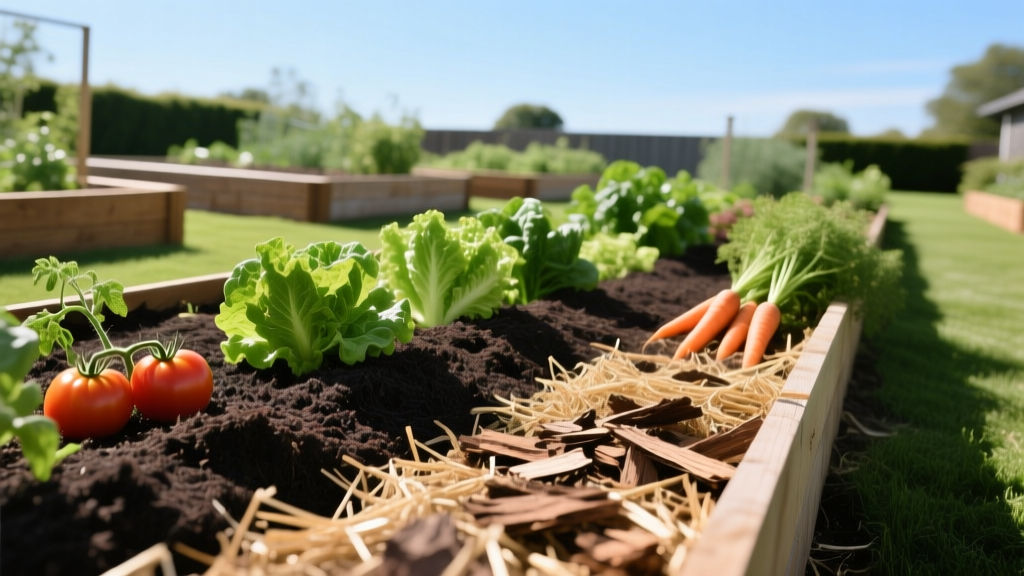
Mastering Mulching in Vegetable Garden Beds: A Soil Amendment Guide
The Soil Chemistry of Mulch: Carbon-to-Nitrogen Dynamics
When executing a strategy for mulching in vegetable garden beds, treating mulch merely as a weed barrier is a critical mistake. Organic mulches are active soil amendments that continuously interact with your soil microbiome. The most important metric to understand is the Carbon-to-Nitrogen (C:N) ratio. Soil bacteria require both carbon for energy and nitrogen for protein synthesis. When you apply a high-carbon mulch, microbes will scavenge available nitrogen from the surrounding topsoil to break it down, a process known as nitrogen immobilization or 'tie-up'.
Warning: The Wood Chip Trap
Never use fresh arborist wood chips (C:N ratio of 400:1) directly around shallow-rooted annual vegetables. The severe nitrogen drawdown will stunt crop growth and cause chlorosis. Reserve fresh wood chips for perennial pathways or compost them for 12 to 18 months before applying to active vegetable beds.
Never use fresh arborist wood chips (C:N ratio of 400:1) directly around shallow-rooted annual vegetables. The severe nitrogen drawdown will stunt crop growth and cause chlorosis. Reserve fresh wood chips for perennial pathways or compost them for 12 to 18 months before applying to active vegetable beds.
Understanding the baseline C:N ratios of common mulching materials allows you to predict how they will alter your soil fertility over a growing season. According to Cornell University Soil Health, maintaining a balanced soil food web requires matching your mulch carbon input with your soil's existing nitrogen reserves.
| Mulch Material | Approximate C:N Ratio | Decomposition Rate | Nitrogen Impact |
|---|---|---|---|
| Fresh Grass Clippings | 15:1 | Rapid (Weeks) | Releases Nitrogen |
| Finished Compost | 20:1 | Moderate (Months) | Neutral / Slow Release |
| Shredded Autumn Leaves | 60:1 | Moderate (Months) | Mild Tie-Up |
| Wheat or Oat Straw | 80:1 | Slow (1 Season) | Moderate Tie-Up |
| Pine Bark Fines | 150:1 | Very Slow (Years) | Severe Tie-Up |
Decision Matrix: Matching Mulch Type to Crop Lifecycle
Not all vegetables respond identically to the same mulching environment. Heavy feeders with deep taproots require different moisture retention and thermal regulation profiles than shallow-rooted, quick-turnover crops. Use this matrix to select the optimal mulch for your specific plantings.
Heavy Feeders & Long-Season Crops (Tomatoes, Peppers, Eggplant)
These crops demand consistent soil moisture to prevent blossom end rot and require warm soil temperatures. Wheat straw or shredded leaf mold provides excellent insulation, keeping root zones cool during peak summer heat while retaining up to 70% of soil moisture evaporation. Apply a 3-inch layer after the soil has fully warmed in late spring.
Shallow-Rooted & Quick Crops (Lettuce, Spinach, Radishes)
Leafy greens and root vegetables have delicate, shallow root systems that cannot penetrate thick, matted layers of straw. Furthermore, straw can harbor slugs, which decimate tender brassica leaves. For these crops, use a 1-inch top-dressing of screened, finished compost or very fine, dried grass clippings (applied in thin layers to prevent anaerobic matting).
Application Protocols: Thickness, Timing, and the 'Collar Gap'
Improper application is the leading cause of mulch-induced crop failure. Follow these precise operational steps to ensure your mulching in vegetable garden beds enhances rather than hinders growth.
- Prep the Base: Eradicate all existing weeds, particularly perennial bindweed or bermudagrass, before laying mulch. Mulch will not smother established perennial weeds. Water the bed deeply to a 6-inch depth prior to application.
- Calculate Volume: For a standard 4x10 foot raised bed (40 sq ft), a 2-inch mulch layer requires roughly 6.6 cubic feet of material. One standard square bale of compressed straw (typically $6 to $10 in 2026) will fluff up to cover about 50 square feet at a 2-inch depth.
- Enforce the Collar Gap: This is non-negotiable. Pull all mulch back exactly 2 inches from the main stem or crown of every plant. Piling mulch against the stem creates a humid microclimate that invites fungal pathogens like Phytophthora and crown rot, and provides cover for stem-boring insects.
- Maintain Aerobic Conditions: If using grass clippings, never apply more than 0.5 inches at a time. Thicker layers become slimy, anaerobic, and generate heat that can physically burn plant stems.
Troubleshooting Mulch-Induced Crop Failures
Even with careful planning, organic mulches can trigger biological imbalances. Use this diagnostic guide to identify and correct issues mid-season.
- Symptom: Lower leaves turning pale yellow; stunted upward growth.
Cause: Nitrogen immobilization from high C:N mulch (like straw or bark) robbing the topsoil.
Fix: Side-dress the affected plants with a fast-acting nitrogen source. Apply blood meal (12-0-0) at a rate of 1 tablespoon per plant, scratching it lightly into the soil just inside the mulch line, then water heavily. - Symptom: Slime trails on leaves; seedlings sheared off at the soil line.
Cause: Straw or thick leaf mulch providing daytime harborages for slugs and snails.
Fix: Rake back the mulch from the immediate planting zone. Apply an iron phosphate-based slug bait (such as Sluggo) which is safe for organic vegetable production, or switch to a hot-composted mulch that dries out faster on the surface. - Symptom: White, crusty mold forming on the mulch surface; plants wilting despite moist soil.
Cause: Hydrophobic fungal mats (often Fuligo septica or slime molds) developing in thick, constantly wet straw layers, preventing water penetration.
Fix: Break up the mulch layer with a hand cultivator to restore airflow. Reduce irrigation frequency and switch to drip tape placed under the mulch rather than overhead watering.
Sourcing and Cost Analysis for Home Growers
When budgeting for your garden, understanding the economics of bulk versus bagged mulch is essential. According to landscaping data tracked by the Old Farmer's Almanac, sourcing locally can cut amendment costs by up to 60%.
Bulk Delivery: If you have multiple large beds, ordering bulk compost or aged leaf mold by the cubic yard is the most economical route. In 2026, bulk municipal compost averages $30 to $45 per cubic yard, plus a delivery fee of $50 to $80. One cubic yard covers 160 square feet at a 2-inch depth.
Bagged Products: Bagged mulch is convenient for small urban gardens or container top-dressing. A standard 2-cubic-foot bag of premium organic compost costs between $5.50 and $8.00 at big-box retailers. To cover the same 160 square feet, you would need 40 bags, totaling over $220.
For the ultimate soil-building strategy, source raw straw bales from local feed stores in the autumn when prices drop to $4 to $6 per bale, and stockpile them under a tarp. By spring, the outer layers will have begun to break down, creating a partially composted, biologically active mulch perfect for early transplants.
Key Takeaways for Vegetable Mulching
Successful mulching in vegetable garden beds requires matching the C:N ratio of your material to your crop's nitrogen needs. Always enforce a 2-inch collar gap around stems to prevent rot, calculate your cubic volume accurately to avoid overspending, and monitor for nitrogen tie-up symptoms in heavy-feeding crops. For deeper insights on landscape mulching, consult resources from Penn State Extension.

