
Gardening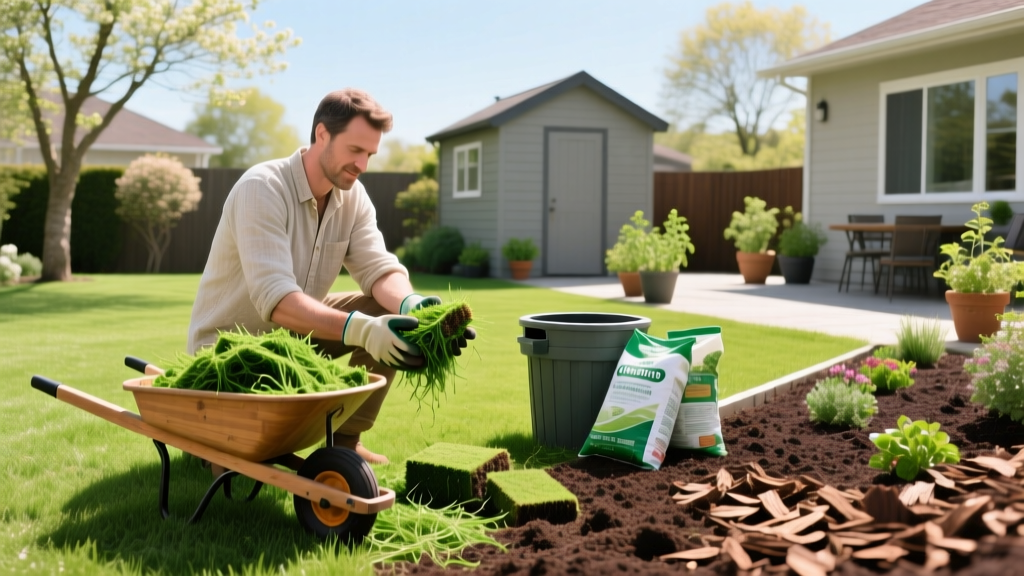
Mulching vs Side Discharge: Harvesting Clippings for Garden Mulch
The debate between mulching vs side discharge is traditionally framed around lawn aesthetics and turf health. However, for the dedicated gardener, this decision dictates whether your landscape's most valuable nitrogen-rich resource is locked into the soil profile or harvested to amend your vegetable beds. Grass clippings are not waste; they are a high-value, free soil amendment. Understanding the mechanical and biological differences between mulching decks and side discharge chutes allows you to strategically route nutrients exactly where your garden needs them most.
The Nutritional Profile of Grass Clippings
Grass clippings possess an approximate N-P-K (Nitrogen-Phosphorus-Potassium) ratio of 4-2-1. A standard 5,000-square-foot lawn generates roughly 500 pounds of clippings annually. By side-discharging and harvesting these clippings, you are effectively diverting 20 pounds of pure nitrogen away from the turf and into your garden beds, reducing the need for synthetic fertilizers like blood meal or fish emulsion.
The Mulching Approach: Turf-Centric Nutrient Cycling
Mulching mowers utilize specialized high-lift blades with extended serrated edges and a domed deck design. This creates a vacuum that suspends the grass blades in the cutting chamber, forcing them through the blade multiple times before dropping them as fine particles directly onto the soil surface.
When to Choose Mulching
- Drought-Stressed Lawns: Mulching acts as a micro-layer of insulation, reducing soil moisture evaporation by up to 15% during peak summer heat.
- Sandy Soils: Lawns with poor nutrient retention benefit from the immediate decomposition of fine clippings, which feed soil microbes directly at the root zone.
- Time Efficiency: Eliminates the need for raking, bagging, or tarp-collection, saving an average of 30% of total mowing time.
The Garden Trade-off: By mulching, you are prioritizing the lawn. The clippings decompose in situ, meaning your raised beds, perennials, and vegetable rows receive zero nutritional benefit from the mowing session.
Side Discharge: The Garden Bed Harvesting Method
Side discharge mowers eject clippings laterally through a deflector chute. The clippings are cut only once, resulting in longer, heavier strands that sit on top of the turf canopy. While this can cause thatch buildup if left on the lawn, it is the ideal mechanism for harvesting material for garden use.
Strategic Discharge Techniques
- The Tarp Catchment: Lay a 10x10 foot canvas tarp over the lawn edge. Mow parallel to the tarp, angling the side discharge chute so clippings blow directly onto the canvas. Gather the corners to transport to the garden.
- Direct Bed Injection: For garden beds bordering the lawn, remove the discharge deflector guard (if safe and legal in your jurisdiction) and mow along the perimeter, blowing fresh clippings directly into the garden pathways or between crop rows.
- Windrow Accumulation: Mow in concentric circles, discharging outward, to create a continuous windrow of clippings that can be easily raked into a wheelbarrow.
⚠️ CRITICAL WARNING: Herbicide Carryover
Never side-discharge clippings into edible garden beds if the lawn has been treated with broadleaf herbicides containing clopyralid, aminopyralid, or picloram. These synthetic auxins have soil half-lives exceeding 120 days and can persist in compost piles for over a year. Even trace amounts will cause severe phytotoxicity in sensitive crops like tomatoes, peas, and beans, manifesting as severe leaf cupping, stunted growth, and crop death. If you use these herbicides, you must wait a minimum of four full mowing cycles (or 30 days) before harvesting clippings for the garden, and even then, restrict use to ornamental beds only.
Decision Matrix: Mulching vs Side Discharge
| Feature | Mulching Deck | Side Discharge |
|---|---|---|
| Clipping Size | Fine (1/4 inch or less) | Coarse (1 to 3 inches) |
| Decomposition Rate | Rapid (3-5 days) | Slow (2-4 weeks) |
| Garden Utility | Low (locked in turf) | High (easily harvested) |
| Wet Grass Performance | Poor (clogs deck) | Moderate (ejects but clumps) |
| Thatch Risk | Very Low | High (if left on lawn) |
Curing and Applying Side-Discharged Clippings
Freshly side-discharged clippings have a moisture content of 75-85%. If applied thickly to garden beds in this state, they form an anaerobic, slimy mat that generates excessive heat (often exceeding 140°F) and produces ammonia gas, which will burn plant stems and suffocate roots. Proper curing is mandatory.
Step-by-Step Curing Protocol
- Spread for Desiccation: Rake the harvested clippings onto a driveway, tarp, or empty garden bed in a layer no thicker than 2 inches.
- Turn Once: After 12 hours, turn the pile with a pitchfork to expose the wet center to sunlight and airflow.
- Verify Dryness: After 24 to 48 hours, the clippings should turn pale brown/green and feel crisp to the touch. The moisture content should drop below 40%.
- Apply to Beds: Spread the cured clippings around garden plants to a depth of 1.5 to 2 inches. Keep the mulch at least 2 inches away from the main stem of tomatoes, peppers, and brassicas to prevent collar rot.
Note: If you must apply fresh, wet clippings immediately, limit the application depth to a maximum of 1/4 inch. At this thickness, they will dry in place without matting.
The Hybrid Solution: Composting for C:N Balance
Grass clippings are a 'green' composting material with a Carbon-to-Nitrogen (C:N) ratio of roughly 15:1. An optimal compost pile requires a C:N ratio of 30:1. Side-discharging clippings directly into a compost bin without 'browns' will result in a foul-smelling, anaerobic sludge.
To compost side-discharged clippings effectively, use the 2:1 Volume Rule. For every one wheelbarrow of fresh grass clippings, mix in two wheelbarrows of high-carbon browns, such as shredded corrugated cardboard, dry autumn leaves, or wood shavings. Monitor the core temperature with a compost thermometer; the pile should reach 130°F to 145°F within 48 hours to kill weed seeds introduced from the lawn edges.
Frequently Asked Questions
Can I side-discharge clippings over wood chip pathways?
Yes. Fresh side-discharged clippings are excellent for topping up garden pathways. As they break down, they feed the underlying soil biology without introducing weed competition to your planted beds. The high nitrogen content also accelerates the decomposition of the wood chips beneath them.
Does side discharging spread lawn weeds into the garden?
It can. If your lawn is heavily infested with seed-producing weeds like crabgrass, dandelions, or Poa annua, side discharging will broadcast those seeds into your garden beds. Only harvest clippings for garden use if your turf is relatively weed-free, or ensure the clippings are hot-composted (reaching 140°F+) to destroy seed viability before application.
For more foundational knowledge on breaking down organic matter, refer to the EPA's guide on composting basics. Additionally, understanding how turf management intersects with soil health is critical; resources like the NRDC's composting guidelines provide excellent frameworks for balancing lawn care with sustainable garden practices.

