
Gardening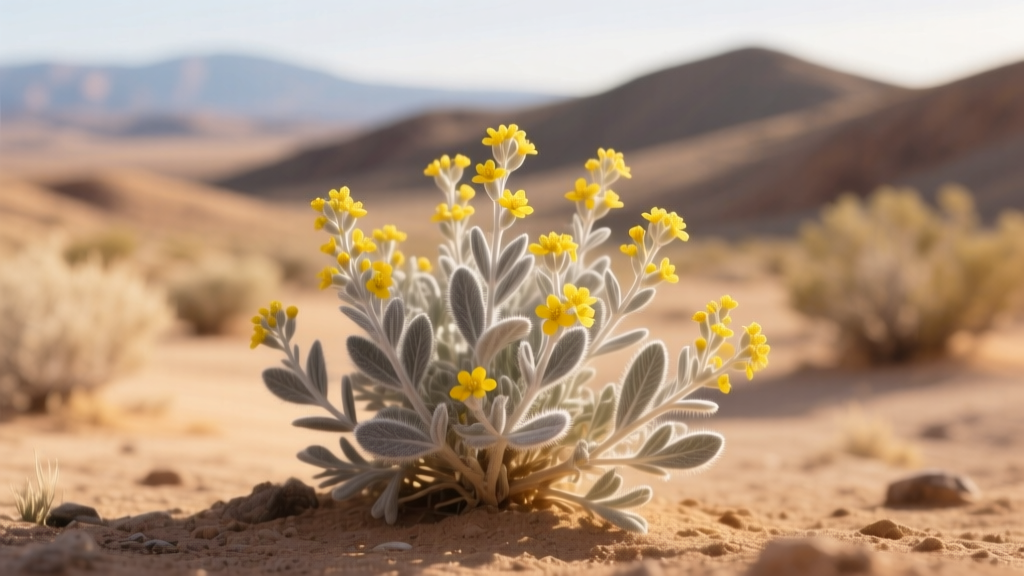
What Is Nevada's State Flower? Identifying and Growing Sagebrush
When residents, students, and botanists ask what is Nevada's state flower, the answer points to a resilient, aromatic shrub rather than a traditional blooming blossom: the Sagebrush (Artemisia tridentata). Officially designated as the state flower in 1917, this iconic plant defines the visual and ecological landscape of the Great Basin. Unlike showy annuals or delicate perennials, sagebrush is a woody, drought-deciduous shrub that thrives in harsh, arid environments where few other plants can survive.
For homeowners and landscapers in the Intermountain West, understanding sagebrush goes beyond state trivia. As of 2026, xeriscaping with native shrubs remains the most effective strategy for water conservation in high-desert climates. This guide provides a deep-dive identification framework, ecological context, and actionable cultivation protocols for integrating Nevada's state flower into a sustainable landscape.
The Botanical Identity of Nevada's State Flower
The sagebrush belonging to the Asteraceae (sunflower) family is not a true sage (genus Salvia). Instead, it is a species of wormwood. The specific epithet tridentata translates to "three-toothed," referring to the distinct shape of its leaf tips. According to the USDA Plants Database, Artemisia tridentata is the dominant shrub across millions of acres of western North America, forming vast, silvery seas of vegetation that stabilize soil and provide critical winter forage.
Field Identification: How to Spot True Sagebrush
Accurate identification is critical, especially when sourcing plants for restoration or xeriscaping. Misidentifying lookalikes can lead to poor landscape performance. Use this diagnostic checklist to confirm you are working with true Great Basin sagebrush:
- Leaf Structure: Leaves are wedge-shaped, measuring 1/4 to 1/2 inch long, and terminate in three distinct lobes (tridentate). They are covered in fine, silvery-gray hairs called trichomes, which reflect intense UV radiation and trap a boundary layer of humid air to reduce transpiration.
- Bark and Wood: Older stems feature a shredded, fibrous, light-gray bark. The wood is notoriously brittle and lacks growth rings, making age determination via dendrochronology impossible.
- Aroma: When crushed or wetted by rain, the leaves release a sharp, camphor-like, resinous scent. This is caused by volatile terpenes (camphor, camphene, and cineole) that deter herbivores and inhibit the germination of competing plant seeds (allelopathy).
- Flowers: Blooming occurs in late summer to early fall. The flowers are not showy; they appear as tiny, pale yellow, nodding disc florets clustered on short panicles at the ends of branches.
Ecological Importance in the Great Basin
Sagebrush is a keystone species. Its deep taproot (which can extend 10 to 20 feet underground to access the water table) and extensive lateral root system prevent severe wind and water erosion. Furthermore, it creates a microclimate that facilitates the growth of native bunchgrasses like Indian ricegrass (Achnatherum hymenoides) and bluebunch wheatgrass (Pseudoroegneria spicata).
Ecological Keystone Fact: The Greater Sage-Grouse (Centrocercus urophasianus) relies almost exclusively on sagebrush for survival. The birds consume the leaves during winter when other forage is buried under snow, and they use the dense canopy for nesting and protection from aerial predators. Without Nevada's state flower, this iconic bird would face immediate localized extinction.
Cultivating Sagebrush in a Xeriscape Garden
Growing Artemisia tridentata in a residential setting requires replicating its native high-desert conditions. The most common failure mode for home gardeners is overwatering and planting in heavy, moisture-retentive soils, which rapidly induces fatal root rot caused by Phytophthora fungi.
Step-by-Step Planting Protocol
- Site Selection: Choose a location with full sun exposure (minimum 8 hours of direct sunlight). Avoid low-lying areas where cold air pools or where irrigation runoff collects.
- Soil Preparation: Sagebrush requires exceptionally well-draining soil. If your native soil is heavy clay, amend the planting zone with a 50/50 mix of native soil and 3/8-inch crushed pumice or expanded shale. Target a soil pH between 6.5 and 8.5; the plant thrives in alkaline conditions.
- Planting Depth: Remove the plant from its nursery container and gently tease out the outer roots. Plant the root crown exactly at the soil surface. Burying the crown even 1/2 inch too deep invites collar rot.
- Mulching: Apply a 2-inch layer of inorganic gravel mulch (crushed basalt, granite, or pumice). Never use organic wood chips or bark mulch around sagebrush, as they retain too much moisture and harbor fungal pathogens.
- Establishment Watering: Water deeply immediately after planting. For the first 90 days, apply 1 gallon of water every 10 days. After the first year, cease supplemental watering entirely; the plant should survive on natural precipitation (typically 8 to 14 inches annually).
Environmental Requirements Matrix
| Parameter | Ideal Specification | Tolerance / Failure Threshold |
|---|---|---|
| Soil Texture | Sandy loam, gravelly loam | Heavy clay (causes asphyxiation) |
| Soil pH | 7.0 - 8.5 (Alkaline) | Below 6.0 (Acidic) |
| Annual Rainfall | 8 - 14 inches | Over 20 inches (high rot risk) |
| USDA Hardiness Zone | 4 - 8 | Zone 9+ (excessive summer heat) |
| Sun Exposure | Full Sun (8+ hours) | Partial shade (causes leggy growth) |
Common Lookalikes: Sagebrush vs. Rabbitbrush
When identifying native shrubs in the wild or at a nursery, sagebrush is frequently confused with Rabbitbrush (Ericameria nauseosa or Chrysothamnus viscidiflorus). While both are native to the Great Basin and excellent for xeriscaping, their cultural requirements and visual traits differ. The Lady Bird Johnson Wildflower Center notes that rabbitbrush is often more tolerant of disturbed, highly alkaline soils, whereas sagebrush prefers stable, undisturbed ecosystems.
| Feature | Sagebrush (A. tridentata) | Rabbitbrush (E. nauseosa) |
|---|---|---|
| Leaf Margin | Tridentate (three distinct teeth at tip) | Entire (smooth edges, linear shape) |
| Blooming Season | Late summer (inconspicuous yellow) | Early fall (showy bright yellow clusters) |
| Stem Flexibility | Brittle, snaps easily | Highly flexible, rubbery stems |
| Aroma | Sharp, camphor-like, resinous | Mild, slightly sweet or rubbery |
Propagation: Seed Stratification and Cuttings
Commercially available sagebrush plants are often expensive due to slow growth rates. Propagating your own requires patience. Sagebrush seeds exhibit morphophysiological dormancy. To achieve germination rates above 40%, seeds must undergo cold, moist stratification.
Propagation Warning: Do not attempt to transplant mature sagebrush from the wild. The species develops a massive, deep taproot that is easily severed during digging. Severing the taproot almost universally results in transplant shock and death within 60 days. Always use nursery-grown container stock or direct-seed in place.
For seed propagation, mix harvested achenes with damp vermiculite and refrigerate at 38°F to 40°F for 45 to 60 days. Surface-sow the seeds in a well-draining cactus mix; do not bury them, as they require light to germinate. Maintain a soil temperature of 65°F to 70°F. Germination typically occurs within 14 to 21 days.
Frequently Asked Questions
Does sagebrush attract pollinators?
Yes. While its flowers are wind-pollinated and lack nectar, sagebrush provides critical habitat for native bees and acts as a host plant for several Lepidoptera species, including the sagebrush girdle moth and various checkerspot butterflies.
Can I prune Nevada's state flower to keep it small?
Sagebrush tolerates light pruning, but it does not regenerate well from old, leafless wood. Prune only the current season's growth in late winter, removing no more than 20% of the canopy. Never cut back into the thick, gray, woody base, as dormant buds are rarely present on mature stems, and the branch will die back to the trunk.
Is sagebrush a fire hazard?
Sagebrush contains highly volatile terpenes, making it extremely flammable, especially during late-summer droughts. When designing a xeriscape, maintain defensible space by planting sagebrush at least 30 feet away from structures and avoiding dense, contiguous monocultures near the home ignition zone.

