
Gardening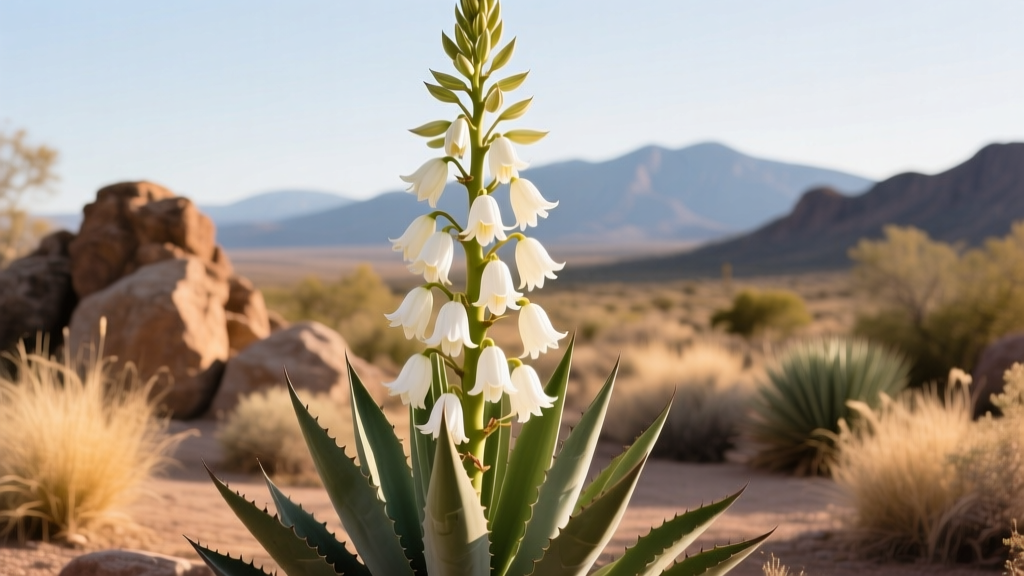
What Is New Mexico's State Flower? A Guide to Growing Yucca
The Official State Flower of New Mexico: The Yucca
If you are researching what is New Mexico's state flower, the answer is the Yucca. Specifically, the legislation adopted on February 28, 1927, designates the flower of the Yucca plant as the official state symbol. While the law does not single out one specific species, the Yucca elata (Soaptree Yucca) and Yucca baccata (Banana Yucca) are the most prominent native varieties thriving across the state's arid landscapes.
Belonging to the Asparagaceae family (formerly classified under Agavaceae), the Yucca is a cornerstone of desert xeriscaping. It is celebrated for its architectural rosettes of sword-like leaves and its spectacular, towering panicles of creamy white, bell-shaped blossoms that attract specialized pollinators, primarily the Yucca moth (Tegeticula yuccasella).
'The Yucca is not merely a decorative desert survivor; it is an ecological linchpin. Its obligate mutualism with the Yucca moth represents one of nature's most precise evolutionary partnerships.' — Lady Bird Johnson Wildflower Center
Yucca vs. Agave: Identifying the True Desert Icon
Homeowners frequently confuse Yucca with Agave when planning drought-tolerant gardens. While both feature rosettes of succulent-like leaves, their botanical behaviors and structural traits differ significantly. Understanding these differences is critical for long-term garden planning.
| Trait | Yucca (e.g., Y. elata) | Agave (e.g., A. americana) |
|---|---|---|
| Flowering Lifespan | Polycarpic (flowers repeatedly over decades) | Monocarpic (dies after a single flowering event) |
| Leaf Structure | Terminal spine present, but leaves often flexible | Rigid, thick leaves with severe terminal spines |
| Growth Habit | Often arborescent (forms a woody trunk over time) | Mostly trunkless, ground-hugging rosettes |
| Flower Stalk | Tall, relatively narrow, branching or unbranched | Massive, thick, heavily branching panicle |
Key Identification Traits of Soaptree Yucca (Yucca elata)
The Soaptree Yucca is the quintessential New Mexico landscape specimen. It can reach heights of 10 to 15 feet in its natural habitat, though it typically stays under 6 feet in residential cultivation. The leaves are narrow (about 1/4 to 1/2 inch wide), topped with a sharp terminal spine, and feature fine, curly white threads peeling from the margins. According to the USDA Plants Database, its deep taproot allows it to access subterranean moisture far below the caliche layers of the desert floor.
How to Grow and Cultivate Yucca in Your Home Garden
Growing a Yucca requires replicating its native, high-desert environment. The most common cause of failure in residential landscapes is excessive moisture retention, which rapidly leads to fatal crown rot.
Site Selection and Sun Exposure
Yuccas demand full sun, requiring a minimum of 8 hours of direct, unfiltered sunlight daily. Avoid planting near roof drip lines, downspouts, or at the bottom of slopes where water naturally pools. South-facing or west-facing exposures are ideal, as the reflected heat mimics their native Chihuahuan and Sonoran desert habitats.
Pro Tip: The Percolation Test
Before planting, dig a 12-inch deep hole and fill it with water. Let it drain completely, then refill it. Measure the drainage rate. If the water level drops slower than 1 inch per hour, your soil is too dense for Yucca. You must heavily amend the soil or plant in a raised berm to ensure survival.
Before planting, dig a 12-inch deep hole and fill it with water. Let it drain completely, then refill it. Measure the drainage rate. If the water level drops slower than 1 inch per hour, your soil is too dense for Yucca. You must heavily amend the soil or plant in a raised berm to ensure survival.
The Ideal Xeriscape Soil Recipe
Yuccas thrive in alkaline, fast-draining soils with a pH between 6.5 and 8.0. If you are dealing with heavy clay, do not plant directly into the native earth. Use this specific amendment ratio to construct a planting mound:
- 40% Coarse Pumice or Builder's Sand (3/8-inch grade; avoid fine play sand which compacts)
- 40% Native Topsoil (screened to remove large rocks)
- 20% Well-Aged Compost (to provide minimal, slow-release organic matter)
When setting the root ball, ensure the crown (where the roots meet the stem) sits exactly 1/2 inch above the surrounding soil grade. Backfill gently and tamp down to eliminate air pockets, then top-dress with 2 inches of 3/4-inch crushed gravel to keep the base dry and prevent weed competition.
Watering and Drought Acclimation Schedule
While Yuccas are famously drought-tolerant, they require strategic irrigation to establish a deep taproot during their first year.
- Weeks 1-4: Apply 1 gallon of water every 5 days.
- Months 2-3: Apply 1.5 gallons every 10 days.
- Months 4-12: Apply 2 gallons every 14 days, tapering off as winter approaches.
- Established (Year 2+): Rely entirely on natural rainfall. Supplement with 1 inch of water per month only during severe summer droughts when daytime temperatures exceed 100°F for consecutive weeks.
Fertilization and Pruning Protocols
Over-fertilizing Yucca promotes weak, sappy growth that attracts pests. Avoid high-nitrogen lawn fertilizers. Instead, apply a 5-10-10 slow-release granular fertilizer at a rate of 1 tablespoon per square foot of the root zone in early spring (late March to early April).
Pruning is minimal but necessary for aesthetics and safety. As lower leaves age, they turn brown and form a 'skirt' around the trunk. Wear ANSI-rated eye protection and heavy leather gauntlet gloves. Use bypass loppers with a 2-inch cutting capacity to snip dead leaves flush against the trunk. Never tear the leaves downward, as this can strip the trunk's protective bark and invite fungal pathogens.
Common Pests, Diseases, and Troubleshooting
Even resilient desert plants face localized threats. The New Mexico State University Cooperative Extension Service frequently advises homeowners on the following specific issues:
The Yucca Plant Bug (Halticotoma valida)
These small, reddish-brown insects cluster on the undersides of leaves and flower stalks, sucking sap and causing stippling. Treatment: Apply a ready-to-use insecticidal soap (potassium salts of fatty acids) at a concentration of 2.5 oz per gallon of water. Spray thoroughly in the early morning when temperatures are below 85°F to prevent leaf burn.
Phytophthora Root and Crown Rot
Caused by soil-borne water molds, this disease manifests as yellowing, drooping lower leaves and a soft, mushy base. Prevention: Ensure perfect drainage and avoid mulching with organic wood chips, which trap moisture. If a plant is severely infected, it cannot be saved; remove it entirely, excavate 12 inches of surrounding soil, and solarize the area with clear 6-mil plastic for 4 weeks before replanting.
Frequently Asked Questions
Can I grow New Mexico's state flower in a container?
Yes, smaller species like Yucca glauca or juvenile Yucca elata thrive in containers. Use a pot at least 24 inches deep to accommodate the taproot. The container must have a minimum of three 1/2-inch drainage holes. Use a commercial cactus and succulent mix, and elevate the pot on 1-inch riser feet to ensure unrestricted water escape.
Is the Yucca flower edible?
Yes, the petals of the Yucca flower are edible and have a slightly sweet, artichoke-like flavor. They can be eaten raw in salads or lightly sautéed. However, the stems, leaves, and roots of most ornamental Yucca species contain saponins, which are toxic if ingested in large quantities, so restrict consumption strictly to the blossoms.
Will deer or rabbits eat my Yucca?
Yucca is highly deer and rabbit resistant. The rigid, fibrous leaves and sharp terminal spines make it physically painful for foraging wildlife to consume. It is an excellent perimeter plant for gardens plagued by heavy herbivore traffic.

