
Gardening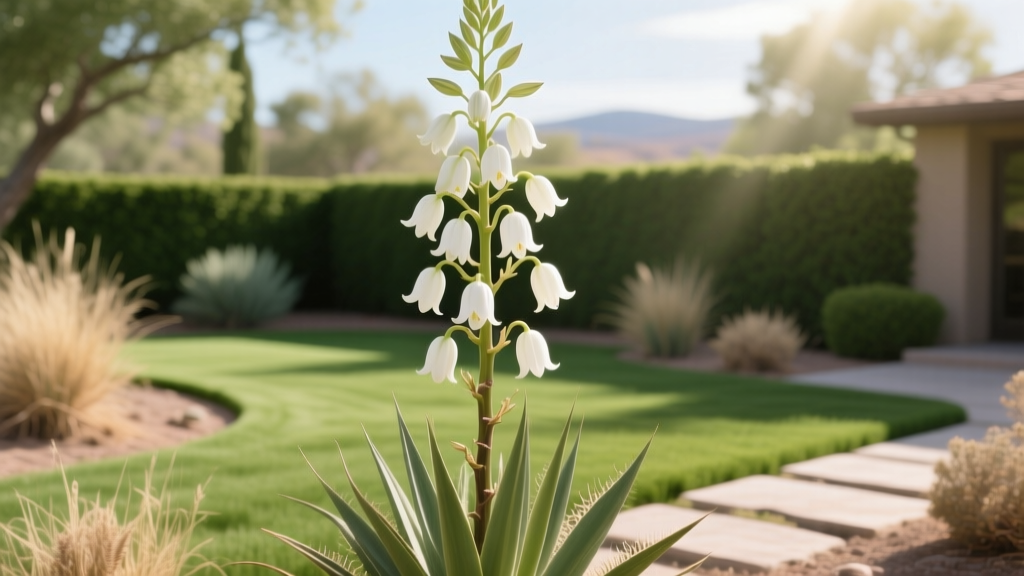
What Is the State Flower for New Mexico? A Yucca Identification Guide
The Official State Flower of New Mexico
When asking what is the state flower for New Mexico, the answer is the Yucca flower. Officially adopted on March 14, 1927, following a campaign by the New Mexico Federation of Women's Clubs, the yucca represents the resilience and stark beauty of the Southwestern landscape. Unlike states that designate a single specific species, New Mexico's legislation broadly recognizes the yucca flower, encompassing several native species within the Yucca genus that thrive across the state's high deserts and plains.
Botanically, yuccas belong to the Asparagaceae family (subfamily Agavoideae). They are evergreen perennials characterized by their rosettes of stiff, sword-shaped leaves and towering panicles of creamy white, bell-shaped blossoms. For gardeners in USDA Hardiness Zones 4 through 9, understanding how to identify, cultivate, and maintain these architectural plants is essential for successful xeriscaping and drought-tolerant landscape design.
Field Identification: Recognizing the Yucca
Identifying a yucca in the wild or in a nursery requires examining three primary morphological features: the foliage, the inflorescence (flower structure), and the fruit. According to the Lady Bird Johnson Wildflower Center, native yuccas possess distinct adaptations for arid survival that make them visually unmistakable.
Foliage and Crown Structure
- Leaf Morphology: Leaves are linear, lanceolate, and terminate in a sharp, hardened spine. They typically measure 1 to 2 feet in length and are coated in a waxy cuticle to minimize transpiration.
- Margin Fibers: Many species, particularly Yucca baccata and Yucca elata, feature curly, peeling white fibers along the leaf margins.
- Growth Habit: Most New Mexico yuccas are acaulescent (stemless) or possess very short, subterranean trunks, forming dense basal rosettes. Tree-like species develop woody trunks over decades.
Inflorescence and Bloom Time
The flowers emerge on a central, woody scape (stalk) that can reach 3 to 8 feet in height. The blossoms are pendulous, bell-shaped, and range from ivory to pale green. They typically bloom between late May and July, depending on the elevation and spring moisture levels. The flowers are highly fragrant at night, an evolutionary adaptation to attract their specific nocturnal pollinators.
Distinguishing Native New Mexico Yucca Species
While the state symbol applies to the genus as a whole, three species dominate the New Mexico landscape. Selecting the correct species for your garden depends on your specific microclimate and soil profile.
| Species | Common Name | Mature Height (Foliage) | Flower Scape Height | Ideal Soil Type |
|---|---|---|---|---|
| Yucca glauca | Soapweed Yucca | 1 - 2 feet | 3 - 5 feet | Sandy loam, well-draining |
| Yucca baccata | Banana Yucca | 2 - 3 feet | 1 - 3 feet (often within foliage) | Rocky, alkaline desert soils |
| Yucca elata | Soaptree Yucca | 4 - 15 feet (trunk) | 10 - 20 feet | Deep sand, arroyo edges |
Cultivating Yucca: Soil Engineering and Planting
The most common cause of yucca failure in residential gardens is improper soil preparation. Yuccas are highly susceptible to root rot pathogens like Phytophthora and Fusarium when subjected to prolonged soil moisture. To replicate their native habitat, you must engineer a fast-draining soil matrix.
Pro Tip: The 3-Part Desert Soil Mix
Do not plant yuccas in standard garden loam or peat-based potting mixes. Create a custom blend using:
- 30% native soil (screened to remove clay clumps)
- 40% expanded shale, pumice, or perlite (3/8-inch grade)
- 30% coarse builder's sand or crushed granite
This mixture ensures a percolation rate of at least 2 inches per hour, preventing water from pooling around the root crown.
Step-by-Step Planting Protocol
- Dig the Hole: Excavate a hole exactly 1.5 times the width of the root ball, but no deeper than the root ball's height. Planting too deep buries the root crown, guaranteeing rot.
- Inspect the Roots: If planting from a nursery container, gently tease out the circling roots. If the root mass is densely bound, use a sterilized knife to make three vertical slits along the sides of the root ball.
- Positioning: Set the plant so the top of the root crown sits exactly 1 inch above the surrounding grade. This promotes surface runoff away from the center of the rosette.
- Backfill and Tamp: Fill the voids with your 3-part desert soil mix. Tamp down gently to eliminate large air pockets, but do not compress the soil so tightly that you destroy the pore space.
- Top-Dress: Apply a 2-inch layer of inorganic mulch (crushed gravel or decomposed granite) around the base. Keep the gravel 3 inches away from the central crown to prevent moisture trapping.
Watering Metrics and Fertilization
Yuccas are adapted to survive on minimal rainfall, but establishing a newly planted specimen requires a calculated irrigation schedule. During the first growing season, apply 1.5 gallons of water directly to the root zone every 14 days. By the second year, reduce this to a deep soak once every 30 days during peak summer heat (July and August). Never provide supplemental water during the winter dormancy period (November through March).
Fertilization is rarely necessary. If your soil is exceptionally poor, apply a low-nitrogen, slow-release fertilizer (such as a 5-10-10 NPK ratio) at a rate of 1 tablespoon per square foot of canopy drip line in early April. Avoid high-nitrogen fertilizers, which promote weak, sappy foliage growth that attracts piercing-sucking insects.
The Yucca Moth: An Obligate Pollination Partnership
You cannot discuss the yucca flower without addressing its exclusive ecological partner: the Yucca moth (Tegeticula yuccasella). This relationship is a textbook example of obligate mutualism. The yucca flower's morphology prevents wind or generalist bees from effectively transferring pollen. Instead, the female yucca moth possesses specialized maxillary tentacles used to actively gather and pack pollen into the stigma of the flower.
After pollinating the flower, the moth lays her eggs inside the developing ovary. The hatching larvae feed exclusively on a portion of the developing yucca seeds. If the moth population in your area is depleted, your yucca will bloom profusely but will fail to produce seed pods. According to the New Mexico Secretary of State's archival records on state symbols, the deep integration of the yucca into the local ecosystem was a primary reason early conservationists championed its adoption as the state flower.
Troubleshooting Common Cultivation Failures
Even in optimal conditions, yuccas can fall victim to specific environmental stressors and pests. Use this diagnostic framework to identify and correct issues.
Symptom: Yellowing Leaves Starting at the Crown
- Cause: Root or crown rot due to excessive soil moisture or winter irrigation.
- Action: Immediately cease watering. Use a trowel to pull back the mulch and expose the crown to direct sunlight and air circulation. If the trunk feels mushy, the plant is unsalvageable and must be removed to prevent the spread of Phytophthora to nearby plants.
Symptom: White, Cottony Masses on Leaf Undersides
- Cause: Yucca plant bug (Halticotoma valida) or mealybug infestation.
- Action: Apply a 2% solution of insecticidal soap (approximately 2.5 fl oz of concentrate per gallon of water). Spray thoroughly on the undersides of the leaves at dusk to avoid leaf burn from the sun. Repeat every 7 days for three cycles.
Symptom: Brown, Crispy Leaf Tips
- Cause: Normal senescence or extreme wind desiccation. If accompanied by overall stunted growth, it may indicate a severe lack of deep watering during a prolonged summer drought.
- Action: Trim the dead tips using sterilized bypass pruners, cutting at a 45-degree angle. If the soil is bone-dry down to 12 inches, initiate a slow, 2-hour drip irrigation cycle.
Warning: Pet Toxicity
While yuccas are a staple of Southwestern landscaping, they contain steroidal saponins. If ingested by dogs or cats, these compounds cause severe gastrointestinal distress, vomiting, and incoordination. If you have pets that habitually chew on garden foliage, avoid planting yuccas in accessible garden beds, or use physical barriers like heavy boulder placements around the rosette base.
Understanding what the state flower for New Mexico is goes far beyond a simple botanical name. The yucca is a masterclass in evolutionary adaptation, requiring specific soil engineering, an understanding of its unique pollination ecology, and a disciplined approach to irrigation. By respecting its arid origins and providing the precise drainage it demands, gardeners can successfully cultivate this iconic state symbol for decades.

