
Gardening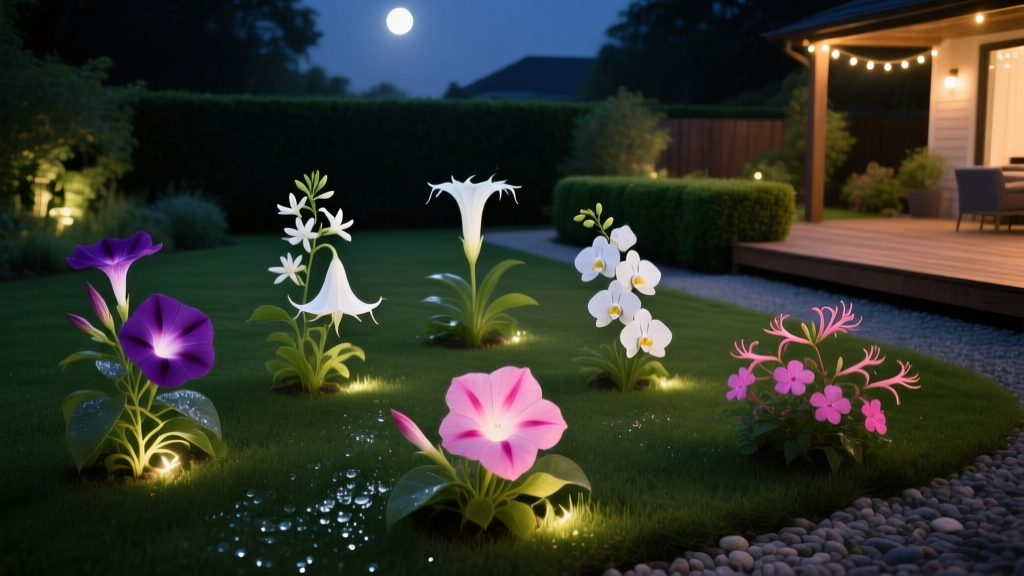
What Flower Blooms at Night? 8 Nocturnal Species to Identify & Grow
The Evolutionary Purpose of Nocturnal Blooms
When asking what flower blooms at night, the answer lies in evolutionary biology and specialized pollinator relationships. Nocturnal blooming is not a random mutation; it is a highly targeted survival strategy. While diurnal flowers compete for bees and butterflies, night-blooming species have evolved to attract Sphingidae (hawk moths and sphinx moths) and nectar-feeding bats (such as the Phyllostomidae family).
According to the Xerces Society for Invertebrate Conservation, moth populations are vital pollinators that are frequently overlooked in garden planning. To accommodate these nighttime visitors, nocturnal flowers share specific morphological traits: they are typically pale white, cream, or light green to reflect moonlight, and they produce heavy, sweet, or spicy volatile organic compounds (VOCs) that travel long distances in cool, still evening air.
Visual and Olfactory Identification Markers
If you are trying to identify an unknown plant that only opens after sunset, look for these distinct markers:
- Petal Reflectivity: White or pale yellow petals act as biological reflectors, making the flower visible to moths navigating by starlight.
- Tubular Corollas: Many night bloomers feature deep, tubular throats (like the Moonflower) specifically shaped to accommodate the long proboscis of a hawk moth.
- Scent Release Timing: The emission of fragrant VOCs is triggered by dropping temperatures and fading UV light. If a plant is scentless at noon but heavily perfumed at 9:00 PM, it is a night bloomer.
- Thermogenesis: Some rare nocturnal species (like certain philodendrons and skunk cabbages) actually generate their own heat to volatilize their scent and attract beetles, though this is less common in standard garden annuals.
Identification Matrix: 8 Common Night-Blooming Species
The table below provides a quick-reference guide to the most reliable nocturnal species for home cultivation, including their specific hardiness zones and peak blooming windows.
| Botanical Name | Common Name | Peak Bloom Window | USDA Zones | Scent Profile |
|---|---|---|---|---|
| Ipomoea alba | Moonflower | Dusk to Dawn | 9-11 (Annual elsewhere) | Sweet, lemony, light |
| Oenothera biennis | Evening Primrose | Early Evening | 4-9 | Mild, sweet, citrus |
| Cestrum nocturnum | Night-Blooming Jasmine | Nighttime only | 8-11 | |
| Epiphyllum oxypetalum | Queen of the Night | One night/year | 10-12 (Indoor elsewhere) | Vanilla, melon, heavy |
| Mirabilis jalapa | Four O'Clocks | Late Afternoon to Morning | 7-10 | Jasmine-like, sweet |
| Zaluzianskya capensis | Night Phlox | Evening to Dawn | 9-11 | Almond, vanilla, honey |
| Nicotiana alata | Flowering Tobacco | Evening to Morning | 10-11 (Annual elsewhere) | Jasmine, clove |
| Selenicereus grandiflorus | Night-Blooming Cereus | Midnight | 10-12 | Strong vanilla, citrus |
Cultivation Deep Dive: Top 3 Night Bloomers
To successfully grow these species, you must move beyond generic gardening advice and cater to their specific physiological needs.
1. Moonflower (Ipomoea alba)
Moonflowers are vigorous vines that can reach 15 feet in a single season. Soil Requirement: They thrive in poor to average, well-draining soil with a pH between 6.0 and 7.0. Failure Mode: Applying a high-nitrogen fertilizer (like a 10-10-10 NPK) will result in massive, lush foliage but zero blooms. Use a low-nitrogen, high-phosphorus fertilizer (5-10-10 NPK) applied only once at planting. Scarify the hard seed coats with sandpaper and soak them in warm water for 24 hours before sowing to ensure germination.
2. Evening Primrose (Oenothera biennis)
This biennial wildflower forms a basal rosette in its first year and sends up a tall spike in its second. Cultivation Note: It develops a deep taproot, making it highly drought-tolerant but nearly impossible to transplant once established. Sow seeds directly in the garden in late fall or early spring. It requires full sun and will flop over in heavily amended, rich soils. The Old Farmer's Almanac recommends leaving the soil slightly compacted and lean for optimal structural support.
3. Queen of the Night (Epiphyllum oxypetalum)
Often misidentified as a standard desert cactus, this is actually an epiphytic jungle cactus. Soil Mix: Do not use standard cactus/succulent mix. Create a blend of 50% orchid bark, 25% perlite, and 25% peat-free compost. Blooming Trigger: It requires a distinct dry rest period in winter (watering only once a month) and cooler nighttime temperatures (around 50°F to 55°F) to set buds for its spectacular, single-night summer bloom.
Designing the Moonlight Garden: Lighting and Placement
A common mistake homeowners make when planting a night garden is ruining the ambiance and disrupting pollinators with harsh artificial lighting. To design an effective moonlight garden, follow these strict illumination parameters:
Lighting Rules for Nocturnal Pollinators:
- Color Temperature: Use only warm LEDs rated at 2200K to 2700K. Cool white or daylight bulbs (4000K+) emit blue light spectrums that disorient moth navigation and suppress their feeding behavior.
- Lumen Output: Keep pathway lights under 50 lumens. The goal is to illuminate the walking surface, not to flood the garden beds.
- Placement: Mount lights below the canopy line, pointing downward. Never use motion-sensor floodlights near Night-Blooming Jasmine or Moonflowers, as sudden bright light will cause moths to scatter.
For seating placement, position your patio or bench on the east side of the night-blooming beds. Because prevailing summer breezes in North America typically move from west to east, sitting on the east side ensures the heavy evening fragrances are carried directly toward you.
Troubleshooting: Why Night Flowers Fail to Open
If your nocturnal plants are forming buds but failing to open, or dropping buds prematurely, consult this diagnostic framework:
- Light Pollution Interference: If a streetlamp or security light shines directly on the plant, it may not register the drop in UV light required to trigger petal unfurling. Install physical light shields or switch to low-lumen amber pathway lights.
- Temperature Shock: Tropical night bloomers like Cestrum nocturnum will drop unopened buds if evening temperatures suddenly dip below 50°F. Move container plants against a south-facing wall to utilize radiant heat from the home's foundation.
- Inconsistent Soil Moisture: Evening Primrose and Moonflowers will abort blooms if they experience severe mid-day wilting followed by heavy evening watering. Maintain consistent soil moisture using a 2-inch layer of shredded hardwood mulch to regulate evaporation.
- Nutrient Imbalance: Excess phosphorus can lock out micronutrients like zinc and iron, leading to chlorosis and bud drop. Conduct a soil test via your local Penn State Extension or equivalent university lab before adding bone meal or bloom-boosters.
Soil Preparation & Composting for Night Bloomers
Not all night bloomers want the same soil. Heavy feeders like Flowering Tobacco (Nicotiana alata) require rich, loamy soil amended with vermicompost (worm castings) at a rate of 1 cup per square foot before planting. Conversely, Mediterranean-adapted night bloomers like Night Phlox (Zaluzianskya capensis) will suffer from root rot in heavy compost. For these, amend the native soil with coarse horticultural sand and avoid organic top-dressing entirely. Understanding the specific native habitat of your chosen nocturnal species is the ultimate key to a thriving, fragrant evening garden.

