
Gardening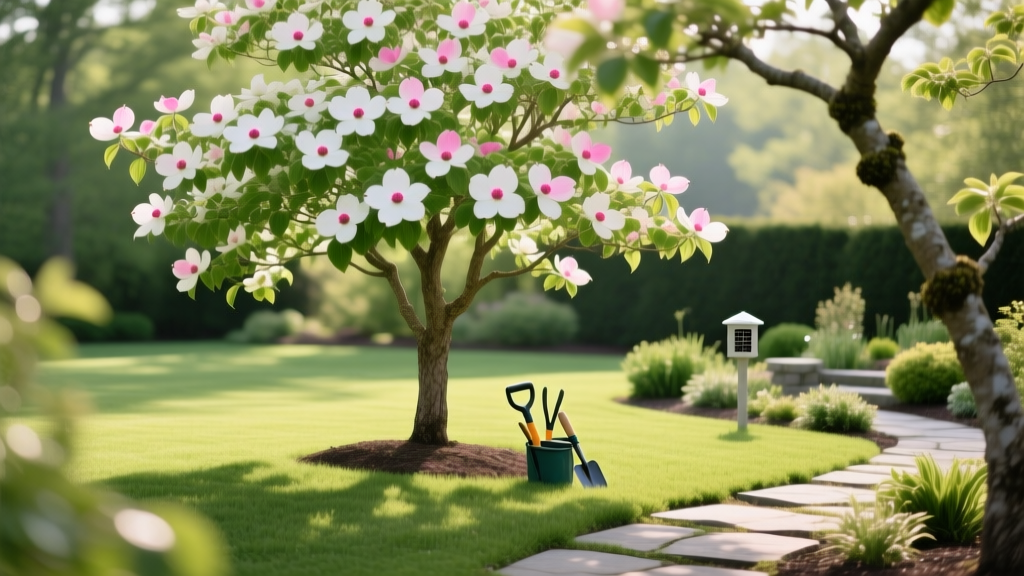
What Is North Carolina's State Flower? A Guide to the Dogwood
When gardening enthusiasts and botany students ask, what is North Carolina's state flower, the answer points to one of the most iconic understory trees in the eastern United States: the Flowering Dogwood (Cornus florida). Designated as the official state flower in 1941, the dogwood is technically a small deciduous tree rather than a traditional herbaceous bloom. However, its spectacular spring display has cemented its status in both legislative history and American landscaping.
This comprehensive identification and cultivation guide breaks down the botanical realities of Cornus florida, its historical significance to the Tar Heel State, and the precise horticultural techniques required to grow it successfully in your own garden.
Botanical Profile & Identification Traits
Quick Botanical Data:
• Scientific Name: Cornus florida
• Family: Cornaceae (Dogwood family)
• USDA Hardiness Zones: 5 through 9
• Mature Height: 15 to 30 feet
• Bloom Time: April to May (depending on latitude and elevation)
• Scientific Name: Cornus florida
• Family: Cornaceae (Dogwood family)
• USDA Hardiness Zones: 5 through 9
• Mature Height: 15 to 30 feet
• Bloom Time: April to May (depending on latitude and elevation)
The 'Flower' Misconception: Bracts vs. True Blooms
The most common mistake novice gardeners make when identifying the dogwood is misinterpreting its floral anatomy. The four large, showy white (or sometimes pink) structures that appear in spring are not petals at all. They are bracts—modified leaves designed to attract pollinators. The true flowers are the tiny, yellow-green clusters tightly grouped in the center of the bracts. These central clusters, known as umbels, contain the actual reproductive organs of the plant and eventually develop into the bright red, berry-like drupes that appear in late summer and fall.
According to the Missouri Botanical Garden, these red drupes are a critical high-fat food source for over 36 species of migratory birds, including the cedar waxwing and the American robin, making the dogwood an essential anchor for wildlife gardens.
The 1941 Legislative History: Why the Dogwood?
To fully understand what is North Carolina's state flower, we must look at the legislative history. On March 16, 1941, the North Carolina General Assembly passed a bill officially adopting the dogwood as the state flower. The legislation was driven by the tree's ubiquitous presence across the state's diverse topography. From the coastal plains to the Piedmont and up into the Appalachian Mountains, Cornus florida thrives as a native understory species.
'Whereas, the Dogwood is one of the most beautiful and abundant trees native to North Carolina, growing from the Atlantic Ocean to the mountain peaks... it is fitting that it be designated as the State Flower.' — North Carolina General Assembly, 1941
While other states have chosen herbaceous plants or specific blossoms (like the rose for New York or the violet for Illinois), North Carolina's choice reflects the deep ecological integration of the dogwood into its native forest canopies. For more on state symbols, the NCpedia archive provides extensive historical context on how the 1941 bill was championed by local garden clubs.
Cultivating Cornus Florida in Your Garden
Growing a flowering dogwood requires replicating its natural woodland edge habitat. They are notoriously sensitive to environmental stress, making precise site selection and soil preparation non-negotiable.
Step-by-Step Planting Protocol
- Site Selection: Choose a location with dappled sunlight or partial shade. Morning sun followed by afternoon shade is ideal. Full sun exposure scorches the leaves and increases water stress, making the tree highly susceptible to borers.
- Soil Testing & Amendment: Dogwoods demand acidic, well-draining soil. Test your soil and aim for a pH between 5.5 and 6.5. If your pH is too high, incorporate elemental sulfur or peat moss into the planting bed months before installation.
- Excavation: Dig a hole two to three times wider than the root ball, but no deeper. The root flare (where the trunk widens at the base) must sit 1 to 2 inches above the surrounding soil grade to prevent crown rot.
- Backfilling: Use the native soil to backfill. Avoid amending the backfill with heavy compost, which creates a 'bathtub effect' that traps water and drowns the roots.
- Mulching: Apply a 2- to 3-inch layer of organic hardwood mulch over the root zone. Crucial: Keep the mulch at least 4 inches away from the trunk bark to prevent moisture buildup and fungal pathogens.
Environmental Requirements Matrix
| Parameter | Optimal Range | Failure Symptoms |
|---|---|---|
| Soil pH | 5.5 - 6.5 | Chlorosis (yellowing leaves), stunted growth |
| Light Exposure | Partial shade (4-6 hrs morning sun) | Leaf scorch, increased borer vulnerability |
| Soil Moisture | Consistently moist, well-draining | Phytophthora root rot, wilting |
| Mulch Depth | 2 to 3 inches (away from trunk) | Crown rot, rodent damage to bark |
Common Pests and Diseases (And How to Treat Them)
The Clemson University Home and Garden Information Center notes that dogwoods are prone to several devastating pathogens, primarily when the tree is under environmental stress.
Dogwood Anthracnose (Discula destructiva)
This fungal disease causes tan spots with purple borders on leaves, eventually leading to twig dieback and tree death. Treatment: Prune out all dead wood during dry weather. Apply protective fungicides containing chlorothalonil or mancozeb starting at bud break in spring, repeating every 10 to 14 days during wet weather.
Powdery Mildew (Erysiphe pulchra)
Manifests as a white, powdery fungal growth on new leaves, causing them to curl and drop prematurely. Treatment: Improve air circulation by thinning the canopy. Apply horticultural oil or fungicides containing myclobutanil at the first sign of infection.
⚠️ Warning: The Dogwood Borer (Synanthedon scitula)
This clearwing moth lays eggs in bark crevices. The larvae bore into the cambium layer, girdling and killing the tree. Look for sawdust-like frass near the base of the trunk. Prevention is key: Avoid damaging the trunk with string trimmers, as wounds are the primary entry points for borers. Apply permethrin-based trunk sprays in May and June to kill adult moths before they lay eggs.
This clearwing moth lays eggs in bark crevices. The larvae bore into the cambium layer, girdling and killing the tree. Look for sawdust-like frass near the base of the trunk. Prevention is key: Avoid damaging the trunk with string trimmers, as wounds are the primary entry points for borers. Apply permethrin-based trunk sprays in May and June to kill adult moths before they lay eggs.
Landscaping Pairings & Companion Plants
Because Cornus florida naturally grows as an understory tree, its root system is shallow and wide. Avoid planting aggressive, deep-rooted competitors beneath it. Instead, select shade-tolerant, acid-loving companions that share its soil preferences:
- Mountain Laurel (Kalmia latifolia): Provides evergreen structure and stunning spring blooms that complement the dogwood's bracts.
- Oakleaf Hydrangea (Hydrangea quercifolia): Thrives in the dappled shade and offers brilliant fall foliage that mirrors the dogwood's red-purple autumn transition.
- Christmas Fern (Polystichum acrostichoides): An excellent, low-maintenance groundcover that protects the dogwood's shallow roots from soil compaction and moisture loss.
- Wild Geranium (Geranium maculatum): A native perennial that provides early-season nectar for pollinators while forming a dense, weed-suppressing mat.
Frequently Asked Questions
Is the dogwood the only state flower that is actually a tree?
No, but it is one of the few. While most states select herbaceous plants or shrubs, North Carolina's choice of the dogwood reflects its status as a dominant woodland tree. Similarly, Michigan's state flower is the apple blossom, which also belongs to a tree species.
Can I grow a pink dogwood in North Carolina?
Yes. While the native wild-type Cornus florida produces white bracts, the cultivar Cornus florida 'Rubra' (often called the pink dogwood) is widely cultivated and thrives in the state. Note that pink varieties are sometimes slightly more susceptible to powdery mildew and require careful site selection.
How long does it take for a newly planted dogwood to bloom?
A nursery-grown dogwood planted from a 5-gallon or 7-gallon container typically takes 2 to 3 years to establish its root system and produce its first significant bloom. Trees grown from seed can take 7 to 10 years to flower.

