
Gardening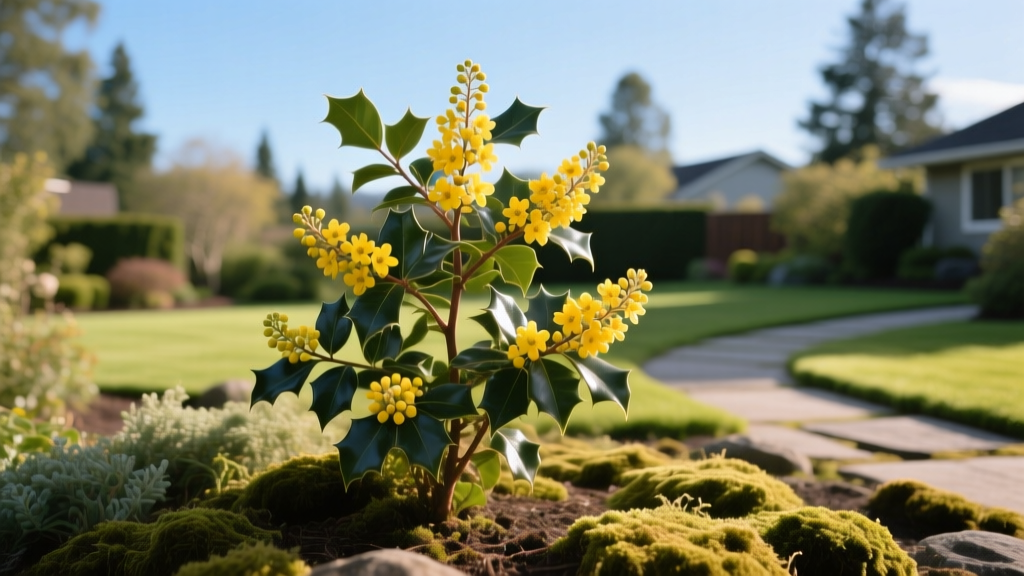
What Is Oregon's State Flower? Growing Oregon Grape Guide
The Identity and History of Oregon's State Flower
When gardeners and botanists ask, 'what is oregon's state flower,' the answer is the Oregon Grape (Mahonia aquifolium). Despite its common name, this plant is not a true grape and does not belong to the Vitaceae family. Instead, it is an evergreen shrub in the barberry family (Berberidaceae). The Oregon Legislative Assembly officially adopted the Oregon Grape as the state flower in 1899, favoring it over the wild rose and clover due to its deep roots in the state's indigenous history, pioneer survival, and year-round aesthetic appeal.
Unlike many state flowers that are delicate, short-lived wildflowers, the Oregon Grape is a robust, woody shrub that serves as a cornerstone of Pacific Northwest landscaping. For home gardeners, understanding how to cultivate Mahonia aquifolium provides an opportunity to grow a historically significant, drought-tolerant, and ecologically vital plant.
Botanical Identification: Spotting Mahonia aquifolium
Identifying the Oregon Grape in the wild or verifying the species at a nursery requires examining its distinct morphological traits. The plant is characterized by its pinnately compound leaves, which closely resemble English holly, and its vibrant spring blooms.
| Feature | Description | Seasonal Variation |
|---|---|---|
| Leaves | Pinnately compound with 7-12 spiny, holly-like leaflets per stem. Glossy dark green. | Leaves often turn deep burgundy or bronze in winter or when exposed to direct sun. |
| Flowers | Dense, upright racemes of bright yellow, cup-shaped blooms. | Blooms profusely from March to May, providing early-season nectar. |
| Fruit | Clusters of small, spherical berries with a dusty, waxy bloom. | Green in summer, ripening to dark blue-black by late summer or early fall. |
| Bark/Stems | Erect, woody canes with a grayish-brown, slightly rough texture. | Inner bark and roots are bright yellow due to berberine content. |
According to the Oregon Encyclopedia, indigenous tribes historically utilized the bright yellow inner bark to create natural dyes and relied on the roots for medicinal applications. Modern gardeners value the plant primarily for its architectural foliage and early pollinator support.
Site Selection and Soil Chemistry Requirements
The most common reason Mahonia aquifolium fails in residential landscapes is improper soil chemistry. This shrub is an acid-loving calcifuge, meaning it cannot tolerate alkaline soils. Planting it in heavy, clay-rich, or lime-amended beds will trigger severe iron chlorosis, turning the leaves pale yellow while the veins remain green.
⚠️ Critical Soil pH Warning: Oregon Grape requires a soil pH between 4.5 and 6.5. Before planting, test your soil using a calibrated digital pH meter or a professional lab test. If your soil pH is above 7.0, lower it by incorporating elemental sulfur (apply at a rate of 1 lb per 100 square feet to drop pH by 0.5 points) or plant the shrub in a raised bed filled with an acidic, ericaceous soil mix.
Light and Exposure
While often listed as 'adaptable,' Oregon Grape performs best in partial shade to full shade. In its native understory habitat, it receives dappled sunlight. Planting it in full, unshaded afternoon sun—especially in USDA Zones 7 and 8—will cause irreversible leaf scorch, manifesting as crispy, brown margins on the spiny leaflets.
Step-by-Step Planting Protocol
To establish a healthy root system and avoid transplant shock, follow this precise planting methodology:
- Dig the Hole: Excavate a hole exactly as deep as the nursery container's root ball, but 2.5 times as wide. This encourages lateral root expansion into native soil.
- Inspect the Roots: If the plant is root-bound, use a sterilized hori-hori knife to make four vertical, 1-inch deep slices down the sides of the root ball to sever circling roots.
- Positioning: Place the shrub in the hole so the root flare (where the trunk widens at the base) sits exactly 1 inch above the surrounding grade to prevent crown rot.
- Backfill: Use the native soil you excavated. Do not mix in heavy compost or potting soil, as this creates a 'bathtub effect' that traps water and rots roots.
- Mulch: Apply a 2-to-3-inch layer of coarse arborist wood chips over the root zone. Keep the mulch strictly 3 inches away from the main stems to deter fungal pathogens.
Troubleshooting Common Cultivation Issues
Even well-sited Oregon Grape shrubs can encounter environmental stressors. Use this decision framework to diagnose and correct problems:
- Symptom: Leaves turning pale yellow with green veins.
Cause: Iron chlorosis due to high soil pH.
Fix: Apply chelated iron (Fe-EDDHA formulation) as a soil drench and amend with elemental sulfur. - Symptom: Brown, necrotic patches on leaf margins.
Cause: Winter wind desiccation or summer sun scorch.
Fix: Relocate to a shaded area protected from harsh eastern winds, or install a temporary burlap windbreak in winter. - Symptom: Stunted growth and sudden cane dieback.
Cause: Phytophthora root rot from waterlogged clay soil.
Fix: Improve drainage by mounding the planting area or relocating the shrub to a sloped grade.
Landscape Sizing and Native Alternatives
The standard Tall Oregon Grape (Mahonia aquifolium) reaches 5 to 8 feet in height and 3 to 5 feet in width. For smaller garden footprints, consider these closely related native species, which offer similar ecological benefits but fit different spatial requirements:
| Species | Common Name | Mature Size | Best Landscape Use |
|---|---|---|---|
| Mahonia aquifolium | Tall Oregon Grape | 5-8 ft H, 3-5 ft W | Privacy screens, woodland borders, foundation plantings. |
| Berberis nervosa (syn. M. nervosa) | Low Oregon Grape | 1-2 ft H, 2-3 ft W | Shade groundcover, understory planting beneath Douglas firs. |
| Berberis repens (syn. M. repens) | Creeping Oregon Grape | 1-2 ft H, 3-4 ft W | Erosion control on shaded slopes, rock garden edges. |
According to the Lady Bird Johnson Wildflower Center, utilizing the correct species for your specific microclimate ensures lower water requirements and higher survival rates without the need for synthetic fertilizers.
Pruning and Long-Term Maintenance
Oregon Grape naturally develops a leggy, multi-stemmed habit over time. To maintain a dense, vigorous shrub, implement a rejuvenation pruning cycle every three to four years in late February, just before the spring growth flush.
Expert Pruning Tip: Never shear Oregon Grape with hedge trimmers. This destroys the natural architectural form and promotes weak, spindly regrowth. Instead, use bypass loppers to cut the oldest, thickest one-third of the canes completely down to the soil line. This forces the plant to push fresh, vibrant shoots from the base.
Ecological Value and Edibility
Beyond its ornamental value, the Oregon Grape is an ecological powerhouse. The USDA Plants Database notes that its early spring blooms provide critical nectar and pollen for native mason bees and bumblebee queens emerging from winter hibernation. The dense, spiny foliage also offers secure nesting habitat for small songbirds.
Regarding human consumption, the dark blue berries are edible but highly tart due to their high tannin and vitamin C content. They are rarely eaten raw but are excellent when cooked and heavily sweetened to make jams, jellies, and syrups. Always harvest berries responsibly, leaving at least 70% of the crop on the shrub to sustain overwintering bird populations.
Frequently Asked Questions
Is Oregon Grape deer resistant?
Yes. The rigid, spiny, holly-like leaflets make the foliage highly unpalatable to deer and elk, making it an excellent choice for rural or suburban properties with heavy ungulate browsing pressure.
Can I grow Oregon Grape in a container?
While possible for a few years, Mahonia aquifolium develops a deep, extensive taproot system and is not ideal for long-term container culture. If you must use a pot, choose a half-barrel sized container (minimum 20 gallons) filled with a 50/50 mix of pine bark fines and peat moss to maintain the required acidic pH and sharp drainage.
Why isn't my Oregon Grape producing berries?
Fruit production requires cross-pollination. If your shrub flowers but fails to set fruit, plant a second Mahonia aquifolium specimen within 30 feet to facilitate pollen transfer by native insects. Additionally, late spring frosts can kill the delicate flower buds before pollination occurs.

