
Gardening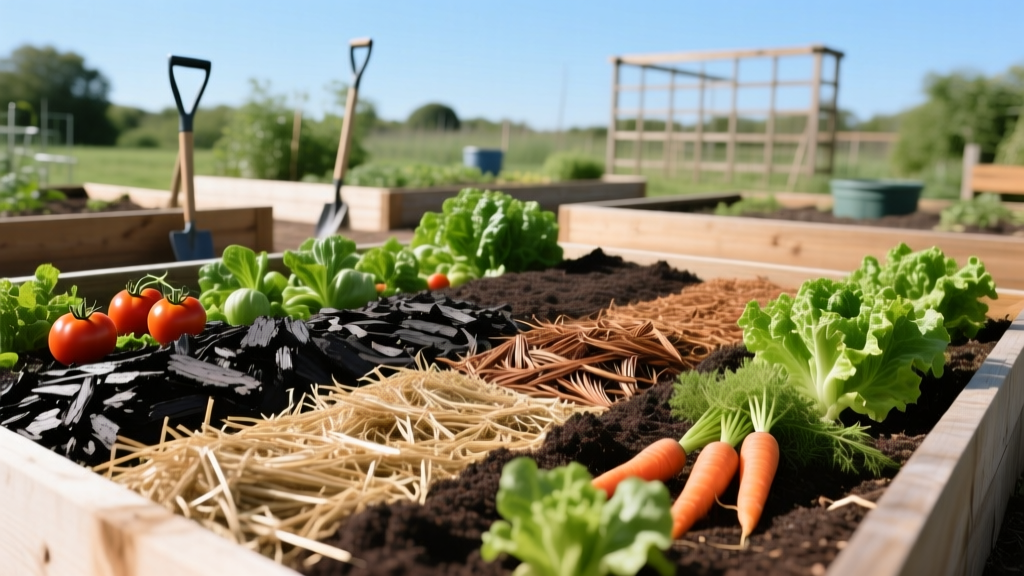
Best Mulch for Vegetable Garden Beds: Organic Types and Depth Guide
The Science of Mulching Edible Crops
Applying the right mulch for vegetable garden beds is not merely about aesthetics; it is a critical soil-management strategy that regulates moisture, suppresses competitive weeds, and feeds the soil food web. However, incorrect material selection or improper depth can stunt crop yields, introduce persistent herbicides, or trigger nitrogen immobilization. This guide breaks down the exact carbon-to-nitrogen (C:N) ratios, application depths, and 2026 sourcing costs for the most effective organic mulches used in high-yield edible landscapes.
Top 5 Organic Mulches for Vegetable Gardens
1. Straw (Wheat, Oat, or Barley)
Straw is the gold standard for vegetable beds due to its hollow stems, which trap air and provide exceptional insulation. It boasts a C:N ratio of roughly 80:1. Critical distinction: Always buy straw, not hay. Hay contains seed heads that will germinate and introduce aggressive grass weeds into your beds. In 2026, expect to pay between $9 and $14 per standard rectangular bale depending on your region and local drought conditions.
2. Shredded Autumn Leaves
Leaf mold is a nutrient-dense, free mulch option with a C:N ratio of 60:1. Whole leaves mat together when wet, creating an anaerobic barrier that blocks water penetration. You must shred them first using a mulching mower or a leaf vacuum. Apply a 2-to-3-inch layer. Leaves are slightly acidic when fresh but neutralize as they decompose, making them safe for all vegetable crops.
3. Dried Grass Clippings
With a tight C:N ratio of 20:1, grass clippings break down rapidly and release nitrogen into the soil. They must be dried in the sun for 48 hours before application to prevent them from rotting into a slimy, foul-smelling mat. Expert Warning: Never use clippings from lawns treated with broadleaf herbicides containing aminopyralid or clopyralid. These persistent chemicals survive the composting process and will cause severe leaf-curling and stunting in sensitive nightshades (tomatoes, peppers) and legumes.
4. Arborist Wood Chips
A common myth in gardening is that wood chips (C:N ratio 400:1) will 'rob' the soil of nitrogen. According to Penn State Extension, nitrogen immobilization only occurs when high-carbon materials are mixed into the soil. When left on the surface, the breakdown occurs exclusively in the top millimeter, leaving the root-zone nitrogen untouched. Wood chips are ideal for perennial vegetable beds (like asparagus or artichokes) and walking paths, but too bulky for delicate annual seedlings.
5. Finished Compost (Living Mulch)
Compost has a C:N ratio of 15:1, meaning it actively adds available nitrogen to the soil as it integrates. While technically a soil amendment, a 1-to-2-inch top-dressing of finished compost acts as a 'living mulch.' It does not suppress heavy weed pressure as effectively as straw, but it provides a steady drip of micronutrients and beneficial mycorrhizal fungi directly to the crop root zone.
Mulch Application Matrix: Depth and Timing by Crop
Applying mulch too thickly can suffocate shallow roots, while applying it too thinly fails to block weed photosynthesis. Use this matrix to dial in your application based on the specific crop architecture.
| Crop Category | Recommended Mulch Type | Target Depth | Application Timing |
|---|---|---|---|
| Nightshades (Tomatoes, Peppers) | Straw or Compost | 3 - 4 inches | After soil warms to 65°F and plants are 12 inches tall |
| Cucurbits (Squash, Cucumbers) | Shredded Leaves or Straw | 2 - 3 inches | When vines begin to run (approx. 3 weeks post-transplant) |
| Root Crops (Carrots, Radishes) | Finely Sifted Compost | 0.5 - 1 inch | Immediately after seedling emergence |
| Brassicas (Cabbage, Broccoli) | Dried Grass Clippings | 2 inches | At transplanting, keeping 2 inches clear of the main stem |
| Perennials (Asparagus, Rhubarb) | Arborist Wood Chips | 4 - 6 inches | Late fall after foliage dies back, or early spring |
The Herbicide Carryover Threat
One of the most devastating failure modes in modern vegetable gardening is herbicide carryover. Persistent pyralid herbicides (aminopyralid, clopyralid, picloram) are frequently used on pastures and hayfields to control broadleaf weeds. These chemicals do not break down during the digestive tract of livestock or during commercial hot-composting operations.
⚠️ The Bioassay Test: Before applying bulk straw, manure, or municipal compost to your vegetable beds, conduct a bioassay. Plant three pea or bean seeds in a pot filled with the suspect mulch/compost, and three in standard potting soil. If the mulch-contaminated seedlings exhibit cupped, fern-like leaves or stunted growth within 14 days, the material contains persistent herbicides and must be kept out of your edible garden.
Step-by-Step: Prepping and Laying Mulch in Raised Beds
Simply dumping mulch over dry, weedy soil is a recipe for failure. Follow this exact sequence to maximize moisture retention and weed suppression.
- Clear Existing Weeds: Hoe or pull all existing weeds. If dealing with aggressive bindweed or bermudagrass, solarize the bed with clear UV-stable plastic for 4 to 6 weeks prior to planting and mulching.
- Deep Irrigation: Water the bare soil to a depth of at least 6 inches (roughly 1 inch of water volume). Mulch traps moisture, but it cannot create it. If you mulch over dry soil, light summer rains will be absorbed by the mulch layer and never reach the root zone.
- Apply the Mulch: Spread your chosen organic material evenly. Use a ruler to verify depth.
- Maintain the Stem Gap: Pull mulch back 2 to 3 inches from the base of plant stems. Piling mulch directly against the stem (volcano mulching) traps humidity against the epidermis, inviting fungal pathogens like Phytophthora and stem rot.
Sourcing and 2026 Cost Breakdown
Budgeting for mulch requires looking beyond the initial purchase price to include delivery and longevity.
- Baled Straw: $9 - $14 per bale. Covers roughly 100 square feet at a 3-inch depth. Requires annual reapplication.
- Municipal Compost: $25 - $45 per cubic yard (bulk). Often available for free at local municipal recycling centers, though quality and herbicide testing vary wildly.
- Arborist Wood Chips: $0 (Free). Utilize the ChipDrop network to connect with local arborists. Be prepared for a 15-to-20 cubic yard drop, which requires significant driveway space and a wheelbarrow to move.
- Bagged Shredded Hardwood: $5 - $7 per 2-cubic-foot bag. Highly expensive for large vegetable plots ($120+ to cover a standard 4x8 bed at 3 inches), but convenient for small urban container gardens.
Frequently Asked Questions
Does mulch attract slugs and snails to vegetable beds?
Thick, moist layers of straw or leaves can provide daytime harborages for slugs. If slugs are a persistent issue in your microclimate, switch to a surface mulch of coarse compost or rely on bare-soil cultivation until the plants canopy out. Alternatively, apply iron phosphate-based slug baits (safe for edibles and pets) beneath the mulch layer.
Will pine needle mulch make my vegetable soil too acidic?
No. While fresh pine needles have a slightly acidic pH (around 3.5 to 4.5), they neutralize as they decompose. According to research cited by the University of Maryland Extension, pine straw has virtually no long-term impact on soil pH. It is an excellent, weed-free mulch for pathways and around acid-loving crops like blueberries, but perfectly safe for standard vegetable beds.
How do I prevent straw from blowing away in high winds?
Lightly mist the straw with a hose immediately after laying it down to help the hollow stems interlock. For high-wind regions, use a 'mulch anchor' technique: lay down a biodegradable jute netting over the straw and pin it to the soil with 6-inch landscape staples. The jute will decompose into the soil by the end of the growing season.

