
Gardening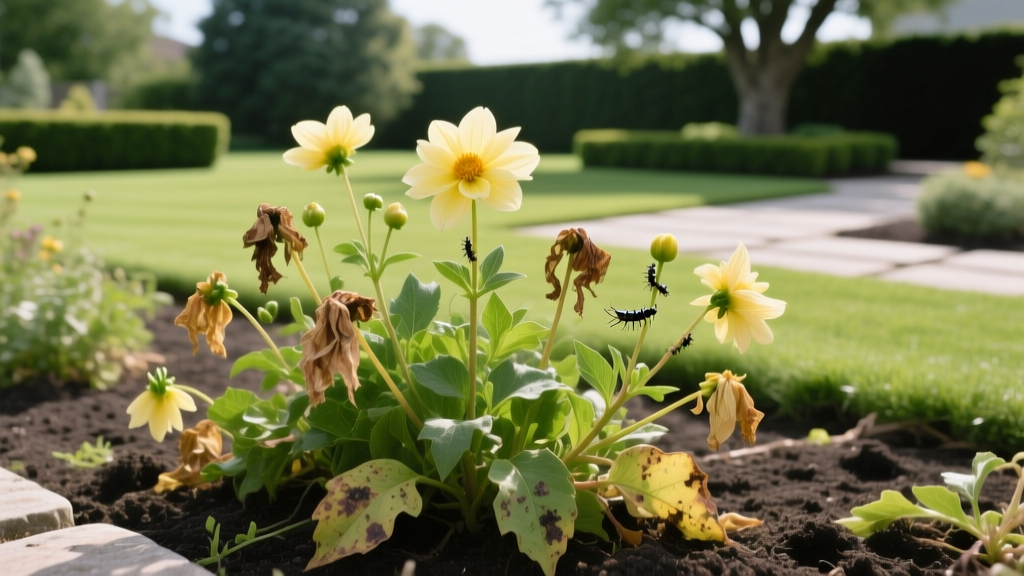
Diagnosing Pale Yellow Flowers: Why Blooms Fade and Rescue Fixes
The Physiology of Fading: Why Blooms Lose Their Color
Gardeners invest significant time and capital into premium cultivars, only to watch vibrant reds, deep purples, and bright oranges degrade into pale yellow flowers. This color loss is rarely a random aesthetic glitch; it is a physiological distress signal. When petals lose their anthocyanins (red/blue pigments) or carotenoids (orange/yellow pigments), the underlying cellular structure is failing to synthesize or protect these compounds. While natural senescence (aging) causes blooms to fade as they die, premature fading into a washed-out, pale yellow hue indicates environmental stress, nutrient lockout, or thermal bleaching.
Before applying fertilizers or changing your watering schedule, you must accurately diagnose the root cause. Misdiagnosing thermal bleaching as a nitrogen deficiency will lead to excessive vegetative growth at the expense of further bloom production.
Diagnostic Matrix: Identifying the Culprit
Use this decision matrix to cross-reference your visual symptoms with the most likely environmental or chemical triggers.
| Visual Symptom | Primary Suspect | Secondary Suspect | Immediate Rescue Fix |
|---|---|---|---|
| Petals fade to pale yellow/white from the edges inward; foliage remains green. | Thermal Bleaching (UV/Heat) | Water deficit during peak bloom | Install 40% knitted shade cloth; increase morning irrigation. |
| Flowers are pale yellow and stunted; new leaves are yellow with green veins. | Iron Chlorosis (High pH Lockout) | Manganese deficiency | Apply Fe-EDDHA chelated iron drench; lower soil pH with elemental sulfur. |
| Entire bloom and stem turn pale yellow and mushy; soil is damp. | Root Asphyxiation (Overwatering) | Pythium root rot | Halt watering; aerate soil crust; apply beneficial mycorrhizae. |
| Flowers turn pale yellow uniformly and drop prematurely; older leaves yellow first. | Nitrogen Deficiency | Excessive carbon mulch tie-up | Side-dress with blood meal (12-0-0) or liquid fish emulsion. |
Deep Dive 1: Thermal Bleaching and UV Degradation
When daytime temperatures consistently exceed 85°F (29°C), many flowering plants halt anthocyanin production. The intense UV radiation literally breaks down existing pigments in the petals. Roses, petunias, and hydrangeas are particularly susceptible. The flowers may open with a hint of their true color but rapidly bleach into pale yellow flowers or stark white as the cellular vacuoles lose their acidic pH buffering capacity under heat stress.
Expert Insight: Pigment stability is highly temperature-dependent. A study on rose petal pigmentation demonstrates that night temperatures above 70°F (21°C) prevent the plant from recovering its pigment-synthesis pathways, leading to permanent fading of that specific bloom cycle.
Rescue Protocol for Heat Stress
- Shade Cloth Selection: Deploy a 30% to 50% density knitted shade cloth over the affected bed. Avoid woven black plastic, which traps ambient heat. Aluminet (reflective shade cloth) is superior as it bounces UV rays away while allowing diffuse photosynthetically active radiation (PAR) to reach the leaves.
- Hydration Timing: Shift irrigation to 5:00 AM. Watering at midday cools the soil temporarily but increases fungal pathogen risk on the foliage. Deep, slow drip irrigation at the root zone ensures the plant can maintain turgor pressure in the petals during peak afternoon heat.
Deep Dive 2: Soil pH Lockout and Micronutrient Starvation
If your plants are producing pale yellow flowers alongside chlorotic (yellowing) foliage with distinct green veins, you are dealing with iron chlorosis. Iron is a critical cofactor in the enzymatic pathways that produce both chlorophyll for the leaves and the structural integrity required for vibrant petal pigments. However, iron availability is strictly governed by soil pH.
In soils with a pH above 7.0, iron oxidizes into a form that plant roots cannot absorb. According to the University of Minnesota Extension, simply adding more iron sulfate to alkaline soil is a waste of money, as it will lock up within hours. Furthermore, the UMass Amherst Extension emphasizes that correcting the underlying pH is a multi-year process, requiring immediate chelated interventions to save the current bloom cycle.
The Chelated Iron Decision Framework
Not all chelated iron products are created equal. You must select the correct chelate based on your exact soil pH reading:
- Fe-EDTA: Effective only in soils with a pH below 6.5. If your soil is alkaline, this molecule breaks down and releases the iron, which immediately locks up again.
- Fe-DTPA: Effective up to a pH of 7.0. A good middle-ground option for slightly alkaline garden beds.
- Fe-EDDHA: The gold standard for high-pH soils. It remains stable and available to plant roots in soils with a pH up to 9.0. Look for products containing at least 6% Fe-EDDHA (often labeled as 'ortho-ortho' EDDHA for maximum efficacy).
Application Rate: For a rapid foliar rescue, mix 1/2 teaspoon of Fe-EDDHA per gallon of water and spray directly on the foliage at dusk. For a long-term soil drench, apply 2 to 3 ounces of granular Fe-EDDHA per 100 square feet of bed space, watering it in immediately.
Deep Dive 3: Root Asphyxiation and Hypoxia
Overwatering is the most common killer of container and raised-bed flowers. When soil pores are completely saturated with water, oxygen is displaced. The roots undergo hypoxia (oxygen starvation), which halts the active transport of nutrients. The plant cannot pull up the phosphorus and potassium required for vibrant bloom pigmentation, resulting in pale, sickly yellow flowers that droop and drop prematurely.
Rescuing Waterlogged Roots
- Break the Crust: Use a hand cultivator to gently break the top 1 inch of the soil crust. This allows trapped anaerobic gases (like ethylene, which accelerates petal drop) to escape and oxygen to re-enter the soil profile.
- Apply a Wetting Agent: If the soil is hydrophobic beneath a wet surface layer, apply a surfactant or wetting agent (like yucca extract) to ensure uniform water distribution and prevent localized saturation.
- Inoculate with Mycorrhizae: Drench the root zone with a liquid mycorrhizal fungi solution. These beneficial fungi extend the root system's reach, improving oxygen exchange and nutrient uptake even in compromised soils.
The 48-Hour Triage Protocol for Fading Blooms
When you notice your prized cultivars turning into pale yellow flowers, execute this rapid-response triage plan to save the remaining buds in the current cycle.
- Hour 0-2 (Assessment): Test soil pH and moisture at a 4-inch depth. Inspect the undersides of leaves for spider mites, which cause stippling that mimics nutrient deficiency.
- Hour 2-12 (Environmental Control): Erect temporary shade cloth if temperatures are exceeding 85°F. Deadhead all fully faded, pale blooms to redirect the plant's energy away from seed production and into new bud formation.
- Hour 12-24 (Chemical Intervention): Based on your pH test, apply the appropriate chelated iron or a diluted liquid kelp extract (rich in trace minerals and cytokinins to stimulate cell division in new buds).
- Hour 24-48 (Monitoring): Check soil moisture again. Ensure the top 2 inches are dry before re-watering. Monitor new bud swell for color intensity.
'Plants are master chemists, but they require the exact right environmental parameters to synthesize complex pigments. When a flower turns pale yellow prematurely, it is not a failure of the seed genetics; it is a failure of the soil chemistry or the microclimate.' — Dr. Linda Chalker-Landis, Horticulture Extension Specialist
Frequently Asked Questions
Will pale yellow flowers regain their original color if I fix the soil?
No. Once a petal has fully expanded and its pigments have degraded or failed to synthesize, that specific bloom will not regain its color. The rescue fixes outlined above are designed to protect the plant's physiology so that the next flush of buds develops with true, vibrant pigmentation.
Can too much fertilizer cause flowers to turn pale yellow?
Yes. Excessive nitrogen promotes rapid, lush vegetative growth at the expense of flowers. Furthermore, high levels of phosphorus can bind with zinc and iron in the soil, creating an artificial micronutrient deficiency that leads to chlorotic foliage and pale, underdeveloped blooms. Always use a bloom-booster fertilizer with a lower nitrogen ratio (e.g., 2-4-2) during the flowering stage.

