
Gardening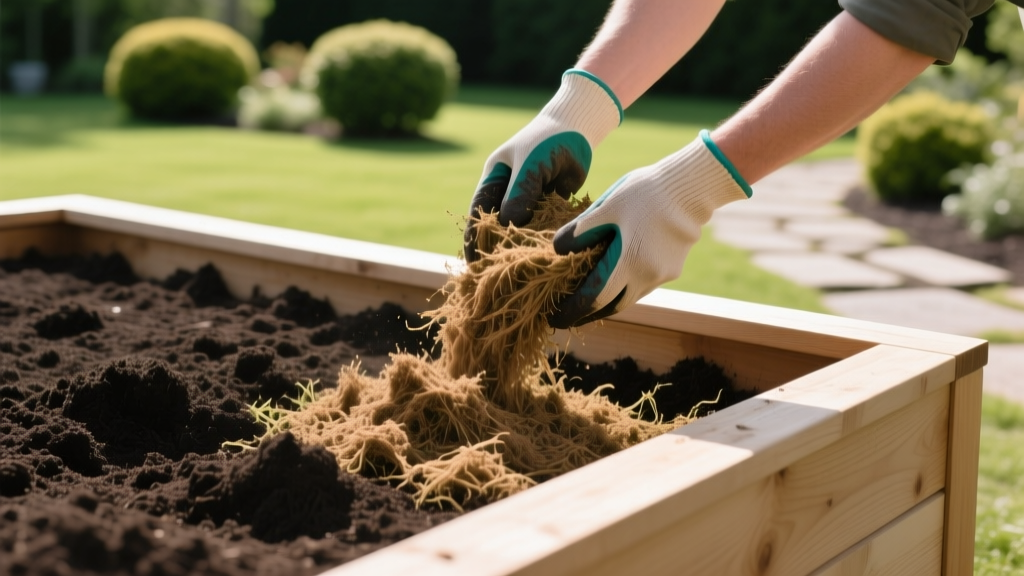
How to Mix Peat Moss and Soil for Perfect Raised Bed Drainage
The Mechanics of Peat Moss and Soil Integration
Integrating peat moss and soil correctly solves the two most common raised bed failures: compaction and moisture volatility. Sphagnum peat moss possesses a Cation Exchange Capacity (CEC) of 100 to 200 meq/100g, significantly higher than standard garden loam (which typically ranges from 10 to 30 meq/100g). This high CEC allows the peat to act as a nutrient reservoir, binding calcium, magnesium, and potassium ions and releasing them to plant roots on demand.
However, simply dumping dry peat onto garden beds guarantees failure. According to Penn State Extension, the physical structure of organic amendments dictates their efficacy. When properly hydrated and blended, peat moss increases soil porosity by up to 30%, creating the micro-air pockets necessary for aerobic soil bacteria and deep root respiration.
⚠️ CRITICAL WARNING: The Hydrophobic Nature of Dry Peat
Never mix bone-dry peat moss directly into soil. In its dehydrated state, sphagnum peat becomes highly hydrophobic (water-repellent). If mixed dry, it will form localized pockets that actively wick moisture away from plant roots. Pre-hydration is non-negotiable.
Never mix bone-dry peat moss directly into soil. In its dehydrated state, sphagnum peat becomes highly hydrophobic (water-repellent). If mixed dry, it will form localized pockets that actively wick moisture away from plant roots. Pre-hydration is non-negotiable.
Step-by-Step Hydration and Mixing Protocol
To unlock the water-retention capabilities of peat moss—allowing it to hold 10 to 12 times its dry weight in moisture—you must break the surface tension of the dried fibers.
- Measure and Break: Empty a standard 3.8 cubic foot compressed bale into a wheelbarrow. Use a garden fork to break apart the dense, compacted blocks.
- Warm Water Soak: Apply exactly 1.5 gallons of warm water (around 80°F) per 1 cubic foot of compressed peat. Warm water penetrates the waxy cuticle of the sphagnum fibers faster than cold water.
- Curing Period: Let the mixture sit for 2 to 4 hours. The peat will expand, yielding roughly 7 to 8 cubic feet of loose, dark material.
- The Squeeze Test: Grab a handful of the hydrated peat and squeeze firmly. It should yield a few drops of water but hold its shape when you open your hand. If water streams out, it is too wet; if it crumbles instantly, add more water.
- Integration: Blend the hydrated peat with your native soil and compost using a broadfork or tiller, working to a depth of 10 to 12 inches.
Exact Peat Moss and Soil Ratios by Plant Type
There is no universal 'one-size-fits-all' blend. The ideal ratio of peat moss and soil depends entirely on the root architecture and pH requirements of your target crops. Use the matrix below to formulate your specific raised bed mix.
| Plant Category | Peat Moss | Native Loam/Topsoil | Compost | Aeration (Perlite/Pumice) |
|---|---|---|---|---|
| Acid-Loving (Blueberries, Azaleas) | 40% | 20% | 20% (Pine Bark) | 20% |
| Heavy Feeders (Tomatoes, Peppers) | 25% | 35% | 30% | 10% |
| Root Crops (Carrots, Radishes) | 15% | 55% | 15% | 15% (Coarse Sand) |
| Shallow-Rooted (Lettuce, Spinach) | 30% | 40% | 20% | 10% |
pH Buffering: The Missing Step in Soil Amendment
Raw sphagnum peat moss has a naturally acidic pH ranging from 3.0 to 4.0. If you amend your beds without buffering, you risk dropping your overall soil pH below 5.5, which locks out essential macronutrients like phosphorus and causes severe calcium deficiency (blossom end rot in tomatoes).
Calculating Dolomitic Lime Applications
To neutralize the acidity introduced by peat moss and soil blending, you must incorporate dolomitic lime, which supplies both calcium and magnesium. The standard buffering rate is 5 pounds of dolomitic lime per 100 square feet of garden bed for every 20% volume of peat moss added. Mix the lime into the top 6 inches of the soil profile at least two weeks before planting to allow the chemical reaction to stabilize the pH between 6.2 and 6.8.
2026 Cost Analysis: Peat Moss vs. Coco Coir
While coco coir has gained popularity as a sustainable alternative, peat moss remains the most cost-effective amendment for large-scale raised bed projects when evaluating price-per-expanded-cubic-foot.
- Sphagnum Peat Moss: A premium 3.8 cubic foot compressed bale (e.g., Premier Pro-Moss or Sun Gro) retails for $22 to $26 in 2026. Once hydrated, it yields approximately 7.5 cubic feet, bringing the cost to $2.93 to $3.46 per usable cubic foot.
- Coco Coir: A standard 5kg compressed brick costs $18 to $22 and yields about 4.5 cubic feet. This equates to $4.00 to $4.88 per usable cubic foot.
For a standard 4x8 foot raised bed requiring 32 cubic feet of total volume, utilizing peat moss for a 30% amendment ratio (9.6 cubic feet) will cost roughly $30. The same volume of coco coir would cost nearly $47. The Canadian Sphagnum Peat Moss Association notes that modern harvesting regulations require the restoration of peat bogs, mitigating historical environmental concerns and ensuring long-term supply stability.
Troubleshooting Common Amendment Failures
Even with precise ratios, environmental factors can cause your peat moss and soil mix to behave unpredictably. Use this diagnostic guide to correct mid-season issues.
Symptom: Water pools on the soil surface and runs off the edges of the raised bed.
Cause: The peat moss was mixed dry and has become hydrophobic, or the soil profile has compacted over time.
Fix: Apply a natural surfactant (such as 1 tablespoon of liquid castile soap diluted in 2 gallons of water) to break the water's surface tension. Follow up with deep core aeration using a broadfork, spacing the tines 6 inches apart.
Symptom: Lower leaves on tomatoes and peppers turn yellow with green veins (interveinal chlorosis).
Cause: Magnesium deficiency triggered by an unbuffered peat moss application dropping the pH below 5.5.
Fix: Apply a fast-acting foliar spray of Epsom salts (1 tablespoon per gallon of water) for immediate relief. Follow up with a soil drench of liquid kelp and a top-dressing of 2 lbs of dolomitic lime per 100 sq ft to permanently correct the root-zone pH.
Symptom: Soil level in the raised bed drops by 3 to 4 inches by late August.
Cause: Rapid microbial decomposition of the peat and compost fractions during peak summer heat.
Fix: This is a natural settling process. Do not add more peat mid-season. Instead, top-dress the bed with 1 inch of finished compost and a 2-inch layer of arborist wood chips to insulate the soil, retain moisture, and slow further decomposition.

