
Gardening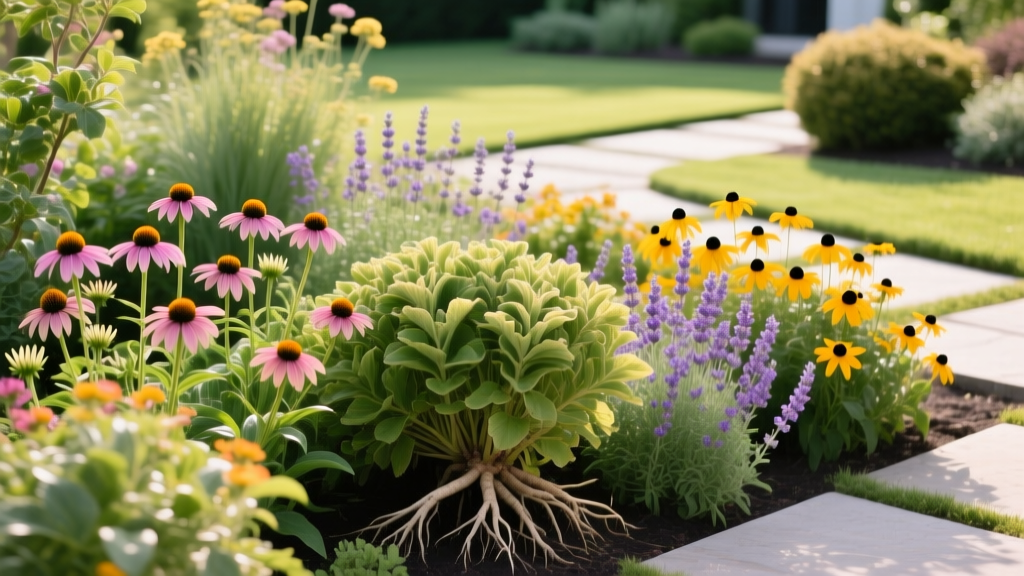
What Is a Perennial Plant? Identification and Growth Guide
The Botanical Definition: Lifecycle and Survival Mechanics
To understand what is a perennial plant, you must look beyond the foliage and examine the root system. Botanically, a perennial is any plant that lives for three or more growing seasons. Unlike annuals, which complete their entire lifecycle—from germination to seed production to death—in a single year, perennials invest heavily in underground storage organs. These structures allow the plant to enter dormancy during unfavorable conditions (such as winter freezes or summer droughts) and regenerate from the crown when environmental triggers signal the start of a new growing season.
Herbaceous vs. Woody Perennials
Herbaceous Perennials: The above-ground stems and foliage die back completely to the ground in winter. The plant survives entirely via its root system or crown (e.g., Hosta, Echinacea, Paeonia).
Woody Perennials: The above-ground structure persists and grows larger each year. This category includes trees, shrubs, and woody vines (e.g., Hydrangea quercifolia, Clematis).
Identifying Perennials: Visual and Structural Cues
When identifying unknown plants in a landscape, observing the stem structure and growth habit provides immediate clues about their lifecycle. Perennials typically develop a distinct "crown"—the localized thickening at the soil line where the roots transition into stems. This crown houses the dormant buds (eyes) that will produce next year's shoots.
| Trait | Annual | Biennial | Perennial |
|---|---|---|---|
| Lifespan | 1 Season | 2 Seasons | 3+ Seasons |
| Root Fate | Dies with plant | Dies after seeding | Persists & expands |
| Crown Development | None | Minimal (rosette) | Pronounced & woody |
| Example Species | Zinnia elegans | Digitalis purpurea | Rudbeckia fulgida |
Root System Architecture: The Secret to Longevity
The primary reason perennials survive for decades lies in their specialized root architectures. These systems store carbohydrates synthesized during the summer to fuel the rapid spring emergence. Understanding these structures is critical for proper division, transplanting, and winterizing.
- Taproots: A single, dominant, thick root that plunges deep into the soil profile. Baptisia australis (False Indigo) and Echinacea purpurea (Purple Coneflower) utilize taproots to access deep moisture. Transplanting rule: Taprooted perennials resent division and should be planted in their permanent location while young.
- Rhizomes: Horizontal, fleshy underground stems that grow just below the soil surface. Iris germanica (Bearded Iris) spreads via rhizomes. Planting rule: The top third of the rhizome must remain exposed to the sun to prevent bacterial soft rot.
- Fibrous Roots: Dense, branching networks of fine roots with no dominant taproot. Hemerocallis (Daylily) and Hosta species feature fibrous systems. Division rule: These are the easiest perennials to divide; simply slice the crown with a sharp spade in early spring or fall.
- Fleshy Storage Roots: Thickened roots designed specifically for carbohydrate storage. Paeonia lactiflora (Herbaceous Peony) relies on these. Critical depth rule: Peony "eyes" (dormant buds) must be planted no deeper than 2 inches below the soil line. Planting them 3 or more inches deep will result in lush foliage but zero blooms for years.
Hardiness Zones and 2026 Nursery Buying Guide
Selecting the right perennial requires matching the plant's genetic cold tolerance to your specific microclimate. The USDA Plant Hardiness Zone Map remains the definitive standard for this, measuring the average annual extreme minimum winter temperature. A plant rated for Zone 5 will survive temperatures down to -20°F (-28.8°C), but may suffer severe crown damage if planted in Zone 4 without heavy mulch protection.
When purchasing perennials, nurseries offer them in several formats, each with distinct price points and establishment timelines:
- Bare-Root: Shipped dormant without soil. Highly cost-effective ($4 to $9 per plant). Requires soaking in water for 4 hours before planting. Takes 1 to 2 years to reach mature blooming size.
- Plugs (72-cell trays): Small, actively growing plants. Ideal for mass plantings or groundcovers like Phlox subulata. Costs roughly $2.50 to $4.00 per plug.
- 1-Gallon Potted: The industry standard for retail garden centers. Priced between $14 and $28 in 2026. Offers immediate landscape impact and establishes within a single season.
- 2-Gallon or Larger: Mature specimens, often used for woody perennials or large ornamental grasses like Miscanthus sinensis. Prices range from $35 to $65+.
Edge Cases: The "Tender Perennial" Misconception
A common point of confusion among home gardeners is the "tender perennial." Biologically, these plants are perennials in their native, frost-free habitats. However, in regions with freezing winters, they are killed by the cold and must be replanted annually, leading nurseries to market them as annuals.
"Many plants we treat as summer annuals in northern climates, such as Pelargonium (geraniums), Salvia guaranitica, and Dahlia hybrids, are actually herbaceous perennials in USDA Zones 8 through 11. With proper overwintering techniques—such as lifting dahlia tubers or bringing potted geraniums into a cool, dark basement—gardeners can preserve these plants for decades."
— Adapted from the University of Minnesota Extension perennial management guidelines.
For authoritative selection guidance tailored to specific regional soils and climates, the Royal Horticultural Society (RHS) maintains an extensive database of perennial cultivars, detailing their exact soil pH preferences and drought tolerance levels.
Frequently Asked Questions
Do perennial plants bloom continuously all summer?
No. Unlike annuals, which are genetically programmed to produce seeds continuously until frost, most herbaceous perennials have a specific, narrow blooming window lasting 2 to 4 weeks. To achieve continuous color, gardeners must practice "succession planting," combining early bloomers (Baptisia), mid-summer bloomers (Echinacea), and late bloomers (Aster novae-angliae).
How long do perennial plants actually live?
Lifespan varies drastically by species. Short-lived perennials like Gaillardia (Blanket Flower) and Delphinium often decline after 3 to 4 years and require reseeding or replacement. Long-lived perennials, particularly Paeonia (Peonies) and Asclepias tuberosa (Butterfly Weed), can thrive and expand in the exact same location for 50 to 100 years if left undisturbed.
Why is my perennial producing leaves but no flowers?
The three most common failure modes for non-blooming perennials are: (1) Planting depth is too deep (especially common with peonies and irises), (2) Excessive nitrogen fertilizer, which promotes vegetative leaf growth at the expense of flower bud formation, and (3) Insufficient sunlight. Most flowering perennials require a minimum of 6 hours of direct, unfiltered sunlight to trigger the hormonal pathways necessary for bud initiation.

