
Gardening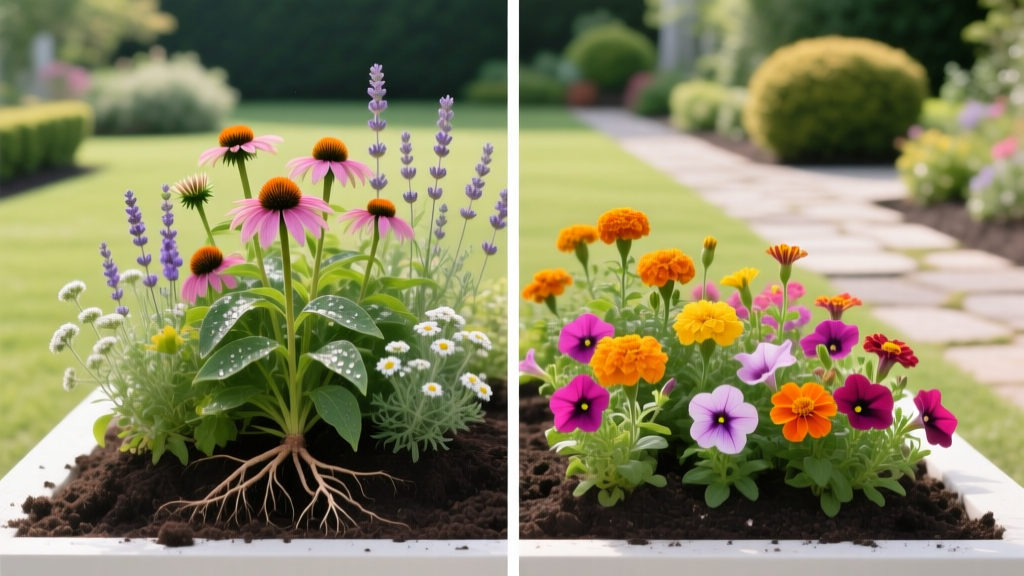
What's the Difference Between a Perennial and an Annual Plant?
The Core Botanical Distinction: Lifecycle Mechanics
When asking what's the difference between a perennial and an annual, the answer lies in genetic resource allocation and senescence triggers. An annual plant completes its entire life cycle—germination, vegetative growth, flowering, seed production, and death—within a single growing season. Its biological imperative is entirely focused on rapid reproduction before environmental conditions become hostile.
A perennial plant, conversely, lives for three or more years. Instead of expending all stored energy on a single massive seed set, perennials allocate significant carbohydrates to developing robust root systems (rhizomes, tubers, or deep taproots) to survive winter dormancy or dry seasons. They flower and set seed annually, but the parent plant's vegetative structures persist.
Botanical Insight: The transition from vegetative growth to flowering is often governed by photoperiodism and vernalization. Annuals are genetically hardwired to flower based on age or day length, while many perennials require a prolonged period of cold (vernalization) to break dormancy and initiate flower buds for the following spring.
Annual Plants: The One-Season Sprinters
Annuals are the workhorses of continuous summer color and rapid vegetable yields. Because they do not need to reserve energy for overwintering, they channel 100% of their photosynthetic output into blooms and fruit. Gardeners typically divide annuals into two functional categories based on frost tolerance:
- Hardy Annuals: These tolerate frost and can be direct-sown outdoors in early spring or fall-sown for spring blooms. Examples include Viola tricolor (Johnny Jump-Up) and Calendula officinalis. Seeds typically cost $3 to $5 per packet of 100+ seeds.
- Tender/Half-Hardy Annuals: Killed by the first frost. These require starting indoors 6 to 8 weeks before the last spring frost date or purchasing as nursery transplants. Examples include Zinnia elegans, Tagetes patula (French Marigold), and Cosmos bipinnatus.
The Annual Root Structure
Annuals develop shallow, highly branched, fibrous root systems. This architecture maximizes surface area for rapid water and nutrient uptake in the top 6 to 12 inches of soil, supporting their explosive top-growth. However, this makes them highly susceptible to drought stress, requiring consistent irrigation (roughly 1 to 1.5 inches of water per week).
Perennial Plants: The Long-Term Investment
Perennials form the structural backbone of garden borders. While they may have a shorter bloom window (typically 3 to 6 weeks) compared to annuals, their foliage and architectural presence persist for decades. According to the Cornell University Home Gardening guidelines, herbaceous perennials die back to their crown in autumn, while woody perennials (shrubs and trees) retain their above-ground structure.
When establishing perennials like Echinacea purpurea (Purple Coneflower) or Hosta plantaginea, gardeners must follow the industry-standard 'Sleep, Creep, Leap' timeline:
- Year 1 (Sleep): The plant focuses 80% of its energy on root establishment. Top growth is minimal, and blooms may be sparse or absent.
- Year 2 (Creep): The root system is established. Vegetative growth expands outward, and flowering reaches about 50% of its mature capacity.
- Year 3+ (Leap): The plant reaches mature size, produces maximum blooms, and may require division (e.g., Daylilies or Hostas) to prevent center die-out.
The 'Tender Perennial' Gray Area
Plant classification is not strictly binary; it is geographically dependent. Many plants sold as 'annuals' in northern nurseries are actually tropical perennials. For example, Pelargonium x hortorum (common geranium) and Canna indica are biologically perennials. However, because they cannot survive freezing temperatures, gardeners in USDA Zones 3 through 7 grow them as annuals. In Zones 9 through 11, these same plants will live for years outdoors. Always cross-reference plant tags with the USDA Plant Hardiness Zone Map to understand a plant's true lifecycle in your specific microclimate.
5-Year Cost and Labor Analysis: 100 Sq Ft Garden Bed
Understanding what's the difference between a perennial and an annual also requires a financial perspective. Annuals demand recurring capital and labor, while perennials require high upfront costs but lower long-term maintenance. Below is a projected 5-year cost analysis for filling a 100-square-foot garden bed, assuming average 2026 nursery pricing.
| Metric | 100% Annual Bed | 100% Perennial Bed |
|---|---|---|
| Initial Plant Cost | $120 (thirty 4-packs at $4 each) | $360 (twenty 1-gallon pots at $18 each) |
| Year 2-5 Plant Replacement | $480 ($120/yr x 4 years) | $40 (replacement of 2 failed specimens) |
| Soil & Fertilizer (5 Yrs) | $150 (heavy feeders require constant liquid fertilizer) | $75 (top-dressing with compost annually) |
| Labor (Planting/Cleanup) | High (complete teardown and replanting every spring) | Low (cutting back dead foliage in early spring) |
| Total 5-Year Cost | $750 | $475 |
Warning on Perennial Maintenance: While perennials save money on plant purchases, they require periodic division. Plants like Rudbeckia fulgida and Aster novae-angliae will develop woody, dead centers after 3 to 4 years. You must dig them up, split the root mass with a spade, and replant the outer healthy sections, or the plant will eventually die out.
How to Visually Identify Them in the Nursery
Nursery layouts can be confusing, but you can reliably identify a plant's lifecycle by examining its physical presentation and signage.
1. Analyze the Container and Root Mass
Annuals are almost exclusively sold in plastic cell packs (4-packs or 6-packs) or small 4-inch square pots. If you gently slide an annual out of its pot, you will see a dense, fibrous web of thin white roots tightly bound to the soil shape. Perennials are typically sold in 1-gallon, 2-gallon, or deep 'band' pots designed to accommodate long taproots. Their root systems are thicker, fleshier, and often feature visible rhizomes or crowns at the soil line.
2. Decode the Plant Tag
Commercial plant tags contain explicit lifecycle indicators, though they are often buried in the fine print. Look for the following markers:
- Annuals: Tags will list 'Sowing Instructions' or 'Frost Dates.' They rarely feature a USDA Zone hardiness map. If a zone map is present, it usually indicates where it can be grown as a perennial, accompanied by the phrase 'Grown as an annual in cooler zones.'
- Perennials: Tags will prominently display a USDA Hardiness Zone range (e.g., 'Zones 4-9'). They will also list 'Mature Size' dimensions that take 3+ years to achieve, and often include pruning or division instructions rather than sowing dates.
3. Evaluate the Bloom-to-Foliage Ratio
Because annuals are bred for immediate visual impact at the point of sale, nursery annuals are often forced into bloom using high-phosphorus fertilizers and controlled greenhouse lighting. You will buy them covered in flowers. Perennials sold in spring are frequently sold 'green' (vegetative state) with zero flowers, as they have not yet received the environmental cues to bloom. Do not mistake a lack of flowers on a 1-gallon nursery pot for poor plant health; it is a hallmark of a true perennial.
Frequently Asked Questions
Can a perennial bloom all summer like an annual?
Very few perennials bloom continuously from May to September. However, some modern cultivars have been bred for extended bloom times. Coreopsis verticillata 'Moonbeam' and Salvia nemorosa 'Caradonna' can bloom for 10 to 12 weeks if deadheaded (spent flowers removed) weekly to prevent the plant from shifting energy into seed production.
What are biennial plants?
Biennials, such as Digitalis purpurea (Foxglove) and Daucus carota (Queen Anne's Lace), require two years to complete their lifecycle. In year one, they produce a low-growing rosette of foliage and store energy in a taproot. In year two, they send up a tall flower spike, set seed, and die. Many biennials self-seed prolifically, creating the illusion of being perennials in the garden.
For further research on specific plant lifecycles and regional adaptability, consult the Missouri Botanical Garden Plant Finder database, which provides exhaustive botanical profiles and lifecycle classifications for over 7,500 species.

