
Gardening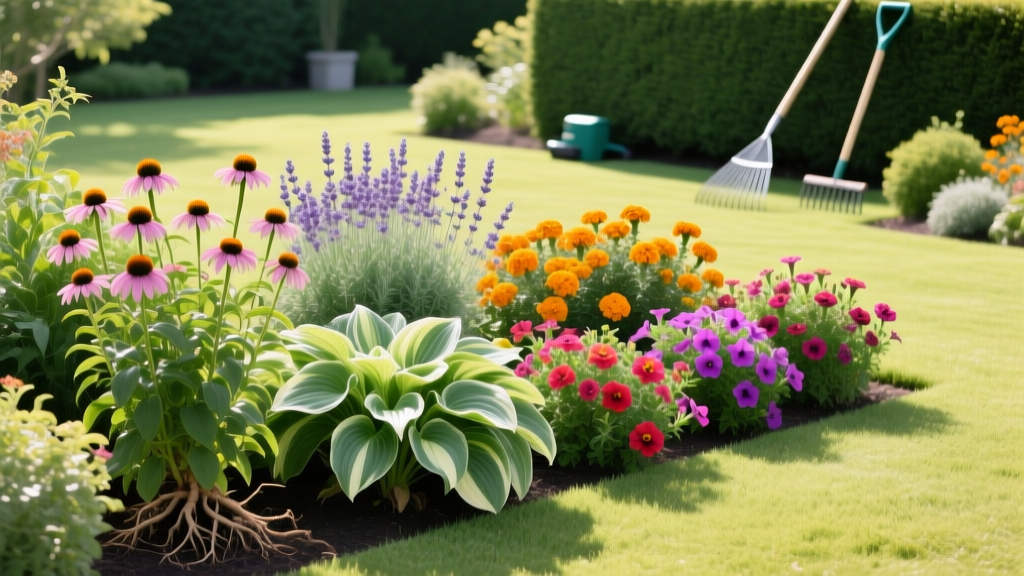
Understanding the Difference Between Perennials and Annuals Plants
The fundamental difference between perennials and annuals plants lies in their biological life cycles, root structures, and reproductive strategies. While annuals complete their entire life cycle—from germination to seed production and death—within a single growing season, perennials persist for three or more years, regenerating from their root systems each spring. Understanding this distinction is critical for budgeting, garden design, and long-term landscape maintenance.
The Biological Core: Reproductive Strategies
Plant behavior is dictated by evolutionary survival mechanisms. When you understand why a plant grows the way it does, garden maintenance becomes highly predictable.
Annuals: The Sprint to Reproduce
True annuals (like zinnias, marigolds, and sunflowers) possess a singular biological imperative: produce seeds before winter. Because they only have one season to ensure their genetic lineage, they channel massive amounts of energy into continuous, showy blooms. If you prevent an annual from setting seed (a process called deadheading), it will produce even more flowers in a desperate attempt to complete its reproductive cycle.
Perennials: The Marathon of Survival
Perennials (such as hostas, daylilies, and echinacea) prioritize root and vegetative growth over immediate seed production. They store carbohydrates in specialized structures like taproots, rhizomes, or tubers to survive winter dormancy. Consequently, their bloom windows are typically much shorter—often lasting only 3 to 6 weeks—because they cannot afford to exhaust their energy reserves on prolonged flowering.
Expert Insight: The 'Sleep, Creep, Leap' Rule. Herbaceous perennials follow a three-year establishment timeline. Year one ('sleep') focuses entirely on subterranean root development with minimal top growth. Year two ('creep') shows moderate vegetative expansion. Year three ('leap') delivers the mature plant size and full floral displays.
The Hardiness Zone Caveat: 'Tender Perennials'
The most common point of confusion regarding the difference between perennials and annuals plants is geographic relativity. Many plants sold as 'annuals' in northern climates are actually biologically perennial in their native habitats.
For example, the common garden geranium (Pelargonium x hortorum) and coleus (Plectranthus scutellarioides) are herbaceous perennials or woody shrubs in USDA Hardiness Zones 10 and above. However, because they lack the cellular antifreeze mechanisms required to survive freezing temperatures, they die off in Zones 3 through 9. Gardeners in colder regions treat them as annuals, replacing them yearly, while a gardener in Miami will maintain the exact same geranium bush for a decade.
Always cross-reference plant tags with the USDA Plant Hardiness Zone Map to determine if a 'tender perennial' can actually survive your specific winter lows.
Financial Breakdown: Upfront vs. Long-Term Costs
Budgeting a garden requires analyzing the cost-per-square-foot over a five-year horizon. Annuals demand recurring capital, while perennials require a higher initial investment that amortizes over time.
- Annual Flower Bed (100 sq ft): Requires approximately 80 to 100 4-inch pots for full coverage. At an average retail price of $4.50 per pot, the Year 1 cost is $360 to $450. Because the plants die in autumn, this exact cost is repeated every single year. 5-Year Cost: $1,800 - $2,250.
- Perennial Flower Bed (100 sq ft): Requires about 35 to 45 1-gallon containers, spaced 18 to 24 inches apart to allow for mature spread. At $14.00 per gallon pot, the Year 1 cost is $490 to $630. In subsequent years, the plants expand to fill the space, requiring zero replacement costs, only minor division every 4-5 years. 5-Year Cost: $490 - $630.
Head-to-Head Comparison Matrix
Use this decision matrix to determine which plant type aligns with your landscape goals and maintenance bandwidth.
| Feature | True Annuals | Herbaceous Perennials |
|---|---|---|
| Lifespan | 1 growing season | 3 to 20+ years |
| Bloom Duration | Continuous (Spring to Frost) | Brief (3 to 8 weeks typically) |
| Root Structure | Shallow, fibrous | Deep taproots, rhizomes, or crowns |
| Maintenance Focus | Frequent watering, deadheading, fertilizing | Spring cut-back, dividing every 3-5 years |
| Drought Tolerance | Low (requires consistent moisture) | High (once established after Year 2) |
| Primary Garden Role | Seasonal color pops, container fillers | Structural backbone, permanent borders |
Strategic Garden Placement Framework
Professional landscape designers rarely choose one over the other; they integrate both based on functional requirements. According to guidelines from the University of Minnesota Extension, combining the two creates a resilient, continuously blooming ecosystem.
Where to Deploy Annuals
- High-Traffic Entryways: Use petunias or calibrachoa in front-door containers where continuous, vibrant color is required to greet guests daily.
- Vegetable Garden Borders: Plant alyssum or marigolds to attract beneficial pollinators and deter nematodes during the peak summer harvest window.
- Temporary Gap Fillers: While waiting for slow-growing perennial shrubs to reach maturity, use fast-growing zinnias to prevent weed encroachment in bare soil.
Where to Deploy Perennials
- Property Lines and Slopes: Utilize deep-rooted perennials like daylilies (Hemerocallis) or ornamental grasses to prevent soil erosion on inclines where annual replanting is physically difficult.
- Shaded Understory Zones: Beneath mature deciduous trees, plant shade-tolerant perennials like hostas, astilbe, and ferns. Annuals struggle to compete with tree roots for surface moisture, whereas established perennial root systems can coexist.
- Pollinator Corridors: Native perennials like milkweed (Asclepias) and coneflower (Echinacea) provide the specific, reliable overwintering habitats and specialized nectar tubes that native bees and monarch butterflies require.
The 70/30 Design Rule: For a sustainable, low-maintenance landscape, aim for a composition of 70% perennials (including woody shrubs and trees) to form the permanent architectural backbone, and 30% annuals to provide flexible, seasonal color accents that can be changed yearly based on preference.
Frequently Asked Questions
Can you plant annuals and perennials in the same bed?
Yes, but you must manage root competition. Plant annuals in the 'negative space' between dormant perennials in early spring. Avoid planting heavy-feeding annuals directly over the crowns of shallow-rooted perennials like sedum or heuchera, as the annuals' frequent watering requirements can cause the perennial crowns to rot.
Do perennials ever need to be replaced?
While long-lived perennials like peonies can survive for 50+ years, short-lived perennials such as columbine (Aquilegia), shasta daisies, and delphiniums often decline after 3 to 5 years. These varieties rely on self-seeding to maintain their presence in the garden, meaning the original mother plant dies, but its genetic offspring take its place.
Are vegetables annuals or perennials?
The vast majority of common garden vegetables (tomatoes, peppers, squash, beans) are biologically tender perennials native to tropical climates, but they are cultivated globally as annuals to harvest yields before the first autumn frost. True perennial vegetables are rare but include asparagus, rhubarb, and globe artichokes, which require dedicated, permanent garden beds.

