
Gardening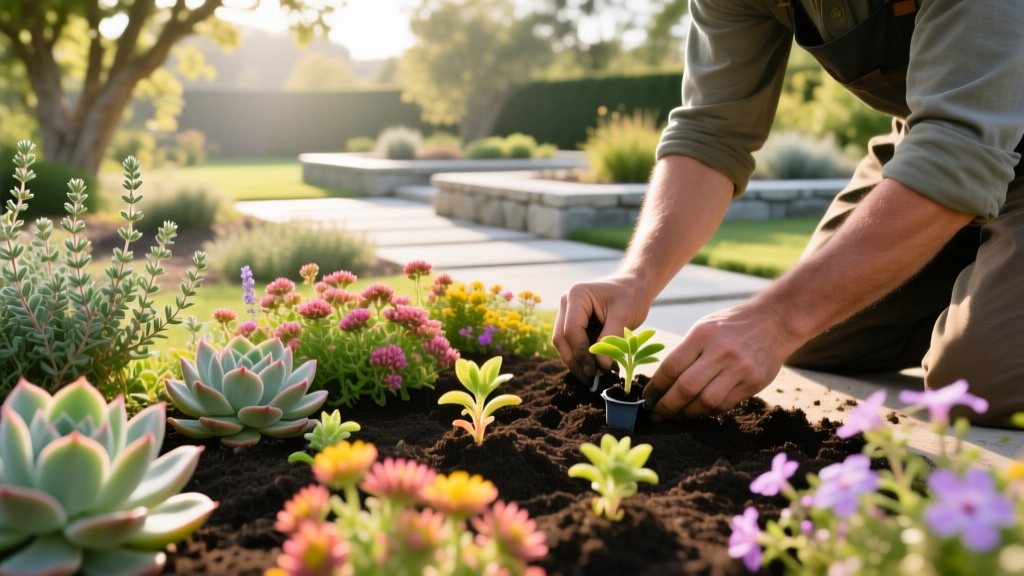
How to Plant and Establish Drought-Tolerant Ground Cover Flowers
Why Drought-Tolerant Ground Cover Flowers Outperform Traditional Turf
Replacing high-maintenance turfgrass with drought-tolerant ground cover flowers is one of the highest-ROI landscaping upgrades a homeowner can make. Once established, perennial flowering ground covers reduce irrigation needs by up to 70% compared to Kentucky Bluegrass or Fescue lawns, eliminate mowing, and provide critical forage for native pollinators. However, the difference between a lush, weed-suppressing carpet and a patchy, disease-ridden failure lies entirely in the first 120 days of establishment. This guide details the exact soil preparation, spacing mathematics, and watering protocols required to successfully establish flowering ground covers in challenging environments.
Site Assessment and Soil Preparation Protocols
Most drought-tolerant ground covers—such as creeping thyme, sedum, and ice plant—originate from alpine or Mediterranean environments. They demand exceptional drainage and will quickly succumb to fungal crown rot in heavy, waterlogged clay. Before purchasing a single plug, you must verify your soil's percolation rate.
The Percolation Test: Dig a 12-inch deep, 6-inch wide hole in your planting area. Fill it with water and let it drain completely. Refill it and measure the water level drop after one hour. If the water drops less than 1 inch per hour, your soil requires structural amendment before planting.
Amending Poorly Draining Soil
If your percolation test fails, do not rely solely on peat moss or compost, which retain moisture. Instead, incorporate 30% by volume of expanded shale, pumice, or perlite into the top 8 inches of the soil profile. This creates permanent macropores that allow water to escape the root zone while maintaining the lean soil conditions these plants prefer. According to the University of Minnesota Extension, maintaining a slightly alkaline to neutral pH (6.5 to 7.5) is ideal for most flowering ground covers, so avoid acidifying amendments like sulfur unless a soil test specifically dictates it.
Selecting the Right Species for Your Microclimate
Choosing the correct botanical variety prevents future eradication headaches. Below is a comparison matrix of the top four drought-tolerant ground cover flowers, detailing their specific requirements and current market costs for 3-inch plugs.
| Botanical Name | Common Name | USDA Zones | Sun Requirement | Spread Rate (Year 1) | Avg Cost (3" Plug) |
|---|---|---|---|---|---|
| Thymus serpyllum | Creeping Thyme | 4-9 | Full Sun | 1-2 sq ft | $3.50 - $5.00 |
| Phlox subulata | Creeping Phlox | 3-9 | Full/Part Sun | 2-3 sq ft | $4.00 - $6.50 |
| Sedum spurium | Dragon's Blood Sedum | 3-8 | Full/Part Sun | 2-4 sq ft | $3.00 - $4.50 |
| Delosperma cooperi | Purple Ice Plant | 6-10 | Full Sun | 3-5 sq ft | $4.50 - $7.00 |
Step-by-Step Planting Guide for Maximum Coverage
The geometry of your planting grid dictates how quickly the ground covers will knit together to suppress weeds. A staggered diamond pattern covers the ground approximately 15% faster than a traditional square grid.
- Map the Diamond Grid: Use landscaping spray paint to mark your planting holes. For aggressive spreaders like Sedum, space holes 12 inches apart. For slower growers like Creeping Thyme, space them 6 to 8 inches apart. Offset every other row to create diamonds.
- Excavate and Position: Dig holes twice the width of the plug, but no deeper than the root ball. Critical Rule: The crown of the plant (where the stems meet the roots) must sit exactly 1/4 inch above the surrounding soil grade. Planting flush or below grade traps moisture against the stem, guaranteeing crown rot.
- Backfill and Tamp: Backfill with the native soil (or your amended mix) and gently tamp down with your hands to eliminate air pockets. Do not use your foot, which over-compacts the soil and crushes delicate peripheral root hairs.
- Initial Soak: Immediately apply 0.5 inches of water using a sprinkler with a fine mist nozzle to settle the soil without washing away the top layer.
The Landscape Fabric Trap: Never install woven weed fabric beneath stoloniferous or rhizomatous ground covers (like thyme or phlox). These plants spread by sending out above-ground runners that must root into the soil at their nodes. Fabric blocks this process, stunting growth and causing the plants to die back in the center. Rely on dense planting and a thin 1-inch layer of fine pine bark mulch between plugs until they fill in.
First-Year Watering and Establishment Protocol
The goal of the first year is to drive roots deep into the soil profile. Shallow, frequent watering creates weak root systems that will fry during the first summer heatwave. The EPA WaterSense program emphasizes deep, infrequent watering to build drought resilience. Follow this exact schedule for the first six months:
- Weeks 1-2 (Root Shock Phase): Apply 0.25 inches of water daily, preferably in the early morning. The root system is restricted to the original plug size and cannot access surrounding soil moisture.
- Weeks 3-8 (Lateral Expansion Phase): Reduce frequency to twice a week, but increase the volume to 0.5 inches per session. This forces the new lateral roots to chase the moisture deeper into the soil profile.
- Months 3-6 (Establishment Phase): Water deeply once a week with 1 inch of water. By month four, you should begin tapering off entirely, relying only on natural rainfall unless you are experiencing a severe drought (defined as less than 0.5 inches of rain in a 10-day period).
Troubleshooting Common Establishment Failures
Even with perfect planting, environmental variables can disrupt establishment. Here is how to diagnose and fix the three most common failure modes in ground cover flowers.
1. Winter Heave in Northern Zones
In zones 3 through 6, freeze-thaw cycles can physically push the shallow root systems of newly planted plugs out of the ground, exposing them to freezing air. The Fix: In late November, apply a 2-inch layer of shredded leaves or straw over the newly planted area. This insulates the soil, keeping the temperature constant and preventing the heaving cycle. Remove the mulch in early April as soon as the soil thaws.
2. Aggressive Weed Competition
Before the ground cover knits together, weeds will exploit the bare soil. Homeowners often reach for pre-emergent herbicides like pendimethalin. The Fix: Do not use pre-emergents in the first year. These chemicals create a barrier in the top inch of soil that will inhibit the ground cover's stolons from rooting at the nodes. Instead, hand-pull weeds or use a targeted glyphosate wick applicator to paint herbicide directly onto weed leaves without touching the desirable ground cover.
3. Fungal Leaf Spot and Crown Rot
If you notice black lesions on the leaves or a foul smell at the base of the plant, you are dealing with a fungal pathogen, usually Botrytis or Phytophthora, exacerbated by poor airflow and evening watering. The Fix: Immediately switch to morning-only watering. Prune out the infected center sections of the plant to improve airflow, and apply a copper-based fungicide (such as Bonide Liquid Copper Fungicide) at a rate of 2 tablespoons per gallon of water, repeating every 10 days until the symptoms halt.
"The success of a flowering ground cover installation is 80% soil preparation and 20% plant selection. If you put a Mediterranean alpine plant in unamended, heavy clay, no amount of fertilizer or water will save it from root asphyxiation."

