
Gardening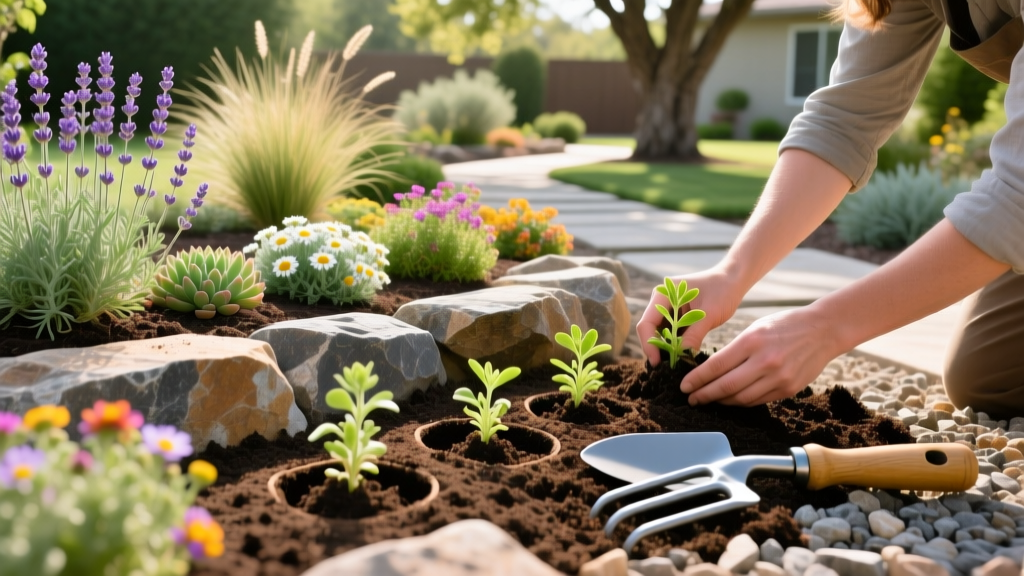
How to Plant a Thriving Garden in Rocky Soil: A Beginner's Guide
Understanding Your Rocky Soil Profile
Gardening in rocky soil presents unique mechanical and biological challenges. Unlike dense clay or loose loam, rocky terrain—often a result of glacial deposits, shallow bedrock, or historical construction fill—disrupts root penetration and accelerates drainage. Before buying a single plant, you must determine the nature of your rocks. Are they rounded river stones, which drain well but shift easily? Or are they jagged shale and limestone fragments that create physical barriers for taproots?
According to the University of Minnesota Extension, soil texture directly dictates water retention and nutrient availability. In rocky soils, the fine particle fraction (sand, silt, clay) is often minimal, meaning organic matter burns up rapidly. Your primary goal is not necessarily to remove every stone, but to build a continuous matrix of organic matter that bridges the gaps between rocks, creating a viable rhizosphere for plant roots.
Pro Tip: The Rebar Probe Test
Push a 3/8-inch steel rebar into the soil after a heavy rain. If it stops abruptly within 4 to 6 inches, you have a shallow rock shelf or hardpan. If it slides down 12 inches but hits resistance, you are dealing with scattered cobblestones. This dictates whether you need to amend in-ground or build upward.
Push a 3/8-inch steel rebar into the soil after a heavy rain. If it stops abruptly within 4 to 6 inches, you have a shallow rock shelf or hardpan. If it slides down 12 inches but hits resistance, you are dealing with scattered cobblestones. This dictates whether you need to amend in-ground or build upward.
Strategy 1: Amending In-Ground Rocky Soil (The Deep Dig Method)
If your rebar probe indicates scattered stones rather than a solid bedrock shelf, you can amend the native soil. Do not use a motorized rototiller. Tilling rocky soil shatters stones into smaller gravel, which then settles and creates an impenetrable concrete-like hardpan layer just below the topsoil. Instead, use manual leverage.
Step-by-Step Manual Clearance and Amendment
- Extract Large Obstructions: Use a 64-inch Truper Rock Bar (approximately $45) to pry out stones larger than a golf ball. The long handle provides the necessary leverage to pop stones out without breaking your back.
- Double Dig the Bed: Using a Fiskars 46-inch D-Handle Square Spade ($32), dig a trench 12 inches deep. Loosen the subsoil at the bottom of the trench with a garden fork, then add a 2-inch layer of coarse builder's sand. Never use playground sand, which is too fine and will clog soil pores.
- Incorporate Organic Matter: Mix native soil with high-quality compost at a 1:1 ratio. For a 100-square-foot bed, you will need roughly 1.5 cubic yards of compost (typically $40 to $60 per yard from local landscape suppliers). Add 4 cups of Espoma Organic Compost Starter per cubic yard to accelerate microbial breakdown.
Strategy 2: Building Over It (Raised Beds and Hugelkultur)
When the rock shelf is too shallow or the stones are too massive to remove, the most cost-effective and biologically sound strategy is to build above the native grade. The Royal Horticultural Society recommends raised beds for poor-draining or excessively rocky native soils, as they allow complete control over the root zone environment.
The 18-Inch Cedar Raised Bed Framework
Standard 6-inch raised beds are insufficient for rocky terrain because heat transfers rapidly from the sun-baked rocks below, drying out the shallow soil above. Build beds at least 18 inches tall using untreated, rot-resistant cedar or composite lumber.
| Material | Purpose | Estimated Cost (4x8 ft bed) |
|---|---|---|
| 18-inch Cedar Boards | Structural walls, rot resistance | $120 - $150 |
| Heavy-Duty Weed Barrier | Prevents rock intrusion from below | $25 |
| Cardboard / Hugelkultur Logs | Base layer filler, moisture retention | Free (scavenged) |
| Raised Bed Soil Mix | Top 12 inches (60% topsoil, 30% compost, 10% pumice) | $80 - $110 (bulk delivery) |
Top Plants That Thrive in Rocky, Well-Draining Soil
If you choose to plant directly in amended rocky soil, select species that evolved in alpine, Mediterranean, or coastal environments. These plants possess deep taproots or fibrous, shallow root systems that navigate crevices efficiently and despise wet feet.
- Lavender (Lavandula angustifolia 'Munstead'): Requires sharp drainage. Rocky soil prevents the root rot that typically kills lavender in heavy clay. Space plants 18 inches apart to ensure airflow.
- Yarrow (Achillea millefolium): Features a resilient rhizome system that spreads horizontally just beneath the surface, easily navigating around small stones. Highly drought-tolerant once established.
- Sedum 'Autumn Joy' (Hylotelephium spectabile): A succulent perennial that stores water in its fleshy leaves, making it virtually immune to the rapid drying effects of rocky terrain.
- Creeping Thyme (Thymus serpyllum 'Elfin'): An excellent groundcover that weaves between surface rocks, suppressing weeds and softening the harsh visual edges of stone-heavy garden beds.
- Sea Thrift (Armeria maritima): Naturally grows in coastal cliffs and rocky outcroppings. Forms tight, grass-like mounds that produce vibrant pink globe flowers in late spring.
Common Beginner Mistakes to Avoid
Navigating rocky soil requires a shift in standard gardening paradigms. Avoid these frequent errors that lead to plant failure and wasted labor:
Warning: The Topsoil Trap
Do not simply dump 3 inches of bagged topsoil directly over rocky ground and plant. Without breaking the interface between the new soil and the rocky subgrade, water will perch at the boundary line, drowning plant roots in the shallow top layer while the deeper soil remains bone dry. Always scarify (scratch and loosen) the top 2 inches of the rocky subgrade before adding new soil.
Do not simply dump 3 inches of bagged topsoil directly over rocky ground and plant. Without breaking the interface between the new soil and the rocky subgrade, water will perch at the boundary line, drowning plant roots in the shallow top layer while the deeper soil remains bone dry. Always scarify (scratch and loosen) the top 2 inches of the rocky subgrade before adding new soil.
- Overwatering to Compensate for Drainage: Rocky soil drains rapidly, leading beginners to water daily. This washes away soluble nutrients. Instead, water deeply twice a week and apply a 2-inch layer of shredded hardwood mulch to slow evaporation.
- Ignoring Soil pH: Limestone-rich rocky soils are highly alkaline (pH 7.5 to 8.5). Attempting to grow acid-loving plants like blueberries or azaleas in this environment will result in severe iron chlorosis. Always test your soil pH and choose plants adapted to your specific rock chemistry.
- Using Wood Chips as a Soil Amendment: Mixing raw wood chips into rocky soil ties up nitrogen as the wood decomposes, starving your plants. Use wood chips only as a surface mulch, and use fully composted organic matter for soil integration.
Frequently Asked Questions
Can I grow root vegetables like carrots in rocky soil?
Standard long-rooted carrots (like 'Danvers') will fork and deform when they hit stones. To grow root crops in rocky terrain, select short, stubby varieties such as 'Paris Market' or 'Little Finger' carrots, or grow them in 12-inch deep fabric grow bags filled with screened potting mix.
How deep do I need to dig to remove all the rocks?
You do not need to remove all rocks. Small gravel (under 1/2 inch) actually improves soil aeration and drainage. Focus your extraction efforts on stones larger than 2 inches in diameter within the top 12 inches of the soil profile, which is the primary root zone for most annuals and perennials.

