
Gardening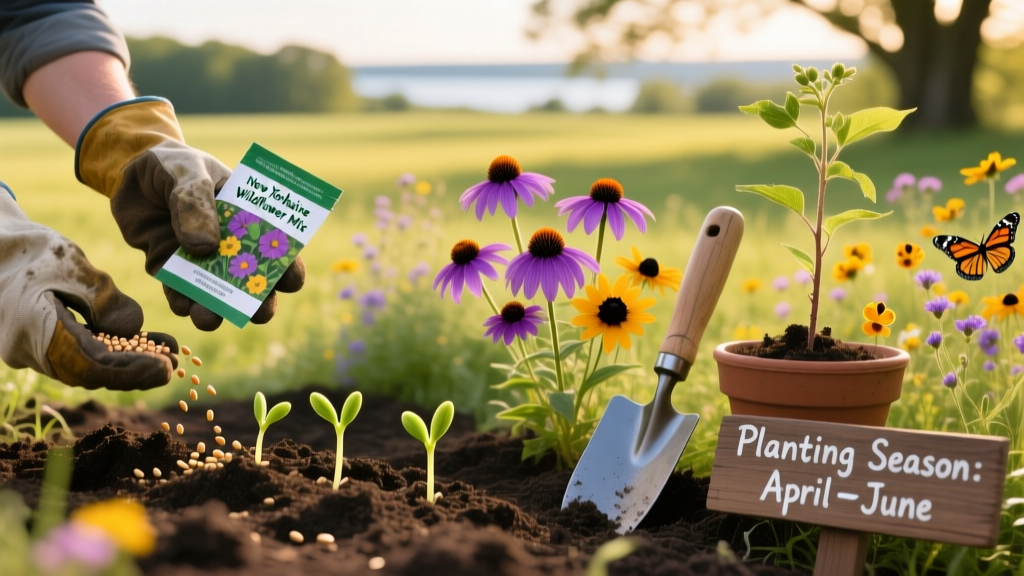
Growing Wildflowers of New York: A Step-by-Step Planting Guide
Why Plant Native Wildflowers of New York?
Cultivating the native wildflowers of New York is one of the most impactful landscaping decisions a homeowner can make. Unlike exotic ornamentals, native species like New England Aster and Butterfly Weed have evolved over millennia to thrive in the state's specific climate extremes, from the freezing Adirondack winters to the humid, salty summers of Long Island. According to the New York State Department of Environmental Conservation, native plant gardens require up to 80% less supplemental watering once established and provide critical host habitats for declining pollinator populations, including the federally threatened rusty patched bumble bee.
However, simply tossing a generic 'wildflower mix' onto your lawn will result in a weed-choked disappointment. Successful cultivation requires precise site preparation, cold stratification, and species selection tailored to your specific ecoregion. This guide provides the exact measurements, timelines, and horticultural techniques needed to establish a thriving native meadow in 2026.
Understanding New York's Ecoregions for Seed Selection
New York is not a single climate zone; it spans multiple ecoregions with drastically different soil profiles and moisture levels. Selecting seeds adapted to your specific region is the first critical step.
Regional Soil Profiles:
- Adirondack & Catskill Regions: Highly acidic, rocky, and well-drained soils. Ideal for Lupine (Lupinus perennis) and Wild Columbine (Aquilegia canadensis).
- Hudson Valley & Central NY: Heavy clay loams with moderate drainage. Best suited for Joe-Pye Weed (Eutrochium purpureum) and New York Ironweed (Vernonia noveboracensis).
- Long Island & Coastal Plains: Sandy, fast-draining, and slightly acidic soils. Perfect for Butterfly Weed (Asclepias tuberosa) and Seaside Goldenrod (Solidago sempervirens).
Step 1: Site Preparation and Soil Testing
The most common failure point in meadow establishment is inadequate weed eradication before sowing. Native wildflower seeds are small and slow to germinate; they cannot compete with established turfgrass or aggressive weeds like bindweed.
Testing Your Soil
Before altering your soil, send a sample to the Cornell University Pollinator Network or your local Cornell Cooperative Extension office. A standard nutrient and pH analysis costs approximately $20 to $25. Most New York natives prefer a pH between 5.5 and 7.0. Avoid adding synthetic fertilizers; high nitrogen levels will cause native wildflowers to produce excessive weak foliage at the expense of blooms, while encouraging aggressive grasses.
The Smothering Method (Organic Eradication)
For areas under 1,000 square feet, avoid herbicides and use the smothering technique. This takes 8 to 12 weeks but preserves soil biology.
- Mow the existing vegetation as short as your mower allows (under 2 inches).
- Lay down overlapping layers of plain, uncoated corrugated cardboard directly over the soil. Remove all tape and staples.
- Wet the cardboard thoroughly to initiate decomposition.
- Cover the cardboard with 3 to 4 inches of arborist wood chips or aged leaf mold. Do not use dyed mulch or bark nuggets, which can alter soil chemistry.
- Wait 8 weeks in summer or 12 weeks in spring before pulling back the mulch to reveal the dead turf beneath.
Step 2: Selecting the Right Native Seed Mix
When purchasing seeds, always look for '100% Pure Live Seed' (PLS) and verify that the botanical names match New York natives. Avoid mixes containing non-native fillers like Bachelor's Button or Queen Anne's Lace. Below is a foundational matrix for a full-sun, well-drained New York meadow.
| Botanical Name | Common Name | Bloom Time | Mature Height | Soil Preference |
|---|---|---|---|---|
| Asclepias tuberosa | Butterfly Weed | June - August | 2 - 3 ft | Sandy, well-drained |
| Symphyotrichum novae-angliae | New England Aster | August - October | 3 - 5 ft | Moist clay to loam |
| Echinacea purpurea | Purple Coneflower | July - September | 2 - 4 ft | Adaptable, loam |
| Monarda fistulosa | Wild Bergamot | July - August | 2 - 4 ft | Dry to medium loam |
Step 3: Cold Stratification and Sowing Techniques
Most native wildflowers of New York possess built-in dormancy mechanisms to prevent them from germinating right before winter. To break this dormancy, seeds require cold, moist stratification.
The Fridge Stratification Method
If you are planting in the spring, you must artificially simulate winter. Mix your seeds with damp (not wet) vermiculite or fine sand at a ratio of 1 part seed to 3 parts carrier. Place the mixture in a sealed ziplock bag and store it in your refrigerator at 34°F to 38°F for 30 to 60 days. Check the bag weekly to ensure the medium remains moist and to remove any mold.
Sowing Rates and Distribution
For a diverse meadow mix, the standard sowing rate is 10 to 15 pounds of Pure Live Seed per acre, which translates to roughly 4 to 6 ounces per 1,000 square feet. Because native seeds are incredibly small, broadcasting them by hand leads to uneven clumping.
Pro-Tip: The Carrier Method
Mix your stratified seed/sand blend with an additional 10 parts of dry, fine builder's sand. This increases the volume of your material, making it much easier to broadcast evenly across the soil surface. The contrasting color of the sand also allows you to see exactly where you have sown, preventing bare patches.
Mix your stratified seed/sand blend with an additional 10 parts of dry, fine builder's sand. This increases the volume of your material, making it much easier to broadcast evenly across the soil surface. The contrasting color of the sand also allows you to see exactly where you have sown, preventing bare patches.
After broadcasting, do not bury the seeds. Most native wildflower seeds require light to germinate. Simply walk over the area or use a lightweight lawn roller to press the seeds firmly into the soil surface to ensure good seed-to-soil contact.
Step 4: First-Year Maintenance and Weed Management
The first year of a native meadow is dedicated entirely to root development, not top growth. Your primary job is weed management without disturbing the fragile native seedlings.
The 'Mow High' Strategy
Annual weeds will inevitably germinate alongside your native seeds. When the annual weeds reach a height of 10 to 12 inches, set your mower to its highest possible setting (usually 4 to 6 inches) and mow the area. This cuts the heads off the fast-growing annual weeds, preventing them from shading out the natives and dropping their own seeds, while safely passing over the slow-growing native rosettes that remain close to the ground.
Never use a string trimmer or weed whacker in the first year, as these will scalp the soil and destroy native seedlings. Avoid using pre-emergent herbicides like Preen, as these will halt the germination of your wildflower seeds as well.
Troubleshooting Common Establishment Failures
Even with careful planning, environmental variables can disrupt establishment. Here is how to handle the most frequent edge cases encountered in New York soils.
- Seed Washout on Slopes: If you are planting on an incline greater than a 15% grade, heavy spring rains will wash your seeds away before they root. Apply a natural, biodegradable tackifier (like PlantTack) to the soil surface after sowing, or cover the area with a jute erosion control netting. Avoid straw mulch, which often contains invasive weed seeds; if you must mulch, use certified weed-free straw at a light rate of 1,000 lbs per acre.
- Heavy Clay Rot: If your Hudson Valley soil holds water for days after a rainstorm, species like Butterfly Weed will suffer from root rot. Do not attempt to fix heavy clay by adding sand—this creates a concrete-like matrix. Instead, top-dress the area with 2 cubic feet of expanded shale (such as PermaTill) per 100 square feet and lightly rake it into the top inch of soil to create permanent macropores for drainage.
- Floppy Asters and Goldenrods: In rich, amended soils, late-season bloomers like New England Aster can grow over 5 feet tall and flop over in autumn winds. To prevent this, perform the 'Chelsea Chop' in late May or early June. Use hedge shears to cut the top one-third of the stems off. This delays blooming by a few weeks but forces the plant to branch out, resulting in a denser, sturdier plant that won't collapse under the weight of its flowers.
Establishing the native wildflowers of New York is an exercise in patience and ecological stewardship. By respecting the specific dormancy requirements of the seeds and adapting your soil preparation to your local ecoregion, you will cultivate a resilient, low-maintenance landscape that supports local biodiversity for decades to come. For further regional planting lists and conservation guidelines, consult the Xerces Society for Invertebrate Conservation.

