
Gardening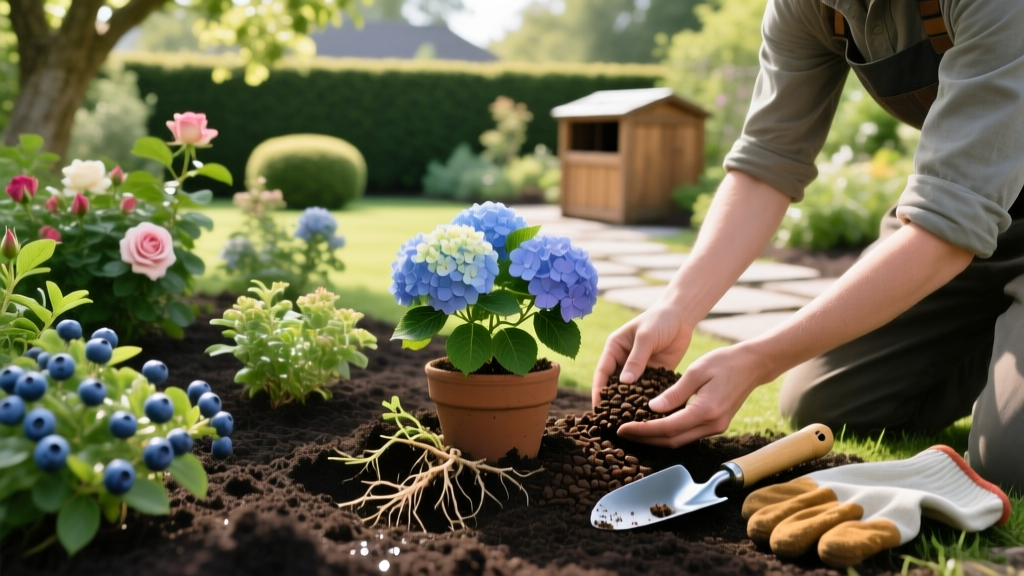
What Plants Benefit From Coffee Grounds? A Soil pH & Nutrient Guide
The internet is saturated with conflicting advice regarding spent coffee grounds in the garden. Some sources claim they are a miraculous acidifying agent that turns hydrangeas blue overnight, while others warn they are toxic to soil microbiology. To accurately answer the question of what plants benefit from coffee grounds, we must separate horticultural science from anecdotal myth. The efficacy of coffee grounds depends entirely on their preparation state (brewed vs. unbrewed), application thickness, and the specific physiological needs of the target plant.
The pH Myth: Fresh vs. Brewed Grounds
Myth: All coffee grounds are highly acidic and will lower soil pH.
Fact: The acidity in coffee is water-soluble. When you brew a cup of coffee, the chlorogenic acids and caffeine wash into your mug. Spent, brewed coffee grounds typically have a near-neutral pH between 6.5 and 6.8. Only unbrewed, fresh grounds retain the high acidity (pH 4.5 to 5.0) required to actively alter soil chemistry. Therefore, using spent grounds as a top-dressing will not meaningfully acidify your soil for acid-loving plants unless composted with other acidic organic matter.
The Nutritional Profile of Spent Coffee Grounds
Before determining which plants thrive with coffee ground amendments, it is critical to understand their nutritional breakdown. According to soil analysis data from Cornell University's Waste Management Institute, spent coffee grounds are not a balanced fertilizer, but rather a targeted slow-release nitrogen source.
- N-P-K Ratio: Approximately 2.0-0.3-0.3 (2% Nitrogen by volume, negligible Phosphorus and Potassium).
- Carbon-to-Nitrogen (C:N) Ratio: 20:1 to 24:1. This is a crucial metric. A C:N ratio under 25:1 classifies the material as a 'green' nitrogen source for composting, despite its brown color.
- Micronutrients: Contains bioavailable calcium, magnesium, and trace potassium, which are essential for cell wall structure and photosynthesis.
Because the nitrogen is bound in complex organic proteins, it must be broken down by soil bacteria before plant roots can absorb it. This makes coffee grounds an excellent long-term soil conditioner rather than a quick-fix liquid fertilizer.
What Plants Benefit From Coffee Grounds? (The Target List)
Plants that benefit most from coffee grounds are typically heavy nitrogen feeders or those that thrive in soils rich in organic humus. Below is a breakdown of the best candidates and the specific mechanisms of their benefit.
Acid-Loving Perennials & Shrubs
While spent grounds won't drastically drop your soil pH on their own, plants like Azaleas, Rhododendrons, Hydrangeas, and Camellias benefit immensely from the organic matter and slow-release nitrogen. The grounds improve soil aeration and water retention in the shallow root zones typical of these shrubs. For Hydrangea macrophylla, combining spent coffee grounds with aluminum sulfate and acidic pine needle mulch creates the ideal humus environment for blue pigment development.
Rose Bushes (Rosa spp.)
Roses are notorious heavy feeders that require consistent nitrogen for continuous blooming cycles. Applying a thin layer of coffee grounds around the drip line of rose bushes provides a steady nutrient drip. Furthermore, the coarse texture of the grounds deters soft-bodied pests like slugs and snails from crossing the soil barrier to reach the lower canes.
Vegetable Garden Heavy Feeders
Corn, squash, and leafy greens (like spinach and Swiss chard) draw heavily on soil nitrogen. Integrating coffee grounds into the soil prior to planting these crops ensures a steady mineralization of nitrogen throughout the growing season. Root vegetables like carrots and radishes also benefit, but with a major caveat: the grounds must be fully composted first. Applying raw grounds directly to root crop beds can cause root forking and stunting due to residual caffeine.
| Plant Category | Best Application Method | Max Application Rate | Primary Benefit |
|---|---|---|---|
| Hydrangeas & Azaleas | Top-dressing mixed with pine bark | 1/2 inch layer, twice yearly | Humus building, slow-release N |
| Roses | Scratched into top 1 inch of soil | 1 cup per mature bush, monthly | Foliage vigor, slug deterrence |
| Tomatoes & Peppers | Fully composted, mixed into bed | 15% of total compost volume | Sustained fruiting nitrogen |
| Leafy Greens | Compost tea / liquid extract | 1 gallon per 10 sq ft, bi-weekly | Rapid vegetative growth |
The Allelopathy Factor: Plants That Hate Coffee Grounds
Understanding what plants do not benefit from coffee grounds is just as critical. Coffee contains residual caffeine and chlorogenic acid, even after brewing. These compounds exhibit allelopathy—a biological phenomenon where a plant produces biochemicals that inhibit the germination and growth of neighboring plants.
Research in urban horticulture indicates that caffeine acts as a natural defense mechanism to prevent competition. Applying raw coffee grounds near germinating seeds or young seedlings can result in severe stunting, chlorosis, and root necrosis.
The Avoid List:
- Seed Starting Trays: Never mix coffee grounds into seedling potting mix. The allelopathic compounds will inhibit radicle (root) emergence.
- Tomato Seedlings: While mature tomatoes love composted grounds, young transplants are highly susceptible to caffeine toxicity.
- Alfalfa and White Clover: These nitrogen-fixing cover crops show significant growth suppression when exposed to coffee ground amendments.
- Orchids and Epiphytes: The dense, moisture-retaining nature of grounds promotes crown rot in plants that require high-aeration bark substrates.
The 3-Step Application Framework
To maximize benefits and avoid the common pitfalls of soil crusting and nitrogen robbery, follow this precise application framework recommended by modern soil scientists and the EPA's composting guidelines.
Step 1: The Compost Integration (The 20% Rule)
The safest and most effective way to use coffee grounds is through the compost pile. Treat them as a 'green' nitrogen source. Maintain a strict volume ratio: 1 part coffee grounds to 3 or 4 parts 'browns' (shredded cardboard, dry oak leaves, or straw). Never allow coffee grounds to exceed 20% of your total compost volume; higher concentrations can stall microbial activity and create anaerobic, foul-smelling conditions.
Step 2: The Top-Dressing Method (Scarification)
If applying directly to the garden bed, never leave a thick layer of raw grounds on the surface. When coffee grounds dry out, the fine particles bind together to form a hydrophobic crust that repels water and blocks oxygen exchange. The Fix: Apply no more than a 1/4-inch layer and immediately scarify (scratch) it into the top 2 inches of existing soil using a hand cultivator. This integrates the grounds with soil aggregates, preventing crusting while keeping them close to surface microbial activity.
Step 3: The Liquid Extract (Compost Tea)
For a fast-acting, low-risk liquid fertilizer, steep 2 cups of spent grounds in a 5-gallon bucket of water for 24 to 48 hours. Stir occasionally. Strain the liquid through a fine mesh bag and use it as a soil drench for container plants and heavy feeders. This extracts the water-soluble nutrients and beneficial microbes while leaving the bulk carbon and allelopathic compounds behind in the solid grounds.
Troubleshooting Common Coffee Ground Failures
Diagnostic: White Mold on Surface Grounds
Symptom: A fuzzy white or greenish-white mold appears on coffee grounds top-dressed around plants.
Diagnosis: This is typically Trichoderma or a similar saprophytic fungus. It is beneficial. These fungi are breaking down the complex carbohydrates in the coffee grounds. Do not scrape it off or apply fungicides; simply scratch it into the soil to speed up decomposition.
Diagnostic: Yellowing Leaves After Application
Symptom: Plant leaves turn pale green or yellow shortly after applying a thick layer of raw coffee grounds.
Diagnosis: Nitrogen immobilization (robbery). If raw grounds are mixed deeply into carbon-poor soil, soil bacteria will consume all available ambient nitrogen to break down the grounds, starving the plant.
Fix: Apply a fast-acting liquid nitrogen fertilizer (like fish emulsion) immediately to bridge the gap until the grounds mineralize.
Frequently Asked Questions
Can I use moldy coffee grounds from my kitchen collector?
Yes. The molds that grow on wet coffee grounds in your kitchen are almost entirely saprophytic fungi that feed on dead organic matter. They are excellent inoculants for your compost pile and will not harm garden plants or transmit plant diseases.
Do coffee grounds attract earthworms?
Earthworms are not directly attracted to the coffee grounds themselves. Rather, they are attracted to the microbial and fungal activity that occurs as the grounds decompose. By feeding the soil food web, you indirectly create a thriving habitat for earthworms, which will pull the organic matter deeper into the soil profile.
Are the grounds from single-serve plastic pods safe to use?
The coffee grounds inside are perfectly safe, but you must be meticulous about removing the micro-plastics and mesh filters. Over time, UV degradation breaks these plastics down into microplastics that contaminate the soil ecosystem. If using pod coffee, carefully peel back the foil, extract the grounds, and discard the plastic cup and filter in the municipal waste bin unless they are explicitly certified as 100% home-compostable bioplastics.

